- Cotton prices soften after import duty suspension announcement
- Imports likely to remain elevated amid domestic supply tightness
India’s decision to suspend the 11% import duty on cotton until 30 October 2026 is expected to improve raw material availability for spinning mills and textile exporters, but the move has simultaneously raised concerns over its impact on domestic cotton prices and farmer sentiment ahead of the kharif sowing season.
The announcement triggered an immediate correction in domestic cotton markets. CAI spot prices for 29 mm Gujarat cotton declined to INR 63,300/candy on 1 June from INR 63,800/candy on 29 May, while 28 mm Gujarat cotton eased to INR 61,300/candy from INR 62,600/candy during the same period. Similar declines were recorded across key growth varieties as traders factored in the possibility of increased imports during the duty-free window.
Import parity improves
The removal of import duty significantly improves import parity for mills at a time when domestic cotton continues to trade at a premium to several international origins. Despite a relatively firm US dollar against the Indian rupee, the elimination of the 11% levy has narrowed the cost disadvantage of imported cotton, making supplies from Brazil, the US, Australia, and West Africa more attractive. Market participants noted that the duty benefit outweighs the impact of currency fluctuations in the current market environment, encouraging mills to explore overseas purchases.
Imports rise as mills seek cheaper fibre
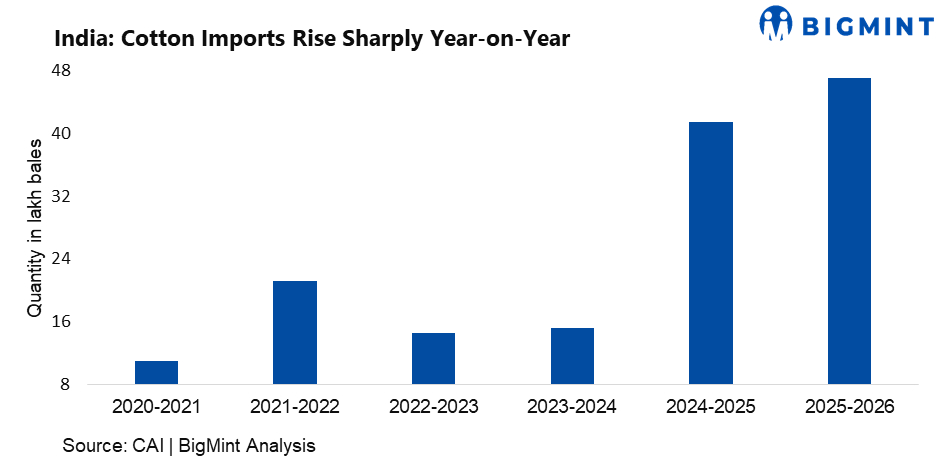
India’s cotton imports have risen sharply over the past two seasons, increasing from 15.2 lakh bales in marketing year (MY) 2023-24 to 41.4 lakh bales in MY 2024-25. Imports are projected to reach around 47 lakh bales in MY 2025-26, reflecting continued supply tightness and stronger demand from the textile industry. The latest duty exemption is expected to accelerate buying interest from mills seeking competitively priced fibre and improved quality availability.
Farmers face mixed outlook
While the policy strengthens the competitiveness of India’s textile exports, it may dampen farmer sentiment ahead of kharif sowing. Growers were expecting firm cotton prices following tighter domestic supplies, but increased imports could cap further upside in the domestic market. Traders said lower price expectations may influence acreage decisions in some regions where cotton competes with soybean, maize, pulses and groundnut.
In the short term, domestic cotton prices are expected to remain under pressure as import arrivals increase. However, monsoon progress, acreage expansion, global cotton prices and currency movements will remain key factors shaping market direction during the 2026-27 season.
Leave a Reply