- Futures decline outpaces spot
- Lower mandi arrivals create mixed signals
Futures-led correction reflects positioning pressure
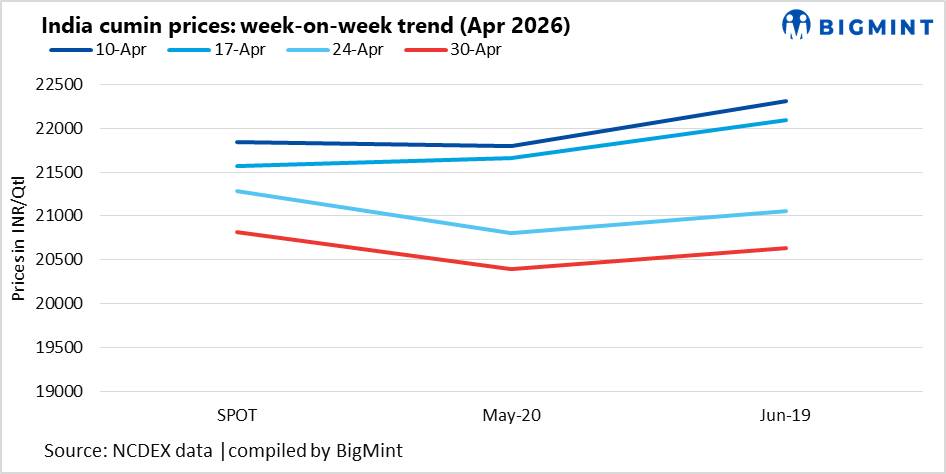
India’s cumin (jeera) market continued to witness a decline through April 2026, led by weakness in futures trading rather than any sharp deterioration in physical demand. Spot prices at Unjha eased from INR 21,840 per quintal on 10 April to INR 20,812 by 30 April, showing a gradual correction. In contrast, May futures declined from INR 21,800 to INR 20,400, while June futures fell from INR 22,310 to INR 20,640, indicating stronger selling pressure in forward contracts.
The sharper fall in futures relative to spot suggests that the correction is largely sentiment-driven, with traders building bearish positions amid expectations of comfortable supply. Physical demand from spice processors, stockists, and exporters remains steady, preventing a sharp fall in spot prices.
Open interest rollover signals fresh short build-up
Open interest trends reinforce this view. The May contract saw open interest decline from 9,723 lots on 17 April to 7,650 lots by 30 April, indicating long liquidation ahead of expiry. Meanwhile, the June contract recorded a sharp build-up from 72 lots to 2,946 lots, pointing to fresh short positions entering the next active contract.
This rollover pattern indicates a shift in market positioning, with participants carrying forward bearish bets into the new contract cycle.
Arrivals ease after peak, limiting further downside
While Agmarknet data showed a sharp surge in arrivals during March and early April, the peak arrival phase is now receding. Current mandi inflows have slowed as lower price levels discourage aggressive farmer selling. Latest trade estimates indicate arrivals of around 23,400 bags in Rajasthan and 32,800 bags in Gujarat, reflecting a decline from peak volumes.
At the same time, NCDEX warehouse stocks stood at 7,033 MT as of 30 April, ensuring adequate availability for exchange deliveries.
Outlook: Balanced to weak with emerging support
The cumin market is currently influenced by short build-up in futures, but easing arrivals and steady physical demand are likely to limit further downside. In the near term, prices may remain under pressure, although any slowdown in arrivals or improvement in export demand could stabilise the market and trigger short covering.
Leave a Reply