- Medium-term import programmes continued despite weak spot demand
- Fuel substitution outweighed outright decline in industrial fuel consumption
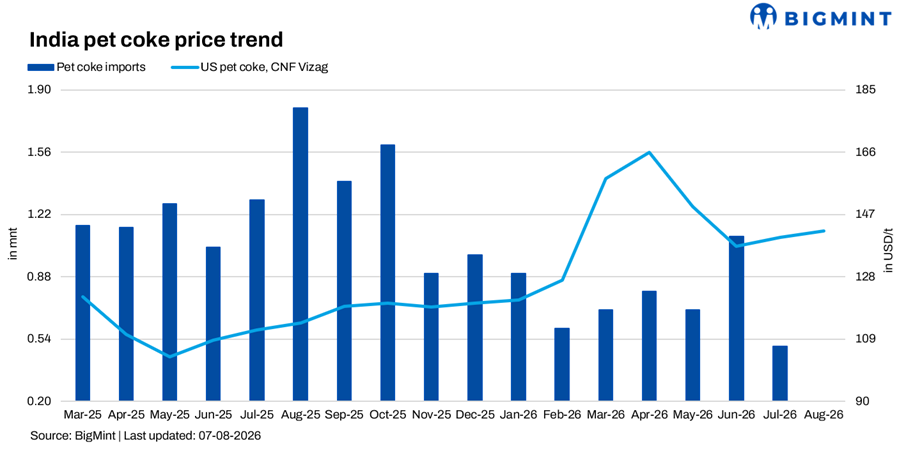
India’s industrial fuel market has entered a period of cautious procurement as cement producers delay imported petcoke purchases in favour of coal, with high imported fuel prices and comfortable domestic coal supplies reshaping buying strategies during the monsoon. Procurement decisions are increasingly being driven by fuel economics rather than availability, with buyers deferring purchases until imported petcoke becomes more price competitive.
Imported petcoke loses price competitiveness
India’s cement industry, the country’s largest imported petcoke consumer, has slowed buying as imported offers remain around $140-142/t CFR India, levels many consumers consider uneconomic.
One leading cement producer said it had temporarily switched to coal until imported petcoke prices fall to around $125/t CFR India, while another major consumer remained out of the market despite stable offers. The market is characterised by a widening bid-offer gap, with sellers maintaining higher offer levels while buyers resist purchases, limiting spot trading activity rather than disrupting supply.
The latest PACE Petroleum Coke Quarterly showed high-sulphur US Gulf Coast green petcoke FOB prices remained firm during July, while CFR India assessments continued to reflect elevated delivered costs. Platts also reported that Indian buyers were delaying procurement during the monsoon as construction activity slowed and buyers waited for more attractive price levels.
Coal supports fuel flexibility
The slowdown in petcoke buying reflects fuel substitution rather than weaker industrial fuel demand. Cement producers continue to optimise between imported petcoke, imported thermal coal and domestic coal based on prevailing fuel economics.
Comfortable domestic coal availability has reduced the urgency to secure imported fuels. Coal India has lowered pithead inventories through higher dispatches, while domestic coal supplies have remained adequate despite the monsoon, providing industrial consumers with greater procurement flexibility.
Industrial coal imports continue despite slower spot demand
The US North Appalachian (NAPP) industrial coal market is also experiencing subdued buying conditions. Market participants described retail demand as slow, with comfortable inventories and consumers continuing to procure largely on a requirement basis.
Despite weaker spot demand, industrial import programmes have continued. BigMint vessel tracking shows around 846,000 tonnes of US NAPP coal currently on the water for India, destined primarily for UltraTech Cement, Ramco Cements, Wonder Cement, Shree Cement and Chettinad Cement.
The divergence between subdued spot buying and continuing imports indicates that large cement producers remain committed to medium-term procurement programmes while limiting discretionary purchases.
Global market remains firm
International petcoke markets have remained broadly balanced despite slower Indian buying. PACE data showed US Gulf Coast high-sulphur green petcoke prices remained largely stable during July, while calcined petcoke prices also stayed elevated relative to historical averages.
The absence of aggressive discounting suggests exporters remain unwilling to lower offers despite softer buying interest, leaving Indian consumers waiting for improved price competitiveness rather than facing supply constraints.
Outlook
The pace of India’s post-monsoon construction recovery will determine the next phase of industrial fuel demand. Elevated imported fuel prices and ample domestic coal availability are expected to keep procurement disciplined in the near term, with buyers continuing to optimise their fuel mix rather than accumulate inventories.
A recovery in construction activity and cement production during the second half of the financial year is expected to improve industrial fuel procurement. Until then, the market is likely to remain driven by price competitiveness rather than fuel availability.
Leave a Reply