- Limited scrap generation, cautious selling tighten supply
- Import offers firm up even as demand remains stable
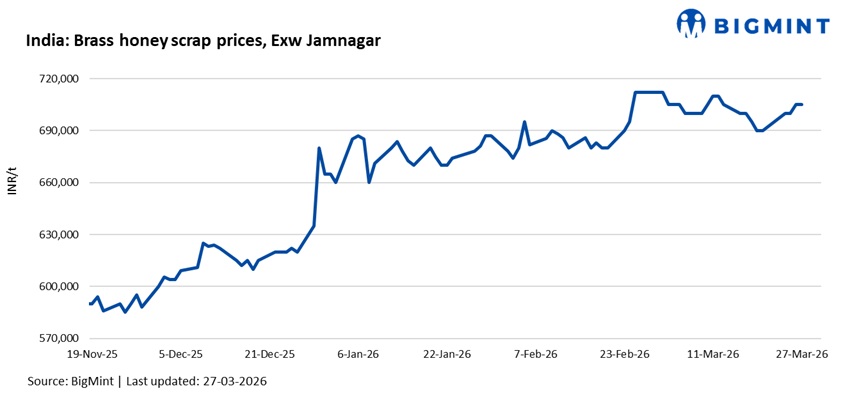
Domestic Brass Honey scrap prices in India edged higher on a w-o-w basis, indicating firm market sentiment supported by steady demand. BigMint assessed brass honey scrap, ex-works Jamnagar, Gujarat, at INR 705,000/t on 27 March, up by 2.17% from INR 690,000/t in the previous week. Prices witnessed moderate fluctuations through the week. The uptick was supported by tight scrap availability and stable buying interest, with market participants aligning purchases with movements in global copper prices.
Higher Brass Honey scrap prices were also supported by firming import offers. Market participants reported a shortage of material across key hubs such as Delhi and Jamnagar, even as export demand remained largely stable. The tightness is primarily attributed to limited scrap generation and cautious selling, with traders holding back inventories amid volatile price trends.
In the spot market, Brass Honey scrap was heard trading as high as INR 720,000/t for immediate requirements, reflecting the urgency among buyers and constrained supply. This marks a noticeable recovery from earlier levels and indicates strengthening sentiment in the near term.
On the import front, European suppliers raised their offers to around 56% of 3M LME, up from 54.25-54.5% levels seen previously. The increase was largely driven by sellers capitalising on the ongoing Middle East tensions, which have tightened freight availability and supported higher realisations. Similarly, offers to India for US-origin material also inched higher, aligning with the broader uptrend in global scrap pricing.
Overall, the current market dynamics suggest that supply-side constraints are the primary driver of price movement. Limited arrivals, coupled with opportunistic inventory holding, have created an environment where even marginal demand is translating into premium trades.
Outlook
Indian Brass Honey prices are expected to remain firm next week, supported by tight supply and elevated import offers. However, any improvement in scrap inflows or easing of geopolitical tensions could stabilise prices, while continued shortages may sustain premium trading conditions.
Leave a Reply