- Firm steel prices, steady offtake allow producers to pass on higher costs
- Shrinking cost advantage of domestic scrap may lift import bookings
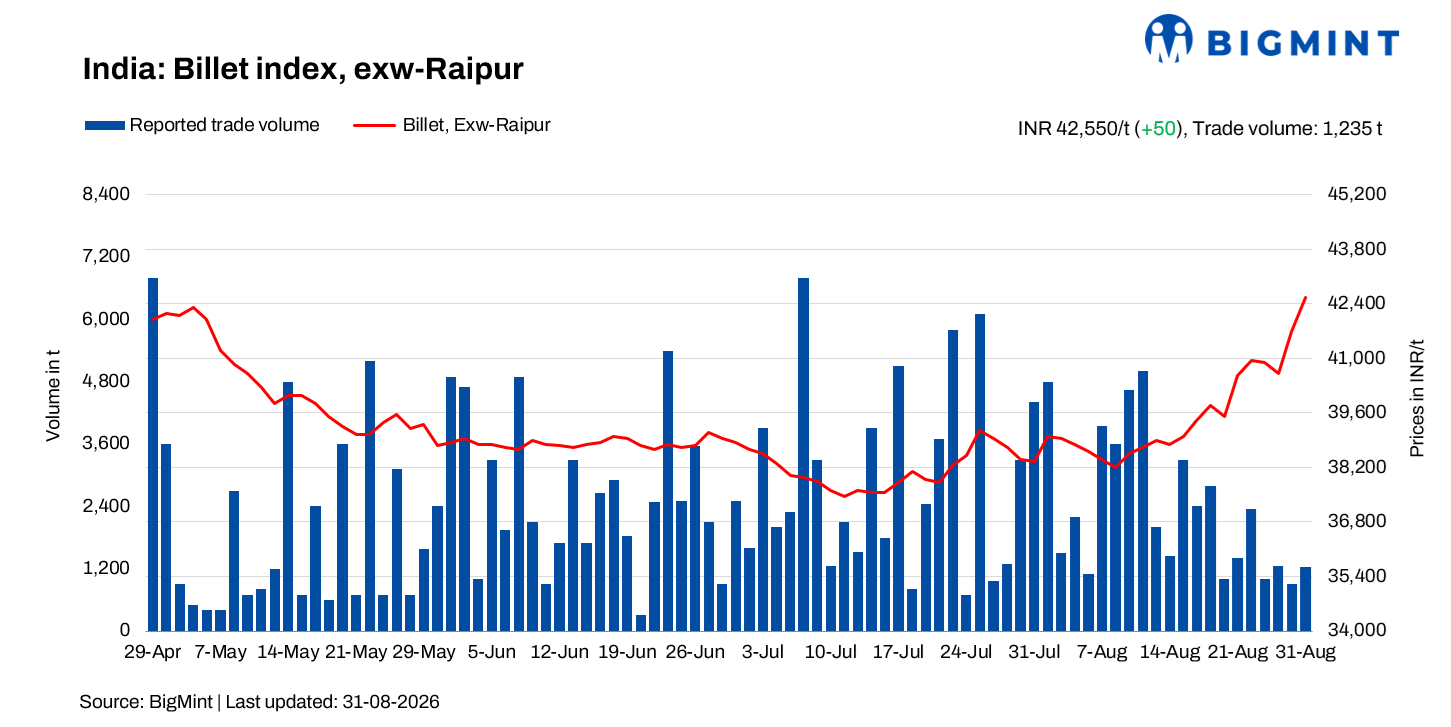
Indian billet prices have been on a sustained uptrend since mid-July, with the Raipur billet index rising by INR 1,350/t m-o-m to an average of INR 39,500/t in August from INR 38,200/t in July. After bottoming at INR 37,450/t on 11-13 July, prices climbed for seven straight weeks, rising in each of the last four weeks, before accelerating sharply in the final fortnight to reach INR 42,500/t on 29 August, a level last seen in April 2026, over four months ago.
The rally has been driven primarily by a sharp rise in metallic input costs, alongside tightening scrap and sponge iron availability.
Metallics costs rise on improving demand
Sponge iron (Raipur PDRI), the key metallic feed for induction-furnace billet producers, surged INR 2,700/t m-o-m to INR 26,700/t in August, as higher coal and pellet costs prompted producers to raise offers.
Non-coking coal prices climbed up sharply to INR 6,900/t from INR 5,650/t, while met coke firmed from a monthly average of INR 35,350/t in July to INR 35,850/t in August, together lifting production costs for both sponge iron and pig-iron-based billet makers, with pig iron itself up INR 770/t m-o-m to INR 38,600/t.
Melting scrap (HMS 80:20, DAP Mandi Gobindgarh) prices also rose INR 1,800/t m-o-m to a monthly average of INR 36,300/t in August, with the latest assessment on 29 August placing prices at INR 39,400/t, keeping overall metallic costs elevated. Tight availability of scrap amid limited import bookings kept prices on an uptrend during the month.
On average, imported HMS traded at a premium of INR 3,400/t over domestic scrap in Jalna during January-August 2026, compared with INR 1,100/t in the year-ago period, slowing import bookings. Consequently, India’s ferrous scrap imports fell sharply by 42% y-o-y to 2.73 million tonnes (mnt) in January-July 2026, according to BigMint data. Imports dropped to their lowest level in five years, as domestic scrap remained much cheaper.
Firm finished steel prices and steady mill offtake have allowed billet producers to pass on the higher input costs, even as buyers remain cautious at elevated levels. Tight spot availability of both scrap and sponge iron further reinforced sellers’ pricing power throughout the month.
Outlook
Billet prices are likely to hold firm in September, supported by continued strength in sponge iron, scrap, and met coke-linked costs. However, any easing in scrap and DRI availability could moderate the pace of gains. The price gap between imported scrap and domestic material has narrowed to around INR 2,000/t in Jalna recently, which could trigger a pick-up in import bookings and ease supply concerns in scrap and reduce raw material costs. However, sustained finished steel demand — driven by a resumption in construction activity following the retreat of the southwest monsoon — is expected to keep prices supported.
Leave a Reply