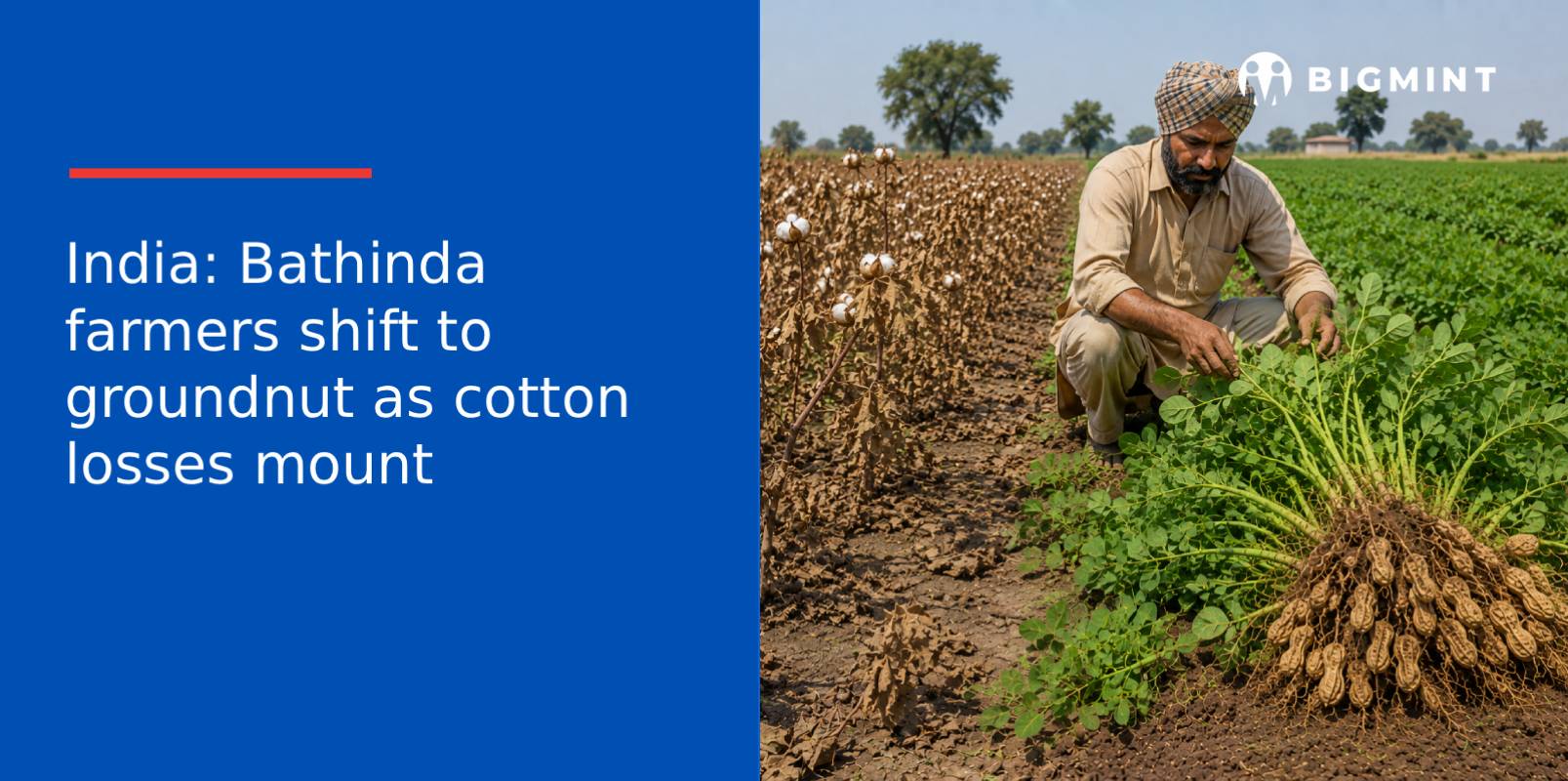
- Groundnut needs just 3-4 irrigations and 105-120 days, far less than cotton and paddy
- Yields 7-10 quintals/acre, with ₹8,000 cost and returns up to ₹20,000
Farmers in two agriculture blocks of Bathinda are increasingly turning to groundnut as an alternative kharif crop after repeated cotton losses over the past four years. Encouraged by the state agriculture department, some paddy growers have also adopted groundnut on a small scale due to its significantly lower water requirement and shorter crop duration.
Groundnut gains ground
Groundnut requires around 30 kg of seed per acre and needs only 3-4 irrigation cycles during its growth period, compared with 10-14 for cotton and 25-30 for paddy. The crop matures in 105-120 days, while cotton takes up to 180 days and paddy up to 140 days.
Average groundnut yield is around 7-10 quintals per acre. The cultivation cost from sowing to manual harvesting is estimated at around ₹8,000 per acre, while returns can reach ₹20,000, equivalent to around 2.5 times the investment.
Farmers in the region have been looking for alternatives after cotton yields declined sharply since 2022 due to pink bollworm, whitefly infestations and erratic weather. Cluster bean was also tried as an alternative last year, but marketing challenges resulted in unsatisfactory returns.
The groundnut initiative has been introduced under the guidance of Punjab Agricultural University, with farmers provided the G40 variety, considered suitable for the semi-arid districts of southern Punjab. Agriculture officials see potential for groundnut to replace part of the water-intensive rice and cotton acreage.
Farmers expand acreage
Some farmers who traditionally cultivated cotton and paddy have reported better crop growth despite delayed sowing. One farmer sowed groundnut in the first week of July, around three months later than the usual period, but remained satisfied with plant development.
Farmers have also highlighted groundnut’s low water requirement, with fields needing substantially less irrigation than paddy. The crop can also find local market demand and be used for non-oil extraction purposes during the winter season, although farmers have called for assured government procurement.
In Kuttiwal Khurd, groundnut cultivation expanded from 2 acres in 2025 to 3.5 acres this kharif season after a farmer recorded a yield of 7 quintals per acre and earned around ₹22,000 from local market sales last season.
Groundnut was cultivated by some farmers in the Maur block around 15 years ago, but acreage declined as farmers shifted to paddy following the expansion of irrigation infrastructure across the Malwa region.
Outlook
Groundnut acreage in Bathinda could expand further if farmers continue to see stable yields and market returns. Its shorter crop duration and substantially lower irrigation requirement are supporting interest among farmers seeking alternatives to water-intensive paddy and weather- and pest-affected cotton.
Leave a Reply