- MCX strengthens as physical aluminium demand weakens
- Monsoon dampens buying as aluminium prices ease
Domestic aluminium prices in India edge lower w-o-w as of 24 July 2026, despite subdued buying activity in the physical market during the monsoon season.
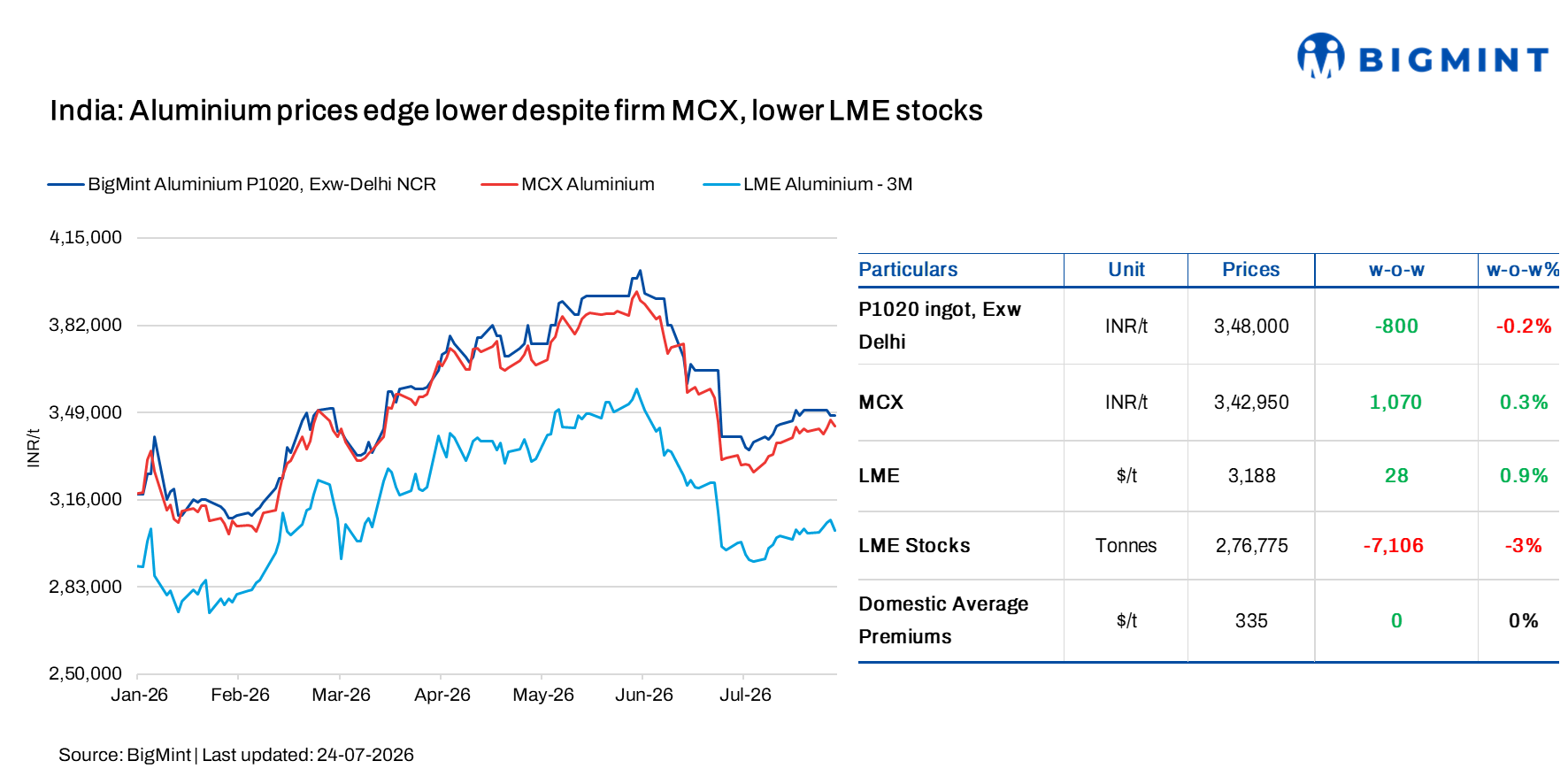
According to BigMint’s assessment, P1020 aluminium ingot prices in Delhi NCR edged down by INR 800/t (0.2%) w-o-w to INR 348,000/t on 24 July, from INR 348,800/t a week earlier.
How did Indian and global exchanges perform?
Domestic aluminium futures on the MCX increased by INR 1,070/t (0.3%) w-o-w to INR 342,950/t, from INR 341,880/t in the previous week.
Meanwhile, three-month aluminium prices on the LME rose by $28/t (0.9%) w-o-w to $3,188/t, from $3,160/t. At the same time, LME aluminium inventories declined by 7,106 t (3%) to 276,775 t, indicating continued tightness in exchange stocks.
Market updates
The domestic aluminium market remained weak during the week, amid firm MCX prices and continued declines in LME inventories. While gains in LME aluminium prices were limited, the persistent drawdown in exchange stocks highlighted tight global metal availability, lending support to domestic market fundamentals.
Demand, however, remained subdued as the ongoing monsoon season continued to affect consumption across key end-user sectors. Most buyers limited purchases to immediate requirements, with little interest in building inventories amid volatile global price movements.
Across Asia, aluminium premiums remained largely stable despite muted trading activity. Japanese buyers continued to procure only prompt cargoes while awaiting clarity on Q4 contract premiums. Elsewhere in Asia, buying interest remained limited, prompting sellers to lower offers amid expectations of additional primary aluminium supply from the Middle East and Indonesia. In India, domestic aluminium premiums held firm at around $330-340/t, supported by tight primary metal availability despite softer demand.
Meanwhile, downstream aluminium manufacturers urged the Ministry of Mines to reduce the effective 8.25% import duty on primary aluminium, arguing that the current tariff structure has encouraged import-parity pricing by domestic producers, significantly increasing raw material costs. Industry associations stated that margins of downstream MSMEs have contracted by up to 70%, while higher global aluminium prices have raised input costs by 20-35% over the past three months. They also reiterated concerns over the inverted duty structure, under which several finished aluminium products continue to enter India at low or zero duty under various free trade agreements (FTAs).
In Western markets, European aluminium premiums remained under pressure due to ample replacement supply from Canada and Indonesia, coupled with seasonally weaker demand. In contrast, US premiums were broadly stable, as slower summer consumption offset support from declining global inventories and ongoing geopolitical uncertainties.
Outlook
Domestic aluminium prices are expected to remain firm in the near term, supported by stronger MCX trends, lower LME inventories, tight supply, and stable regional premiums. However, monsoon-related demand weakness is likely to keep physical buying largely requirement-based. Market participants will also closely monitor developments on the proposed import duty rationalisation, as any policy change could influence domestic primary aluminium pricing and improve raw material availability for downstream manufacturers in the coming months.
Leave a Reply