- Higher billet, rebar prices support scrap market
- Mills continue to follow need-based procurement
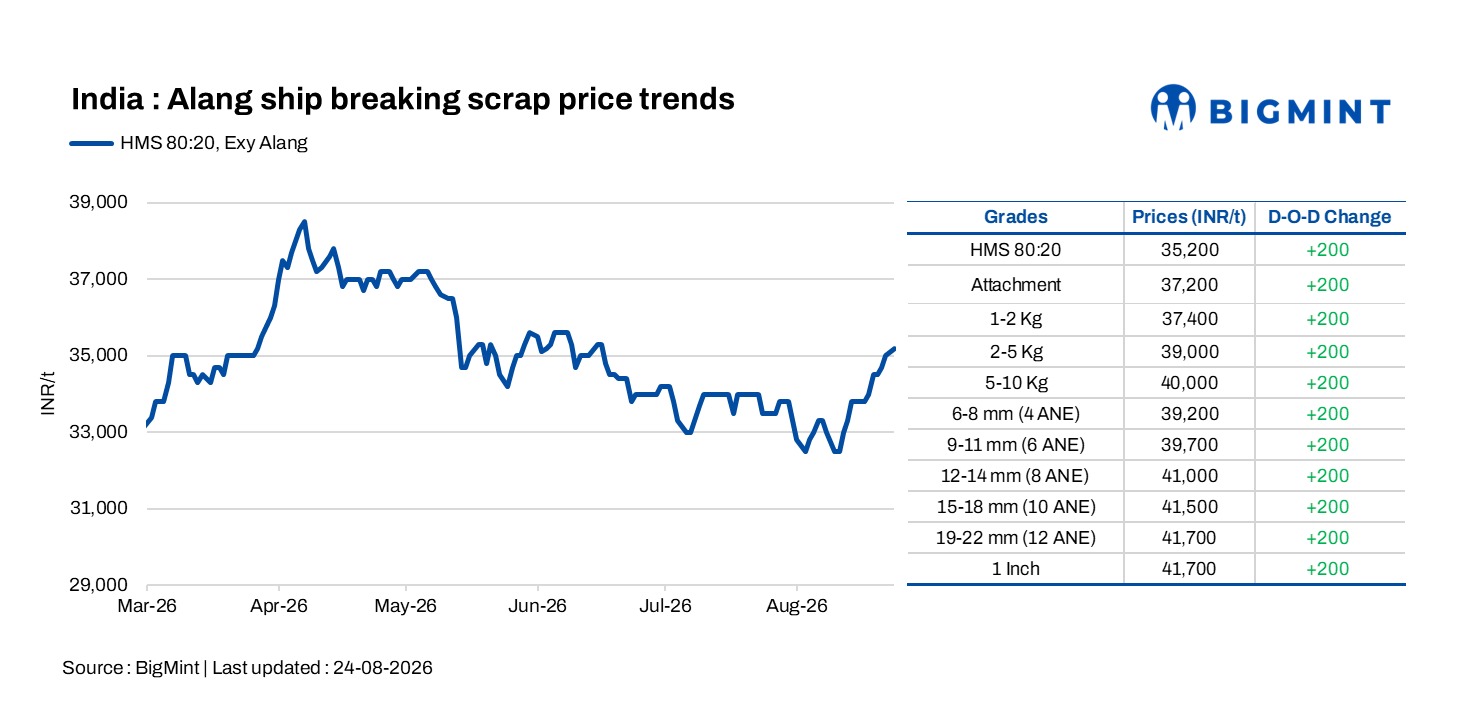
Ship-breaking melting scrap (HMS 80:20) prices in Alang, Gujarat, increased by INR 200/tonne (t) d-o-d to INR 35,200/t ($368/t) ex-yard on 24 August. The increase was driven primarily by tight availability rather than a broad-based improvement in downstream demand.
Vessel inflows into Alang’s recycling yards remain limited, restricting the availability of freshly generated scrap. With replacement costs elevated and holding costs high, shipbreakers have been reluctant to lower offers, keeping a firm floor under prices.
However, the upside remains constrained by subdued finished steel offtake. Rolling mills and downstream buyers are largely following hand-to-mouth procurement, limiting purchases to immediate requirements rather than building inventory.
Liquidity is also becoming a key factor ahead of Diwali. As the festival approaches, steel trading activity typically slows as local market participants and smaller buyers close or reduce operations for the festive period. This creates tighter cash flows and delays payments, prompting mills and traders to conserve working capital and avoid stocking raw materials aggressively.
Gujarat market update

In Gujarat, Bhavnagar billet prices increased by INR 200/t d-o-d to INR 43,500/t DAP, while Ahmedabad rebar prices rose by INR 300/t to INR 48,300/t ex-works on 22 August.
The increase in billet and rebar prices provides some support to scrap replacement costs. However, the movement has yet to translate into a sustained improvement in physical demand, with buyers continuing to procure largely against immediate consumption.
Mandi market update
In Mandi Gobindgarh, HMS 80:20 scrap prices edged up by INR 100/t d-o-d to INR 37,100/t DAP. Billet prices remained stable at INR 44,000/t, while rebar prices increased by INR 200/t to INR 48,900/t.
Mandi rerollers are also closely monitoring billet prices in Durgapur. A significant widening of the Mandi-Durgapur price spread could make Durgapur billets more competitive and encourage supplies into the region, potentially putting pressure on local furnace operators.
For now, however, scrap sellers are prioritizing nearby markets, resulting in tighter scrap availability and firmer offers in Mandi. Higher sponge iron prices are also adding to the upward pressure on overall raw-material costs.
Outlook
The near-term scrap market is likely to remain largely stable. Limited vessel arrivals and constrained domestic scrap availability should continue to support seller offers, while higher sponge iron costs could provide an additional floor.
At the same time, weak downstream offtake and pre-Diwali liquidity constraints are likely to cap buying interest. The market could therefore remain driven more by raw-material availability and replacement costs than by a meaningful improvement in end-user demand. A clearer direction is likely only after festive payment pressures ease and construction-linked steel demand improves.
Leave a Reply