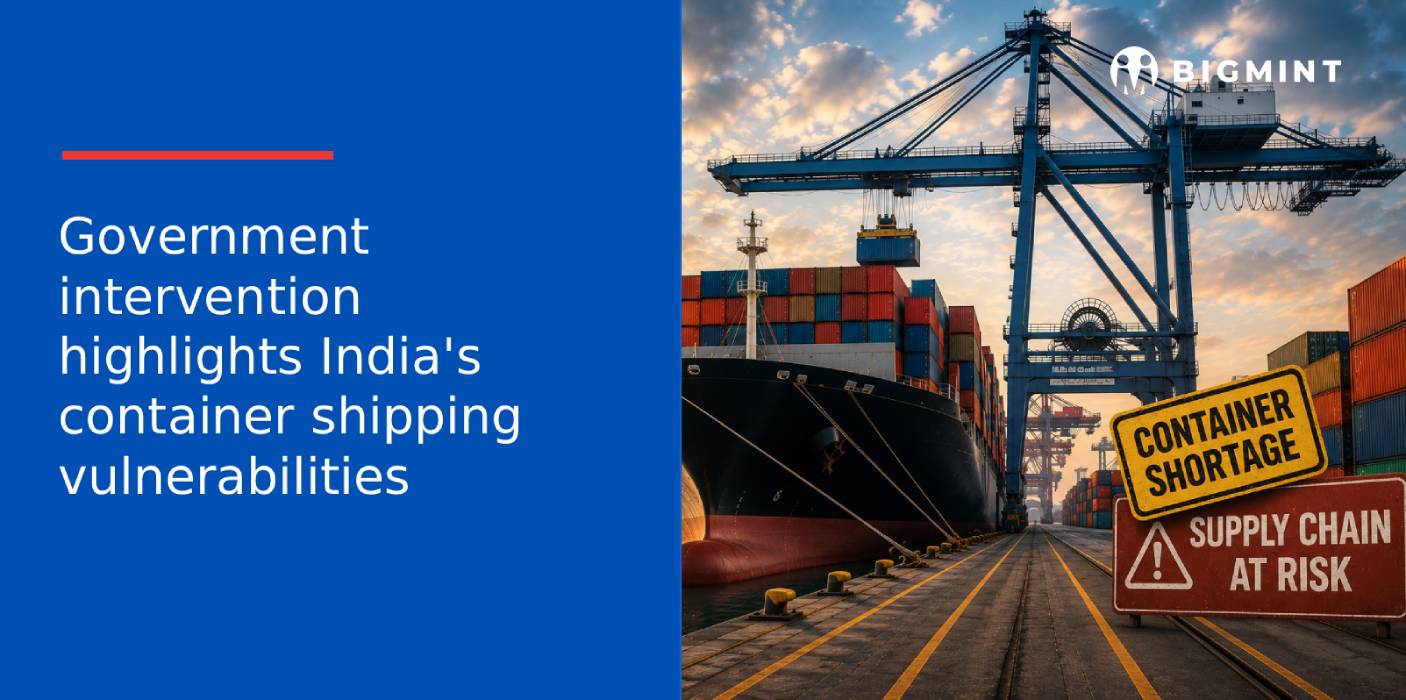
- Shipping disruptions expose India’s container vulnerabilities.
- Freight costs rise as vessel availability tightens.
Shipping constraints raise costs across key export sectors
Iran, which imports nearly 4.5 million tonnes of basmati rice from India annually, is among the markets most affected by the shipping disruptions. According to Prem Garg, IREF President Vessel availability from Kandla and Mumbai has become severely limited due to disruptions in the Strait of Hormuz. The cost of shipping a 20-foot container carrying 26.5 tonnes of rice has risen to around $5,000, while limited vessel availability continues to delay shipments.
Container shortages have significantly increased logistics costs across exports. R. Rajeshkumar, President of the Custom Broker and Shipping Agents Association, Coimbatore, cited a case where a container booked from Kochi to Iraq for $1,500 ultimately required $50,000 to secure an empty container due to shortages at major ports.
Coffee exports have faced similar disruptions. According to Ramesh Rajah, President of the Coffee Exporters Association of India, shipments are now being rerouted via the Cape of Good Hope increasing transit time by 10–22 days. Freight rates have climbed from around $1,200 to $3,800 per container, while buyers continue to insist on previously agreed freight rates.
Infra Constrains
Infrastructure constraints continue to pressure India’s container logistics. Vallarpadam is yet to become fully operational, while Thoothukudi can handle larger mother vessels only after completion of its ₹15,000 crore Outer Harbour Project. Vizhinjam remains focused on EXIM cargo due to connectivity limitations. Freight from Kochi to Jebel Ali has risen from $1,000–1,500 to nearly $7,000, increasing by around $500 in the last three days. Indian exporters also struggle to secure containers, while Chinese exporters receive priority due to stronger demand.
Former Director General of Shipping Amitabh Kumar said India has faced five major shipping disruptions this decade. The latest Strait of Hormuz tensions have forced vessels to reroute via the Cape of Good Hope, extending voyages by 10–12 days, while shipping lines priorities China-Europe and China-U.S. routes.
Domestic Production
Domestic container production remains limited, with India manufacturing around 24,000 TEUs in FY24, compared with China’s several million annually. To reduce this dependence, the government has launched two initiatives—expanding container manufacturing and developing an Indian container shipping line.
The ₹10,000-crore container manufacturing scheme announced in the Union Budget 2026–27 aims to increase domestic production tenfold. On July 3, an India-made EXIM container built by DCM Shriram Group was unveiled at Dadri for Maersk, which has ordered another 1,000 containers. In addition, the Shipping Corporation of India, Container Corporation of India, and the port authorities of Jawaharlal Nehru, Tuticorin and Chennai signed a MoU to establish the Bharat Container Shipping Line, India’s first national container carrier.
Outlook
Government initiatives to strengthen container manufacturing, shipping capacity, and exporter support may help ease logistics pressures over time. However, vessel bunching at major west coast ports and continued shipping disruptions are likely to keep freight costs, container availability, and shipment timelines under pressure in the near term.
Leave a Reply