- Surplus-driven global market keeps rice prices low
- Policy clarity, quality discipline emerge as priorities
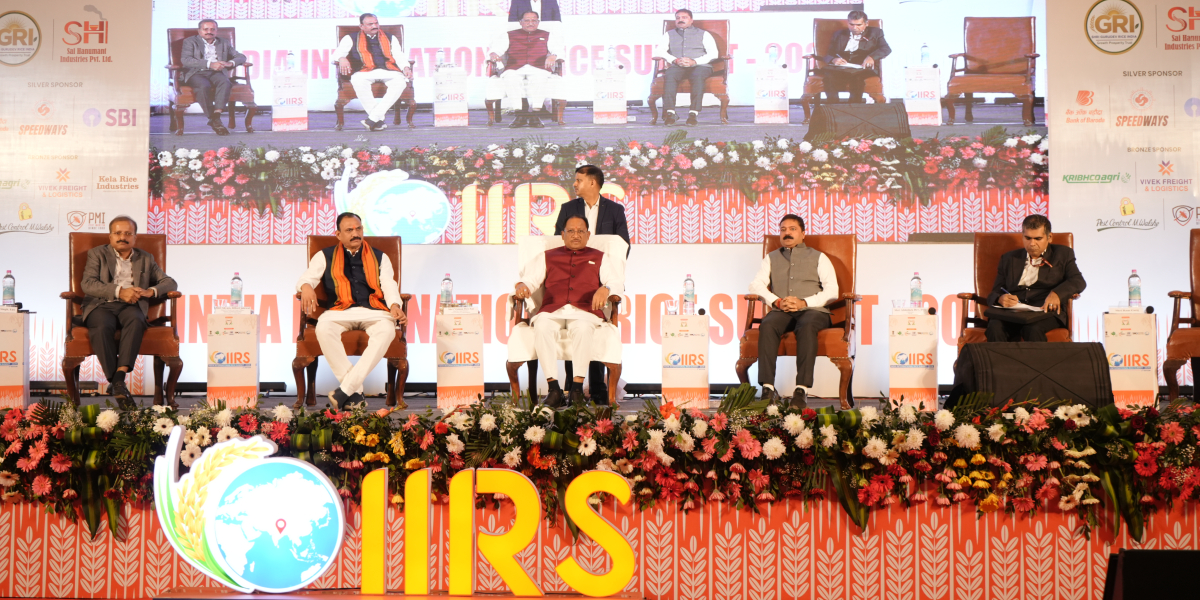
Effective promotion of India’s geographical indication (GI)-tagged rice has emerged as a key priority amid a surplus-driven global market, emphasised experts at the second edition of the India International Rice Summit (IIRS) during 9-10 January 2026, in Raipur, Chhattisgarh.
Hosted by the Rice Exporters Association Chhattisgarh (TREACG) and supported by the Ministry of Commerce and Industry and APEDA, in collaboration with CII, FICCI, and the Trade Promotion Council of India, the IIRS served as a critical nexus for over 1,000 stakeholders, including international buyers from 12 countries and embassy delegations from six nations, to discuss the future of Chhattisgarh, the “rice bowl of India”.
The event was attended by Chhattisgarh Chief Minister Vishnu Deo Sai; Finance Minister OP Choudhary; Speaker of the Chhattisgarh Legislative Assembly Dr Raman Singh; senior state ministers, including Ram Vichar Netam and Shyam Bihari Jaiswal; along with APEDA Chairman Abhishek Dev; among others.
At the summit, industry stakeholders stressed that India needs to strategically leverage its GI rice varieties worldwide to build premium recognition and gain market share. The nation’s agricultural sector also needs to become export ready, with strategies to improve seed quality and modern practices to boost productivity and export suitability.
Market participants also focused on MSME and trade growth by calling for support for technology and partnerships to expand global reach. Another focus was nutrition and innovation, with strengthening of India’s FRK leadership with sustainable and innovative agri value-chain development.
Other highlights
India’s export portfolio (target: 20 mnt): The 2026 global rice market is set to be defined by a monsoon-driven surplus, with Asia accounting for nearly 90% of global traded value. India leads with 150 million tonnes (mnt) production, ample stocks and surplus, supplying about one-third of global trade, with an export target of 20 mnt. Global supply will remain abundant at 767.2 mnt, keeping prices under pressure due to aggressive selling by Thailand, Vietnam, and Pakistan, while competitive market rice stays at around $322/t FOB, even as Thai Hom Mali holds its premium.
In 2026, India’s rice sector remains a global leader, producing 150 mnt with a 45 mnt surplus and supplying about one-third of global trade. Despite low prices from Thailand, Vietnam, and Pakistan, Indian rice stays competitive, with exports of 19.3 mnt across basmati and non-basmati varieties.
3 key factors shaping Indian market: The summit outlined three critical pillars for survival and growth: policy continuity such as ensuring clear government signals and reliable supply; price competitiveness amid intense pressure from Thailand, Myanmar, and an emerging Brazil; and market diversification, with a strategic push beyond traditional hubs into Latin America, West Africa, and the GCC, including Saudi Arabia, Iran, and Iraq.
Strategic challenges & infrastructure: The summit highlighted key operational challenges: quality risk, as aggressive price undercutting by Indian players has raised buyer concerns over potential compromises; the need for standardisation, advocating a “Standard by Default” approach based on grain length, quality, grade, and size; and logistics, emphasising efficient port management and inland support, especially for landlocked hubs such as Raipur. Additionally, warehousing capacity stands at 80-85 mnt but requires efficiency during peak periods, while the Open Market Sale Scheme (OMSS) currently serves only domestic trade, leaving exporters awaiting price reviews for export alignment.
The IIRS highlighted solutions such as Fortified Rice Kernels (FRK), risk management, and exporter financing for addressing these bottlenecks.
Chhattisgarh’s “Rice Bowl” initiatives: Chhattisgarh Chief Minister Vishnu Deo Sai announced key support measures, including a one-year extension of mandi fee exemptions to strengthen exports to 90 countries, and a focus on promoting aromatic varieties such as Jeeraphool and Dubraj from the Surguja region. Farmers are ensured a procurement price of INR 3,100/quintal, with 14.9 mnt procured last year. The state also emphasised innovation, inaugurating the APEDA Regional Office in Raipur and advancing FRK initiatives.
Overall, state initiatives, including mandi fee exemptions, APEDA’s regional office, farmer support, and promotion of aromatic varieties, are expected to strengthen India’s global position.
Leave a Reply