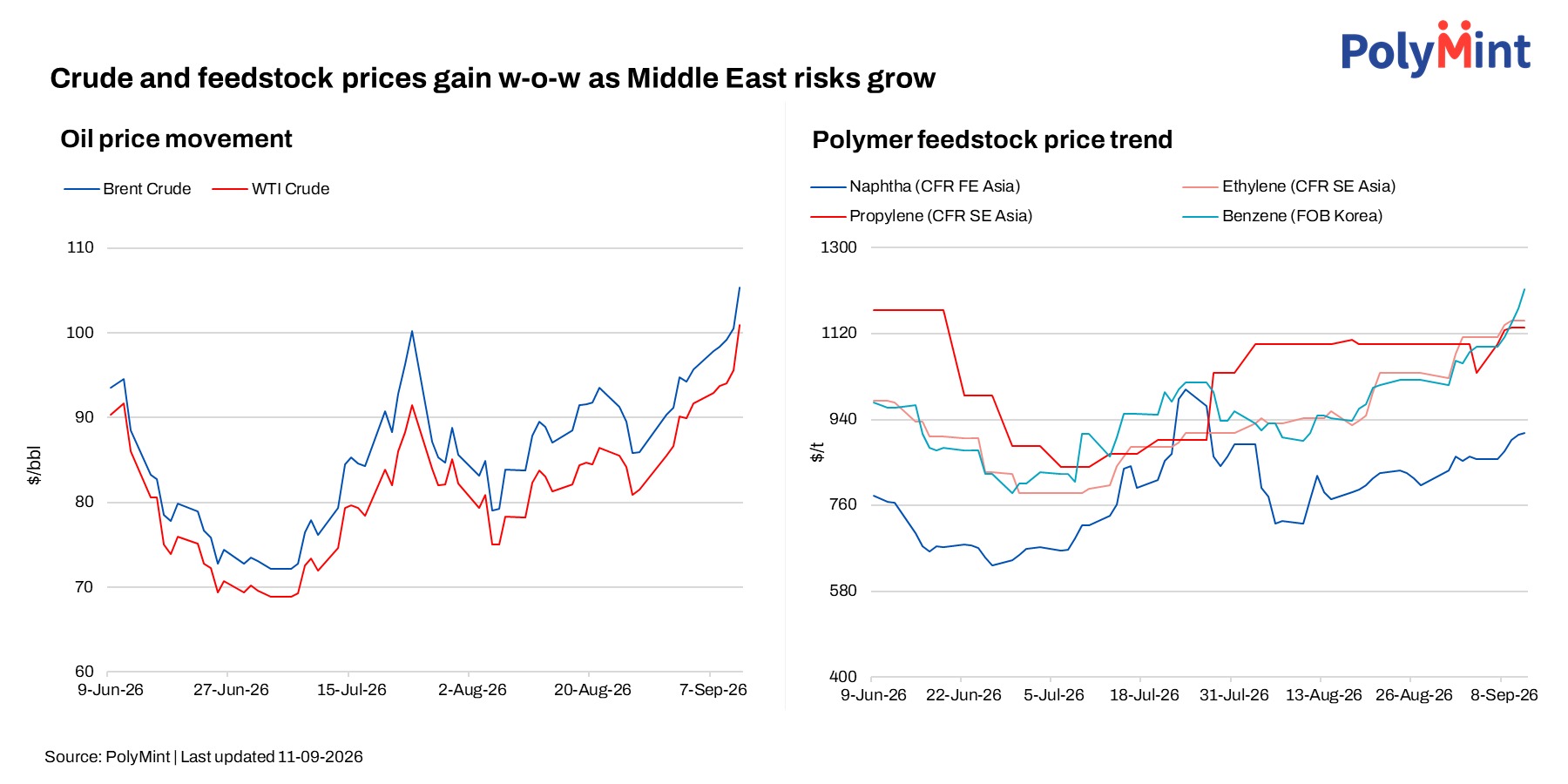
- Crude rises 10% w-o-w amid supply disruptions
- Propylene gains 9%, outpacing ethylene and naphtha
The global petrochemical feedstock complex strengthened sharply in the week ended 11 September as Middle East supply and shipping disruptions tightened crude and petrochemical markets. PolyMint assessments show Brent crude rising 10.1% w-o-w to $105.36/bbl, while naphtha, ethylene, and propylene increased 6.4%, 3.1%, and 9.2%, respectively. Indian polymer prices moved considerably less, indicating limited upstream cost pass-through and increasing margin pressure.
Crude oil and feedstocks
Brent rose from $95.70/bbl on 4 September to $105.36/bbl on 11 September, while WTI increased from $91.69/bbl to $100.95/bbl. The rally was driven by tightening physical supply and disruptions to Middle East crude and shipping flows.
 The IEA said global oil production fell 1.6 mb/d m-o-m to 100.1 mb/d in August, with more than 10 mb/d of Gulf output still shut in. Global inventories also declined by 95 million barrels in August, while the agency expects 2026 global supply to fall by 5.7 mb/d.
Asian naphtha rose 6.4% w-o-w but lagged the crude increase. Regional availability remained constrained as deep-sea naphtha arrivals into Asia stayed below normal and the Middle East supply faced continuing transit disruptions.
Propylene was the stronger performer, gaining 9.2% w-o-w, compared with a 3.1% increase in ethylene. The sharper C3 increase points to tighter propylene availability. Higher propylene costs have also narrowed the spread over PP, increasing pressure on PP producer margins.
Indian polymer market
Indian CFR polymer prices showed limited movement relative to the sharp increase in upstream feedstock costs. PET rose 2.1% w-o-w, and PP raffia increased 1.2%, while HDPE was unchanged. PVC declined marginally by 0.3%. The subdued response indicates resistance to passing the full increase in replacement costs into imported polymer prices.
 Domestic indications showed a firmer response, with PP raffia rising 3.5% w-o-w, PVC increasing 3.1%, and HDPE gaining 1.5%. PET increased 0.8%. The stronger domestic movement, particularly in PP, suggests that local market pricing is beginning to reflect higher replacement costs despite relatively limited movement in CFR assessments.
Market implications
For Indian polymer producers, higher crude, feedstock, and freight costs are raising replacement costs and putting pressure on margins. The weaker rupee, with USD/INR rising 1.3% w-o-w, adds to the landed-cost burden for import-dependent buyers.
Freight is an additional risk. VLCC rates from the Gulf of Oman to China reached Worldscale 450, equivalent to around $11.50/bbl, as security risks reduced tanker availability.
For converters, polymer prices have so far increased less than upstream costs, providing some protection. However, if feedstock and freight inflation persist, producers may seek further resin price increases, testing downstream affordability.
Outlook
Through the remainder of September, petrochemical markets are likely to remain sensitive to Middle East shipping availability and crude supply restoration. Sustained disruption could keep naphtha and olefin replacement costs elevated, with propylene and PP facing greater margin pressure. The extent of polymer price increases will depend on whether producers can pass higher costs through without weakening downstream buying.
Leave a Reply