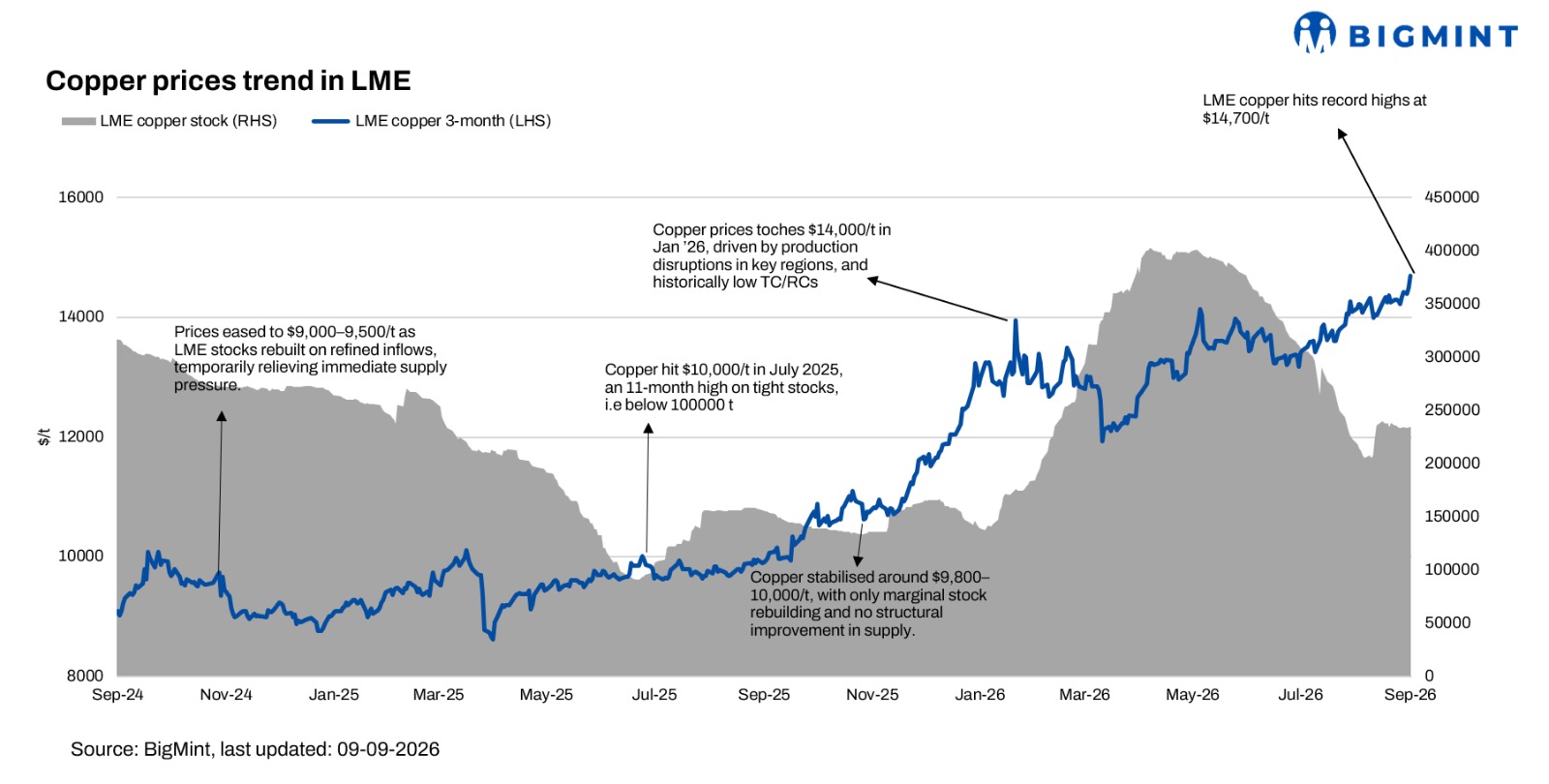
- LME copper exceeds $14,600/t
- Concentrate shortage tightens supply chain
Copper prices have rallied to record levels in recent weeks, supported by severe concentrate shortages, mining disruptions and changing global trade flows. LME three-month copper futures recently crossed $14,600/t, reflecting tightening raw material availability and growing competition for metal units amid potential changes in US trade policy.
LME three-month copper prices have surged nearly 49% year-on-year, rising from around $9,910/t on 9 September 2025 to $14,728/t on 8 September 2026. Prices also gained about 4.4% over the past month, before hitting a fresh all-time high of $14,779/t on 9 September, driven by tightening supply and strong market sentiment.
Short-term tightness has intensified as refined copper flows shift toward the US ahead of potential tariffs, draining LME inventories and pushing futures into steep backwardation, signalling limited supply.
In China, copper demand is expected to strengthen with the seasonal manufacturing pickup, while SHFE inventories have fallen to their lowest level since 2024, further supporting the tight market.
Additionally, The rally comes at a time when demand from electrification, renewable energy projects, power infrastructure, electric vehicles and artificial intelligence-linked investments continues to expand. Strong consumption from these sectors has coincided with constrained mine supply, creating a tighter global market balance.
Concentrate shortages intensify supply pressure
Supply-side concerns remain the primary driver behind the recent price surge. Benchmark treatment and refining charges (TC/RCs) for 2026 settled at $0/t, the lowest level on record, highlighting an acute shortage of copper concentrates available to smelters.
Mining disruptions in key producing regions, including Chile, Peru and parts of Africa, have further tightened concentrate availability. At the same time, slower development of new mining projects has limited the industry’s ability to respond to rising demand.
Trade shifts reduce availability outside North America
Global copper trade flows have also undergone significant changes. Expectations of potential US tariffs on refined copper have encouraged material to move towards North America, reducing availability in other regions and contributing to higher regional premiums.
Meanwhile, inventories across major exchanges remain below historical averages, reinforcing bullish sentiment and increasing market sensitivity to supply disruptions.
Downstream industries face rising cost pressure
The sharp increase in copper prices is creating challenges for downstream industries, including cable and wire manufacturers, electrical equipment producers, appliance makers, automotive component suppliers and construction material manufacturers.
Industry participants indicate that fabricators are increasingly facing margin pressure as higher raw material costs outpace their ability to pass through price increases. Smaller processors remain particularly vulnerable because competitive market conditions limit pricing flexibility.
While higher copper prices are supporting revenues and margins for mining companies and producers, downstream consumers may face increased production costs and softer demand if elevated prices persist.
Market implications
The current rally highlights the growing disconnect between long-term copper demand growth and the pace of new mine development. Persistent supply constraints could increase volatility across the value chain and accelerate efforts to secure long-term raw material supply through recycling, strategic sourcing and investment in new mining projects.
Outlook
Copper prices are expected to remain supported through the remainder of 2026 if concentrate shortages, low inventories and energy-transition demand continue at current levels. However, any improvement in mine supply, easing of trade-related disruptions or slowdown in global industrial activity could trigger periodic price corrections despite the market’s constructive longer-term fundamentals.
Leave a Reply