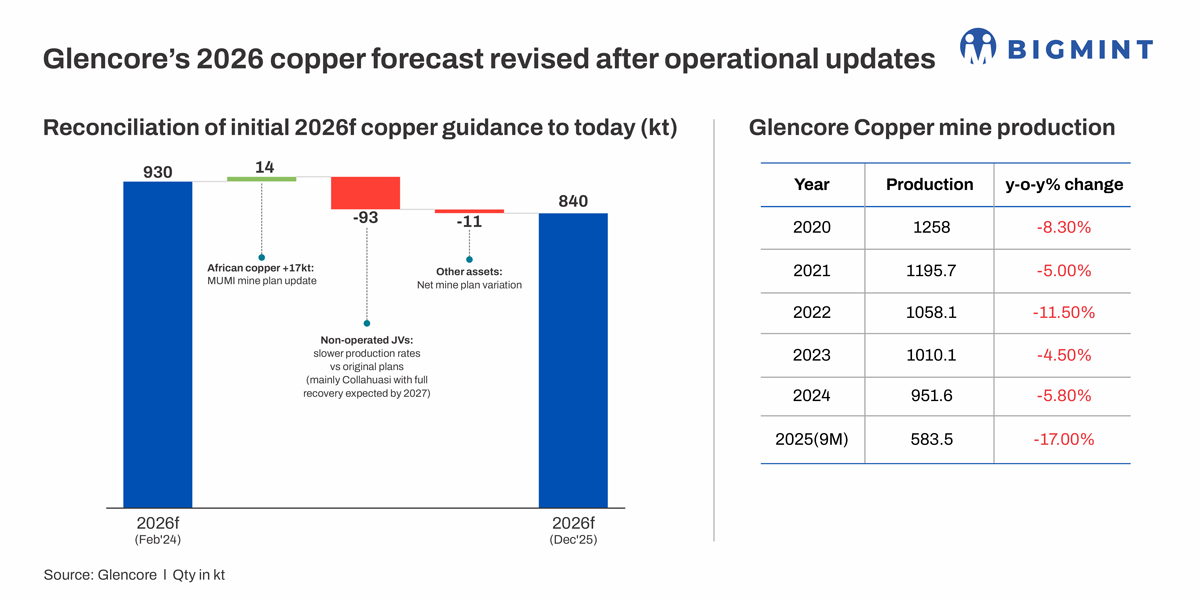
- Glencore trims 2026 copper forecast to 840,000 tonnes on Collahuasi-related production issues.
- Spot TCs stay deeply negative, reflecting severe concentrate tightness.
Mining giant Glencore Plc has cut its copper production forecast for 2026 by about 9.6% to 840,000 tonnes due to falling ore grades and water shortages at the Collahuasi mine in Chile, which the company runs jointly with Anglo American Plc. The company expects production to reach about 850,000 tonnes in 2025.
Despite the near-term challenges, Glencore maintains a positive medium-term growth outlook. The company expects production to rebound to 930,000 tonnes in 2027, touch 1 million tonnes in 2028, and potentially rise to 1.6 million tonnes by 2035. This will be driven by expansions across its African portfolio and the restart of the Alumbrera mine, planned for commercial production in the first half of 2028.
Industry-wide, miners face a combination of lower grades, tough geological conditions and sporadic disruptions, including recent fatal accidents—all adding to the broader narrative of tightening primary copper supply. Persistent supply stress has supported a firmer price environment and strengthened the structural bullish case for copper heading into 2026.
The impact of the supply squeeze is most evident in the concentrate market, where spot treatment charge (TC) levels remain deeply negative, trading at about -$65/tonne CIF Asia Pacific as of 28 November. Negative TCs indicate smelters are effectively paying miners to secure concentrate, further compressing margins and raising the possibility of reduced smelter operating rates if supply does not improve.
What’s ahead in 2026?
Glencore has lowered its copper production forecast for 2026 from 930,000 tonnes (announced in February 2024) to 840,000 tonnes. While some African mines, like Mutanda/MUMI, are expected to produce a bit more copper (around 14,000 tonnes extra), this is outweighed by big cuts at joint ventures such as Collahuasi, where production is slower than expected. However, the company expects production to rebound over 1 million tonnes of annual production by the end of 2028.
In addition, other Glencore mines are contributing 11,000 tonnes less due to changes in their mining plans. Overall, the company now expects about 90,000 tonnes less copper than it initially predicted, showing that operational challenges and delays in ramping up production are still affecting parts of its copper business.
Leave a Reply