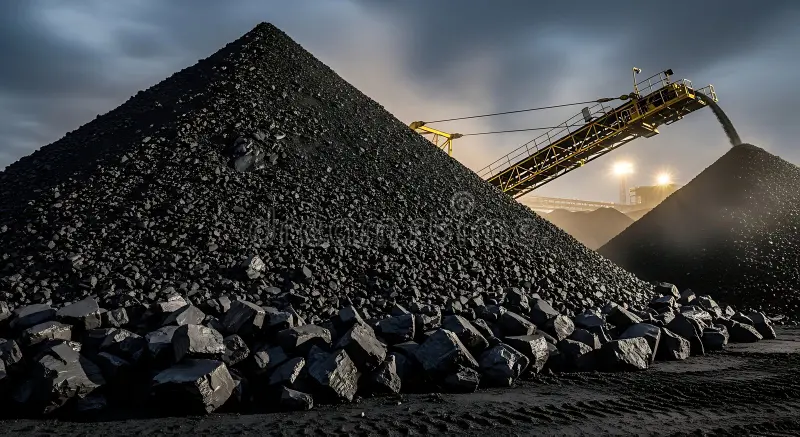
- VDKi urges government to reactivate reserve coal plants
- Merz faces mounting pressure as energy security concerns intensify
Germany currently has approximately 6.7 GW of coal-fired generation capacity held in strategic reserve. These plants are maintained in operational condition but remain offline unless the government formally declares an energy emergency.
The debate over whether to reactivate this capacity has intensified following recent disruptions to global LNG supply chains and renewed volatility across European energy markets.
VDKi continues to lobby the German government to bring the reserve capacity back into operation, arguing that the country’s energy system is becoming increasingly vulnerable.
Energy markets reacted sharply to developments surrounding the Strait of Hormuz situation.
The DES ARA Q3 2026 financial contract dropped sharply during morning trading, falling to $110.50/t, down $10.40/t versus 5 May, before partially recovering to close at $115/t, still down $5.90/t on the day.
The Calendar 2027 DES ARA contract closed at $117/t, down $7.75/t versus 5 May.
European gas and power markets also weakened sharply.
- TTF gas futures initially fell 10% to EUR 40.50/MWh before recovering to €44.20/MWh, down 6.2% on the day
- German Q3 2026 power futures declined 3.7% to EUR 92.40/MWh
Underlying Drivers
1. Germany’s energy system faces structural vulnerabilities
Germany’s energy system remains under increasing pressure following the phase-out of nuclear generation and the progressive retirement of coal-fired power plants.
At the same time:
- Renewable energy output remains intermittent
- Battery storage capacity remains limited
- LNG supply chains have been disrupted by the Hormuz crisis
This has increased concerns regarding Germany’s ability to maintain reliable baseload power during periods of market stress.
The VDKI argues that reactivating the 6.7 GW of reserve coal capacity would provide an important buffer against further supply disruptions and power market instability.
2. Political constraints complicate any coal revival
Despite growing energy security concerns, reactivating reserve coal plants remains politically sensitive.
The governing coalition continues to face internal divisions regarding coal policy.
Key challenges include:
- Strong opposition from the Green Party
- Potential legal challenges from environmental groups
- Technical uncertainty over how quickly mothballed plants could return to reliable operation
As a result, the government faces a difficult balancing act between energy security, climate policy, and industrial competitiveness.
3. Broader economic pressures are intensifying
The energy debate is unfolding against a backdrop of broader economic weakness in Germany.
The country’s automotive sector continues to face severe pressure from:
- Weak industrial demand
- Rising energy costs
- Raw material shortages
- Potential US tariff measures
Public dissatisfaction with the government is also increasing.
Recent polling suggests:
- Only 16% of Germans are satisfied with the government
- Only 24% believe the governing coalition will survive until the end of its term in 2029
These broader economic and political pressures are increasing scrutiny on the government’s energy strategy.
Outlook
The DES ARA financial market may remain under pressure in the near term as traders continue to reassess geopolitical risks and LNG market developments.
However, analysts believe downside potential may be limited.
The $100/t level for DES ARA coal is increasingly being viewed as a strong technical and psychological support level.
Once the market fully digests developments surrounding Iran and Hormuz, attention is likely to shift back toward underlying supply risks and winter energy security concerns.
The future of Germany’s reserve coal capacity remains uncertain.
Possible scenarios include:
- Reactivation of reserve plants if energy security deteriorates further
- Negotiated compromise measures within the governing coalition
- Continued delays in decision-making while authorities monitor LNG markets and winter demand outlooks
For now, Germany’s 6.7 GW of reserve coal capacity remains idle, even as concerns over energy security continue to intensify.
Leave a Reply