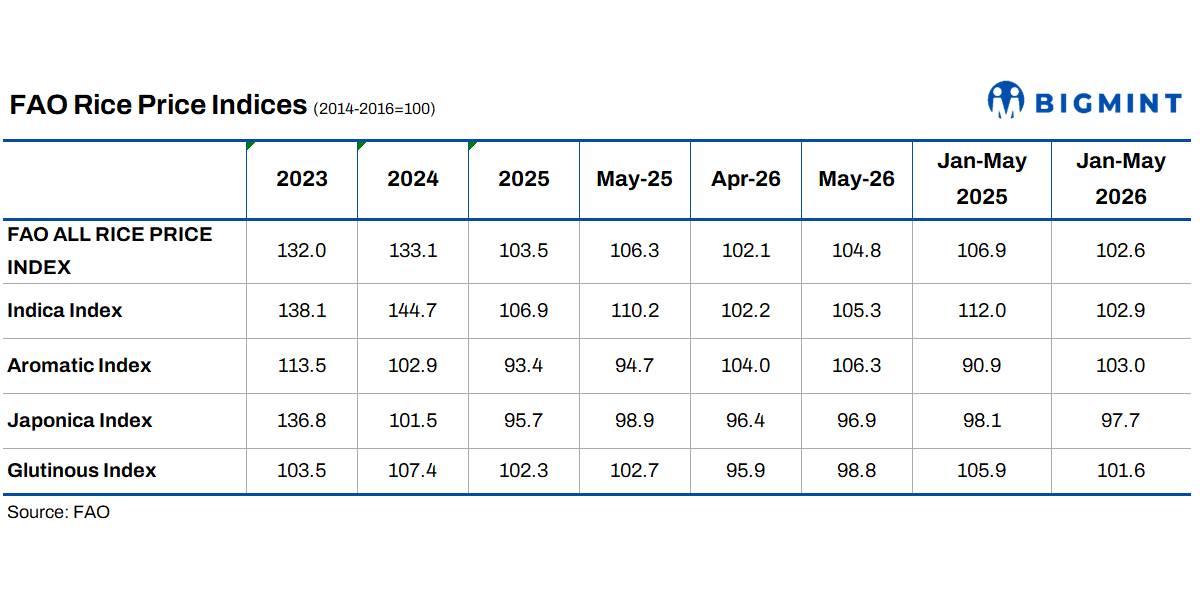
- FAO All Rice Price Index rose 2.7% m-o-m to 104.8 points in May 2026.
- Indica, fragrant and glutinous rice prices strengthened, while Japonica remained largely stable.
The FAO All Rice Price Index averaged 104.8 points in May 2026, up 2.7% from April (102.1 points), reflecting firmer export quotations across major rice categories. Despite the monthly recovery, the index remained 1.4% below May 2025 levels, indicating that global rice prices are still trading below last year’s highs. The improvement was led by stronger prices for Indica, fragrant and glutinous rice, supported by tightening supplies in parts of Asia, weather concerns and rising production costs.
Indica rice records strongest monthly increase
The FAO Indica Rice Price Index increased to 105.3 points in May from 102.2 points in April, registering a 3.0% month-on-month gain. According to FAO, higher input costs in major exporting countries provided support to export quotations during May. However, price trends varied across origins. Vietnam remained the strongest performer, with export prices climbing to 16-month highs amid tightening domestic availability and active buying interest. In Thailand, concerns over the possible emergence of El Niño supported market sentiment, as traders anticipated potential production risks and sustained demand from Southeast Asian buyers. In contrast, India and Pakistan witnessed relatively subdued white rice markets, with prices remaining steady to slightly lower.
India’s parboiled rice market turns bearish
While the overall Indica index strengthened, sentiment in India’s parboiled rice segment weakened during May. According to FAO, the market came under pressure due to, depreciation of the Indian rupee against the US dollar, concerns over export prospects to West African destinations, Benin tightening import regulations, and Burkina Faso’s temporary rice import restrictions. These developments reduced buying interest from key African markets, leading to softer export quotations for Indian parboiled rice despite comfortable domestic availability. However, India continued to remain one of the most competitively priced rice origins globally, helping sustain export interest in several traditional destinations.
Fragrant rice continues upward trend
The FAO Aromatic Rice Index, which tracks fragrant varieties including basmati, rose 2.2% month-on-month to 106.3 points, extending its recovery seen over recent months. Firm demand from premium importing markets and relatively balanced export supplies supported fragrant rice prices during May.
Glutinous rice rebounds sharply
The FAO Glutinous Rice Index increased 3.1% m-o-m to 98.8 points, marking one of the strongest gains among major rice categories. The recovery reflects improved regional demand and firmer quotations across key exporting countries after several months of relatively subdued price movement.
Japonica prices remain stable
The Japonica Rice Index edged up only 0.5% to 96.9 points, indicating a largely balanced market. In the Americas, US No.2 4% broken rice prices remained broadly sideways, while steady sales helped maintain quotations in Brazil and Uruguay close to April levels. Within MERCOSUR origins, prices remained relatively stable despite the completion of the 2026/27 harvest and further appreciation of the Brazilian real against the US dollar.
Outlook
We expect global rice prices are expected to remain firm but with gains capped in the near term. Tight availability in Vietnam, weather-related production concerns in Southeast Asia and steady demand for fragrant rice are likely to continue supporting international quotations. However, abundant export supplies from India and Pakistan, together with policy developments in key African importing markets, could limit further upside in Indica prices. Going forward, weather developments, currency movements and import demand from Africa and Asia will remain the primary factors influencing global rice markets.
Leave a Reply