- Zero-duty EU access set to improve competitiveness
- Non-tariff barriers, quality standards remain key risks
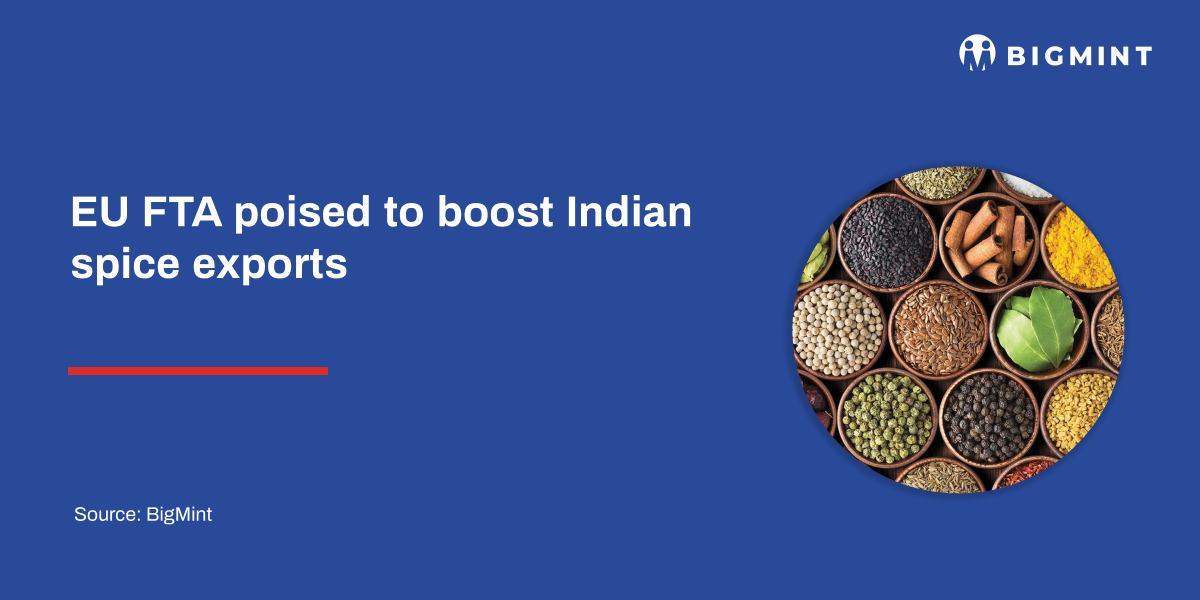
India and the European Union (EU) concluded the long-pending India-EU Free Trade Agreement (FTA) on 27 January 2026, hailed as a major enhancement in bilateral trade ties. Under the deal, Indian exports, including of spices such as cumin, chilli, turmeric, ginger, coriander, pepper, and cardamom, stand to gain zero-duty entry into the EU market, eliminating tariffs that were previously up to 8% on several spice products.
The Federation of Indian Spice Stakeholders (FISS) says this will improve Indian spices’ price competitiveness in one of the world’s most quality-conscious markets. In 2024-25, India exported 17.99 lakh tonnes of spices worth USD 4.72 billion globally, up from 15.40 lakh tonnes valued at USD 4.46 billion the year before. The EU typically accounts for around 20-25% of India’s spice export value.
Gujarat’s cumin traders, especially around the Unjha trading hub, are expected to benefit significantly from this expanded access. Around 11,000 tonnes of cumin are exported to the EU every year.
Why it matters
The EU is among India’s largest spice markets, driving demand in food processing, retail, and ethnic segments. Duty elimination under the FTA will narrow the competitiveness gap with other major producers such as Turkiye, Syria, China, and Egypt and enhance export price realisation. Exporters note that the FTA also envisages closer regulatory cooperation between Indian authorities and EU regulators — a crucial aspect given the EU’s stringent food-safety and quality standards that can trigger border rejections if non-compliance occurs. These non-tariff barriers remain a central concern; without adequate compliance and infrastructure for traceability, the tariff gains alone may not fully translate into higher shipments.
Outlook
With tariff barriers removed, Indian spice exporters can potentially expand their EU market share, particularly for high-demand spices such as cumin, turmeric, pepper, and value-added products. Improved access could also support farm incomes, trade volumes, and arrivals in key producing states such as Gujarat. Success will hinge on exporters’ ability to meet EU regulatory norms and on enhanced government-to-government coordination to reduce non-tariff frictions. Investments in quality assurance, certification, and branding for European markets may further solidify long-term growth prospects for India’s spice sector.
Leave a Reply