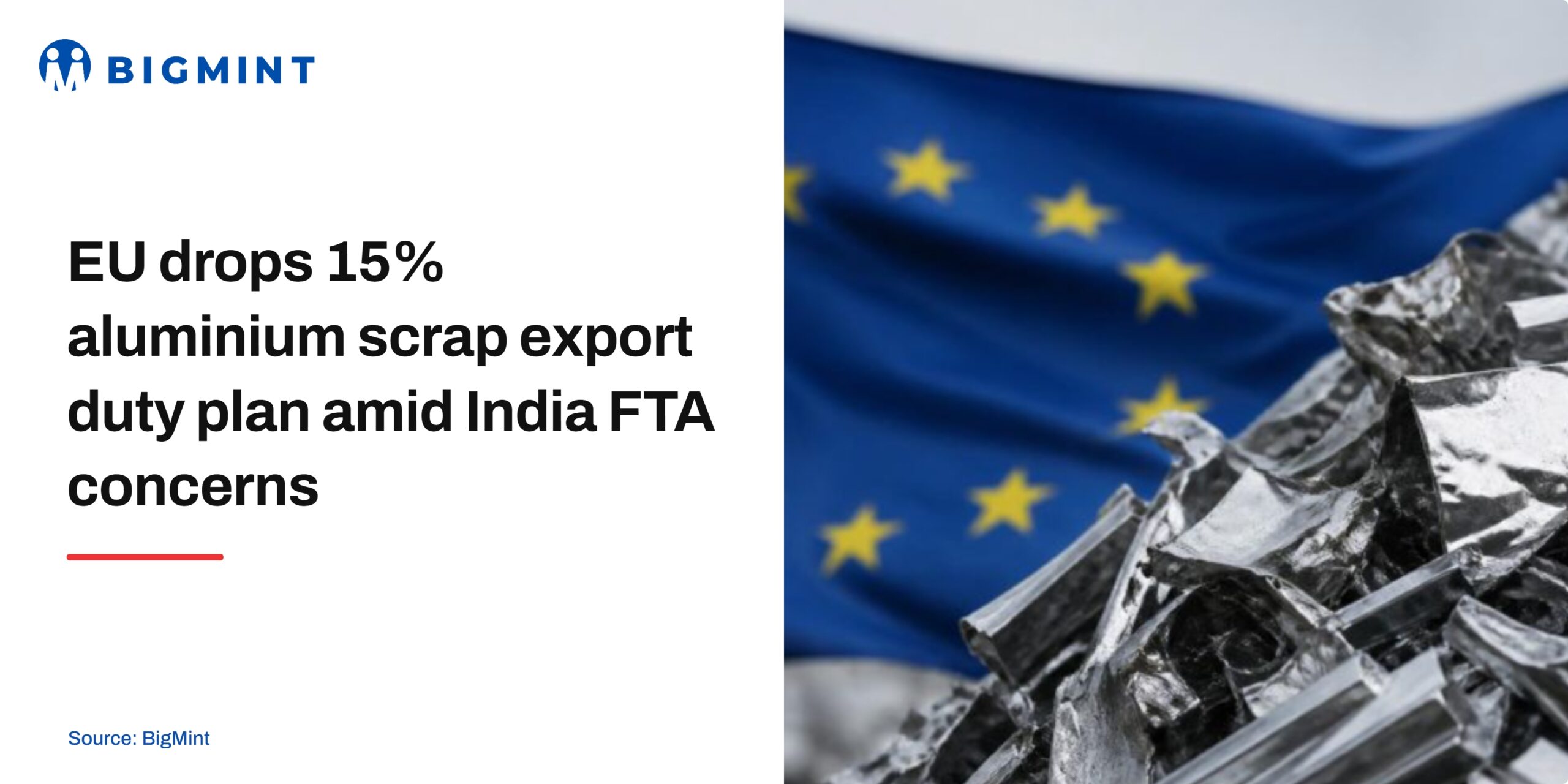
- EU drops 15% aluminium scrap export duty plan
- India FTA concerns key influence behind EU’s decision
The European Union has abandoned plans to impose a 15% export duty on aluminium scrap, with concerns over its potential impact on the bloc’s proposed free trade agreement with India emerging as a key factor, according to sources familiar with the discussions.
The proposed levy, which was expected to be announced on 23 September, was initially drafted as a three-year measure aimed at supporting Europe’s aluminium smelting industry and advancing sustainability objectives. The aluminium industry had sought a higher 30% duty. However, the draft proposal included exemptions for 91 countries and territories, including India, the largest buyer of EU aluminium scrap.
India accounts for around one-third of the EU’s aluminium scrap exports, making the bloc an important source of raw material for the country’s recycling and secondary aluminium industry. The proposed export restrictions had already raised concerns in India, with government officials reportedly seeking relief from Brussels as negotiations on the trade agreement progressed.
The European Commission has now decided to rely on environmental provisions under the EU’s Waste Shipment Regulation instead of a direct export duty. The regulation is expected to be finalised in November and will ban exports of non-hazardous waste to non-OECD countries from May 2027, although exemptions can be granted subject to environmental requirements.
This could still have implications for India. According to the Commission’s draft, India, Thailand and Malaysia did not meet the environmental requirements for an exemption on metal waste and would therefore be unable to directly purchase aluminium scrap from the EU under the proposed framework.
The move comes as EU aluminium producers face pressure from high energy costs, regulatory burdens and rising scrap prices. EU aluminium scrap exports have increased 51% since 2019, reaching a record 1.26 million tonnes in 2025.
For India, the withdrawal of the proposed duty provides near-term relief for scrap procurement. However, the EU’s shift towards environmental restrictions means uncertainty around future access to European scrap remains. With India heavily dependent on imported aluminium scrap, any tightening of EU export rules could affect global scrap flows, sourcing patterns and replacement costs for Indian secondary aluminium producers.
Leave a Reply