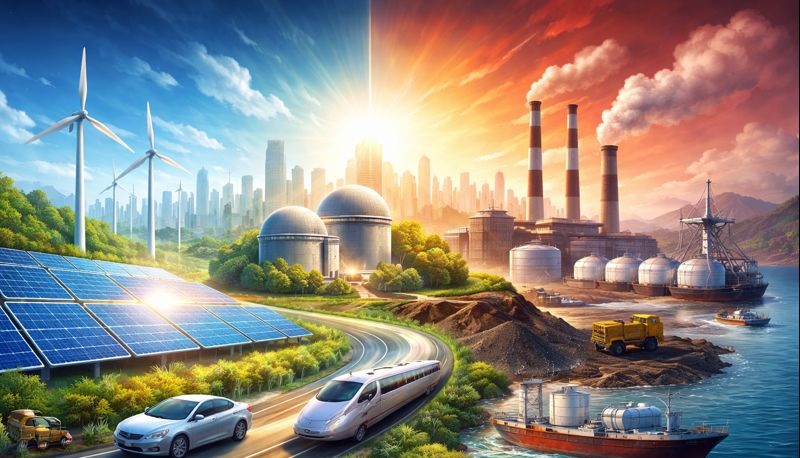
- A dual-track energy strategy integrating clean energy growth with fossil fuel reliance
- Execution risks are rising amid higher costs, stricter regulation, and social opposition
What happened: A complex energy landscape in early 2026
India’s energy sector is characterised by ambitious policy moves, volatile markets, and deepening structural challenges. Key developments include:
Policy & strategy: The landmark SHANTI Bill was passed to revolutionise nuclear power, while the PM Surya Ghar solar scheme was relaunched with a new utility-led model to meet its ambitious target. Simultaneously, Coal India is pursuing major structural reforms by listing its subsidiaries and opening e-auctions to foreign buyers.
Market volatility: A sharp rise in raw material costs (silver, copper, aluminium) is squeezing manufacturers in the solar sector. Meanwhile, coal imports spiked 28% in November 2025, and LNG imports rose to compensate for a decline in domestic gas production.
Regulatory & trade pressure: Authorities announced a crackdown on appliance makers for falsifying efficiency data. Furthermore, the EU’s Carbon Border Tax (CBAM) came into force, threatening key exports like steel and aluminium.
Social unrest: A violent protest erupted in Chhattisgarh against a coal mining project, highlighting deep social tensions over land and displacement.
Economic context: Despite strong headline growth, analysts warn of a “Goldilocks and Gridlock” economy with shrinking fiscal space, even as sectors like autos and transport fuels show robust consumption.
Why it happened: Interconnected drivers
These events are not isolated but stem from India’s core energy and economic imperatives.
Primary driver and its manifestation
- Pursuit of energy security & transition: The SHANTI Bill and solar push aim for clean energy independence. Listing Coal India’s subsidiaries and expanding coal exports aim to modernise and monetise the domestic fossil fuel base to reduce import reliance.
- Global commodity market swings: The solar cost crisis is a direct result of global surges in metal prices. The spike in coal imports was due to temporary factors like low seaborne prices and winter restocking by steel mills. High global LNG prices sustained import costs despite falling domestic output.
- Regulatory harmonisation & compliance Crackdowns on white goods and the EU’s CBAM reflect a global push for standardised efficiency and environmental accountability, forcing Indian manufacturers to adapt.
- Infrastructure-led growth strategy: High government capital expenditure (capex), strong demand for transport fuels, and a private capex revival in sectors like defence are all fuelled by a national focus on building physical infrastructure, which increases energy demand.
- Social & environmental externalities: The Chhattisgarh clash is a symptom of the social cost of rapid resource extraction, where local community rights and environmental concerns conflict with national energy projects.
What is the outlook: Near-term challenges, long-term shifts
The outlook points to continued near-term pressures but a strategic long-term reorientation of India’s energy system.
Near-term (Next 6-18 months):
- Continued pressure: The solar industry will face margin compression and potential consumer price hikes. Coal and LNG imports are expected to remain high to bridge domestic supply gaps, though coal imports may dip as domestic production ramps up.
- Regulatory Scrutiny: Stricter enforcement on appliance efficiency and complex compliance with the EU’s CBAM will be immediate challenges for manufacturers.
- Fiscal Constraints: The government’s high infrastructure spending will test its shrinking fiscal space, potentially affecting the pace of new capital outlays.
Long-term (2-5 years and beyond):
- Structural shift: The SHANTI Bill is expected to unlock private investment in nuclear power, aiming for a capacity scale-up from ~9 GW to 100 GW by 2047.
- Demand recovery: Power and gas demand are forecast to rebound strongly in FY27 (5-6% and 3-4%, respectively), driven by industrial recovery, urbanisation, and electric vehicle adoption.
- Market evolution: Reforms like power market coupling (to unify prices) and lower transaction fees aim to create a more efficient, transparent, and affordable electricity market.
- Strategic balancing act: The core challenge will be managing the dual-track strategy: accelerating the clean energy transition (nuclear, solar, biofuels) while ensuring the affordability and security of traditional energy (coal, gas) to support economic growth, all while navigating social equity and global trade pressures.
In summary, India’s energy sector is navigating a critical transition, actively building its future clean energy infrastructure while managing the immediate realities of a fossil-fuel-dependent, cost-sensitive, and growing economy. The path forward hinges on effective implementation, technological adaptation, and careful balancing of competing priorities.
Leave a Reply