- Global steel demand to recover from late 2020s
- Developing countries to offset lower Chinese apetite
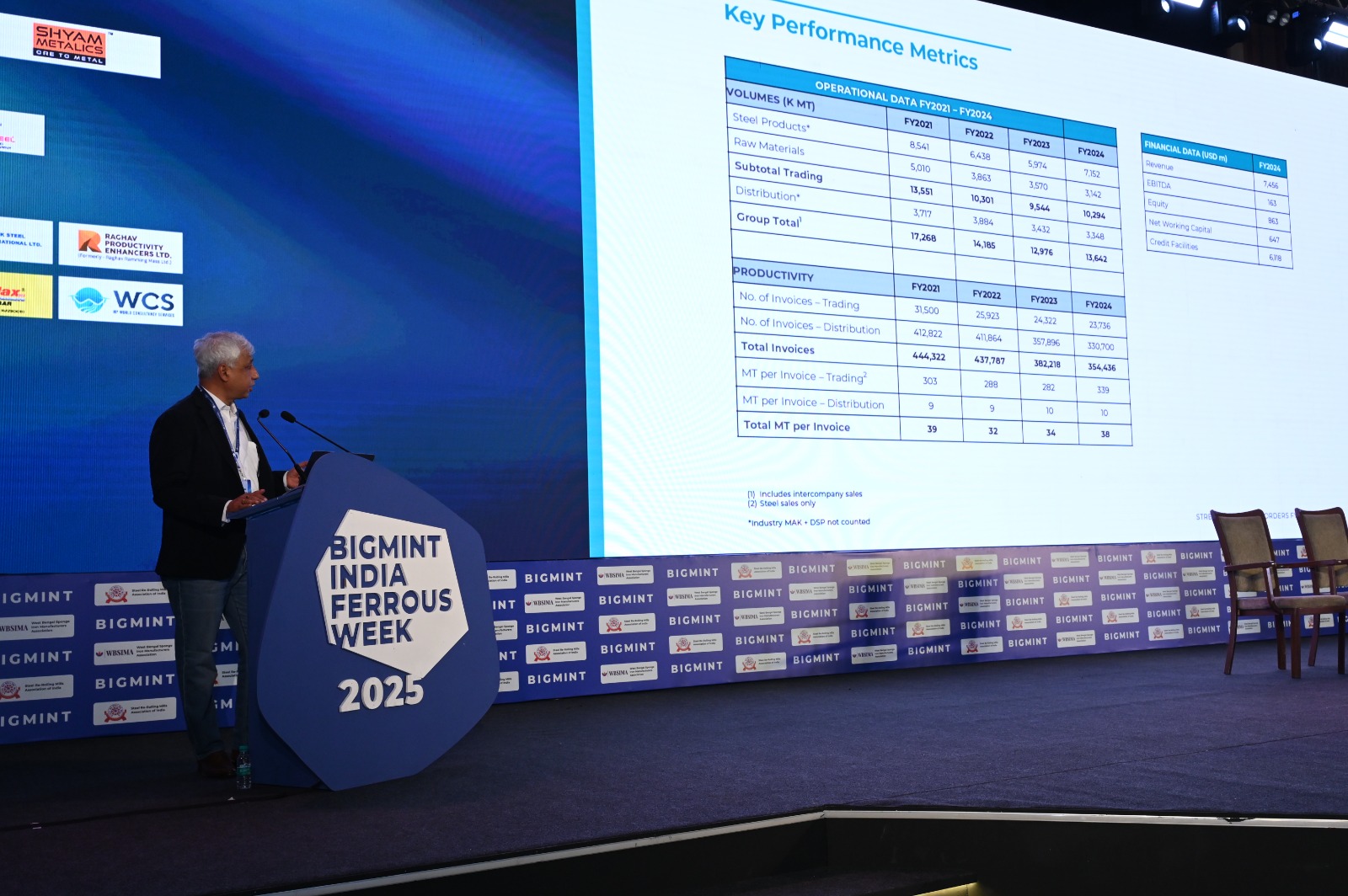
At the BigMint India Ferrous Week 2025, industry leaders gathered to discuss the shifting dynamics of global steel demand. One of the most compelling presentations came from Subhendu Bose, Managing Director, Duferco, who highlighted how regional economies and long-term trends are reshaping the steel industry. His insights offered both cautious realism and measured optimism, pointing to a future where India and other developing nations are set to play a pivotal role in sustaining global demand.
Global outlook – A pause before growth resumes
According to Bose, global steel demand has been in a phase of moderation due to China’s slowing consumption and rising global protectionism. However, the long-term outlook remains positive. Growth is expected to resume between late 2020s and early 2030s, with developing economies offsetting the decline in China’s steel appetite. This transition marks a critical inflection point for producers, traders, and policymakers worldwide.
Regional perspectives
European Union (EU)
The continent continues to face structural challenges, with weak growth prospects in the near term. Rising energy costs, an ageing population, and mounting protectionism are weighing on demand. Nevertheless, infrastructure, military, and energy production are expected to remain the main steel-consuming sectors, offering selective opportunities for growth.
CIS, Ukraine
The region remains heavily influenced by geopolitical tensions and sanctions. Russia’s economy faces prolonged constraints, while Ukraine’s reconstruction is expected to be a key driver of steel demand growth, but only after 2027, when the conflict may begin to settle. This delayed recovery highlights how geopolitics continues to shape commodity cycles.
Middle East
The Middle East stands out as a bright spot, driven by favorable demographics, vast fiscal resources, and large-scale infrastructure ambitions – particularly in countries such as Saudi Arabia and the UAE. Steel consumption in this region is expected to benefit from mega projects and energy-driven growth, positioning it as one of the fastest-growing steel markets.
India
India emerged as the region with the most positive outlook in Bose’s analysis. With a stable government, strong demographic dividend, and major infrastructure push, the country is expected to account for a significant portion of global steel demand growth over the next 15 years. India’s rising share in global consumption underscores its role as the new engine of steel demand, compensating for the slowdown in China.
China
The world’s largest steel consumer faces a structural slowdown. Over the next 10-15 years, demand is likely to decline further due to limited fiscal flexibility, unfavorable demographics, and growing global protectionism. China’s era of double-digit steel demand growth is firmly in the past, and the challenge now lies in managing a soft landing amidst a long-term downtrend.
Conclusion
Bose’s message was clear: the steel world is entering a new era. While China retreats from its dominant position, developing economies – led by India – are set to define the next phase of growth. For industry stakeholders, the focus should shift to regions with demographic and infrastructural momentum, preparing for a landscape where global demand growth resumes, albeit at a steadier and more balanced pace.
As the discussion at BigMint India Ferrous Week highlighted, steel is not just an industrial commodity – it is a mirror of global economic transitions. And in that reflection, India’s rise shines brighter than ever.
Leave a Reply