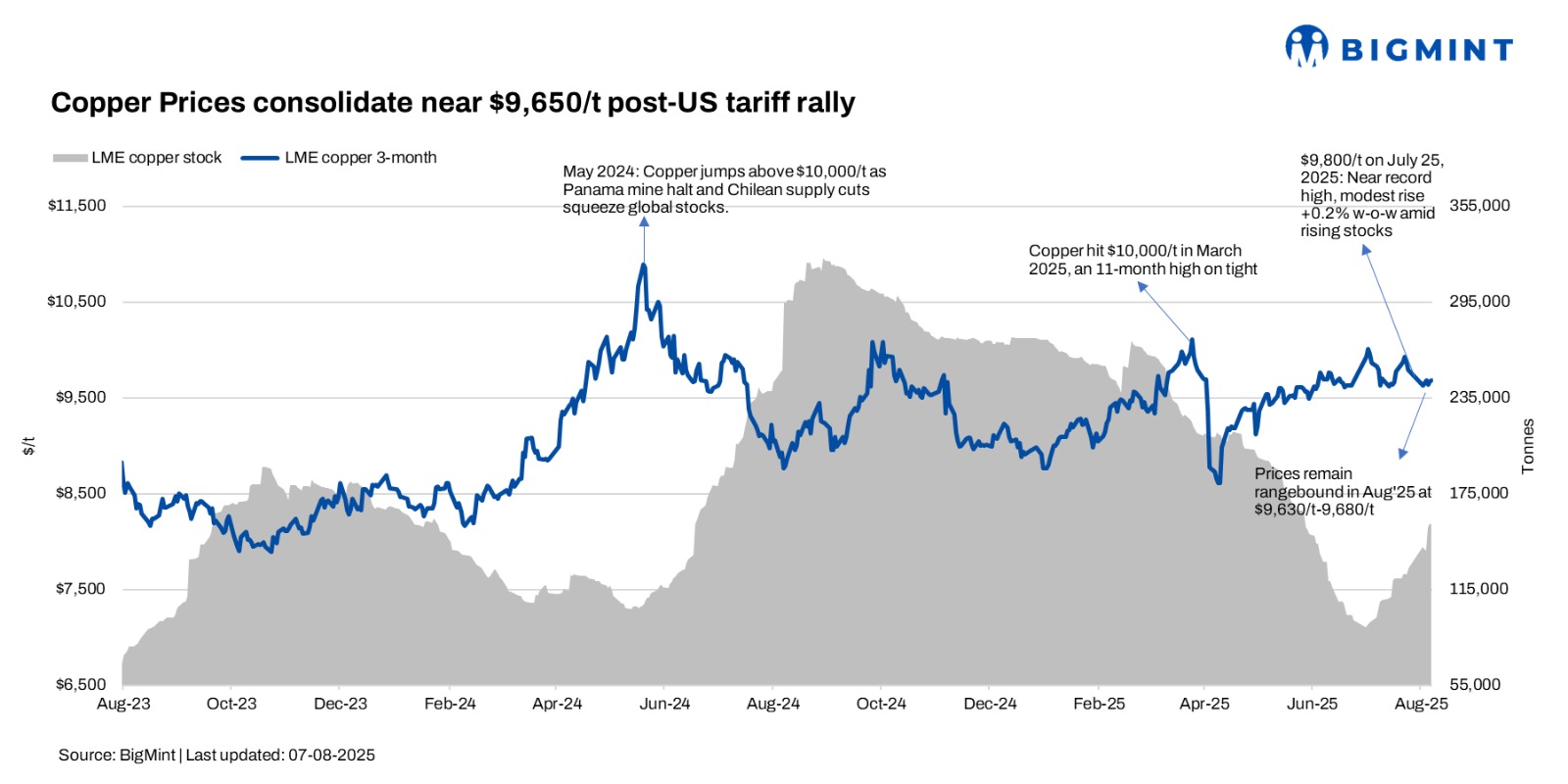
Copper prices on the London Metal Exchange (LME) edged slightly higher week-on-week, with the 3-month contract closing at $9,710/t on August 8, 2025, up from $9,700/t on August 1, 2025.
New U.S. Tariffs on Copper Imports: Starting August 1, 2025, the United States implemented a 50% tariff on copper imports. This has redirected supply towards U.S. buyers, tightening physical supplies in other international markets, thereby nudging LME prices higher. According to Market insights, the tariff move is aimed at boosting domestic refining capacity while reducing dependency on imports from politically sensitive regions.
Copper inventories on the LME increased from 141,750 tonnes to 156,000 tonnes week-on-week as of August 8, 2025, reflecting a significant inflow of material. This contrasts with the recent trend of tightness and low stocks seen earlier in the year. The recent surge in LME copper inventories likely represents the arrival of shipments that were scheduled weeks earlier, when arbitrage opportunities made it attractive to send copper to LME warehouses, particularly from Asia and Latin America.
Global Market Developments: Chile, the world’s largest copper producer, reported a 2.8% year-on-year increase in July output due to higher ore grades at major mines. Meanwhile, labor negotiations at Peru’s Las Bambas mine are showing signs of strain, raising the risk of supply disruptions. In China, July copper imports rose 6% month-on-month as manufacturers ramped up production ahead of peak seasonal demand. The European Union is also evaluating strategic reserves for copper and other critical minerals to mitigate geopolitical supply risks.
Outlook: Market analysts expect short-term copper prices to remain supported by the U.S. tariff policy and potential supply risks from South America. However, rising inventories and signs of slowing demand growth in Europe could cap further gains. In the medium term, sustained demand from renewable energy and electric vehicle sectors, coupled with limited new mine capacity, is likely to underpin prices.
Leave a Reply