- Even if Shanxi resumes full production, output losses will remain
- Decline in hot metal output may stall amid improving export orders
During the weekend, Shanxi held a meeting of city mayors alongside a review meeting on the province’s economic performance for the first half of the year. In the meeting, authorities proposed adopting a “one mine, one policy” approach to accelerate rectification, inspections, and the resumption of production at temporarily suspended coal mines. They also emphasised the orderly implementation of approved coal capacity additions and the maintenance of stable coal production.
The signals released at the meeting once again reignited market expectations for mine restarts. Production data also supported this view, with coal output rising for two consecutive weeks. This was the most direct driver behind this week’s decline in coking coal futures.
Pullback in futures
On the demand side, the outlook for coking coal has remained weak. A second round of coke price cuts is expected to be implemented. At the same time, recent hot metal production has been falling at a relatively rapid pace. Based on the latest maintenance schedules, the upcoming trough in hot metal output could fall below 2.35 mnt/day, which continues to place a clear cap on the upside for coking coal prices.
Over the past month, coking coal has largely traded within the RMB 1,230-1,300/t range. The lower end of the range has been supported by supply tightness, while the upper bound has been constrained by weak demand. In the near term, with demand yet to improve and expectations for mine restarts strengthening, the recent pullback in futures prices remains within a reasonable range. After reducing long positions earlier, investors could consider rebuilding long exposure in the range of RMB 1,220-1,240/t.
Tight supply to persist
In the short term (two-three months), analysts maintain a constructive view on coking coal prices. The core rationale is that even if Shanxi fully resumes production, some output losses will remain. Under the new safety oversight requirements, it will be difficult for underground operating intensity to return to pre-accident levels in the short term.
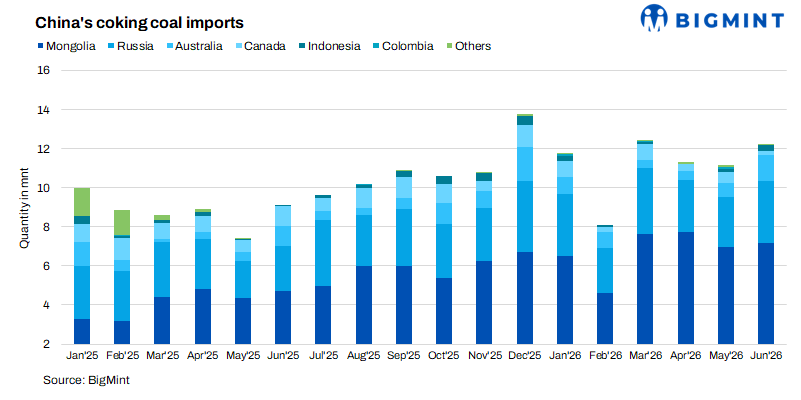
For imports, Mongolia customs clearance volumes at the border have yet to recover to pre-Naadam festival levels, while inventories at Ganqimaodu continue to draw down.
Meanwhile, the recent wave of seaborne coking coal arrivals has largely been absorbed. Arrivals are expected to decline noticeably in August. Therefore, from a short- to medium-term perspective, the underlying trend of tight supply is unlikely to change.
From destocking to restocking
The primary factors restricting coking coal price upside are retreating hot metal output. Based on the maintenance schedule, production will gradually recover after Tangshan’s production restrictions end and scheduled maintenance is completed in August.
At the same time, there has been marginal demand improvement in the form of a rebound in steel export orders. Hence, at the moment, there is no expectation of further decline in hot metal output. If steel mills begin to see better operating conditions, downstream users may gradually shift from destocking to restocking.
Moving forward, as Shanxi mines resume production, the key issue will be the pace and extent of output recovery. If production continues to show meaningful losses despite the resumption, the market is likely to reprice the longer-term supply shortfall, providing continued support to coking coal prices. At the same time, as demand gradually recovers, the overall coking coal market is expected to remain on a destocking trajectory.
This article is published as part of a content sharing agreement between Horizon Insights and BigMint
Leave a Reply