- Weak retail activity signals fragile consumer confidence
- Fixed asset investment falls unexpectedly in 2026
Metal Intelligence Centre: China’s economic momentum weakened further in April 2026, with newly released data highlighting broad-based softness across industrial activity, consumer spending, and investment. While exports had earlier helped cushion the slowdown, they are now proving insufficient to counter growing domestic pressures. External disruptions, including spillover impacts from the Iran war, have added another layer of strain on the world’s second-largest economy.
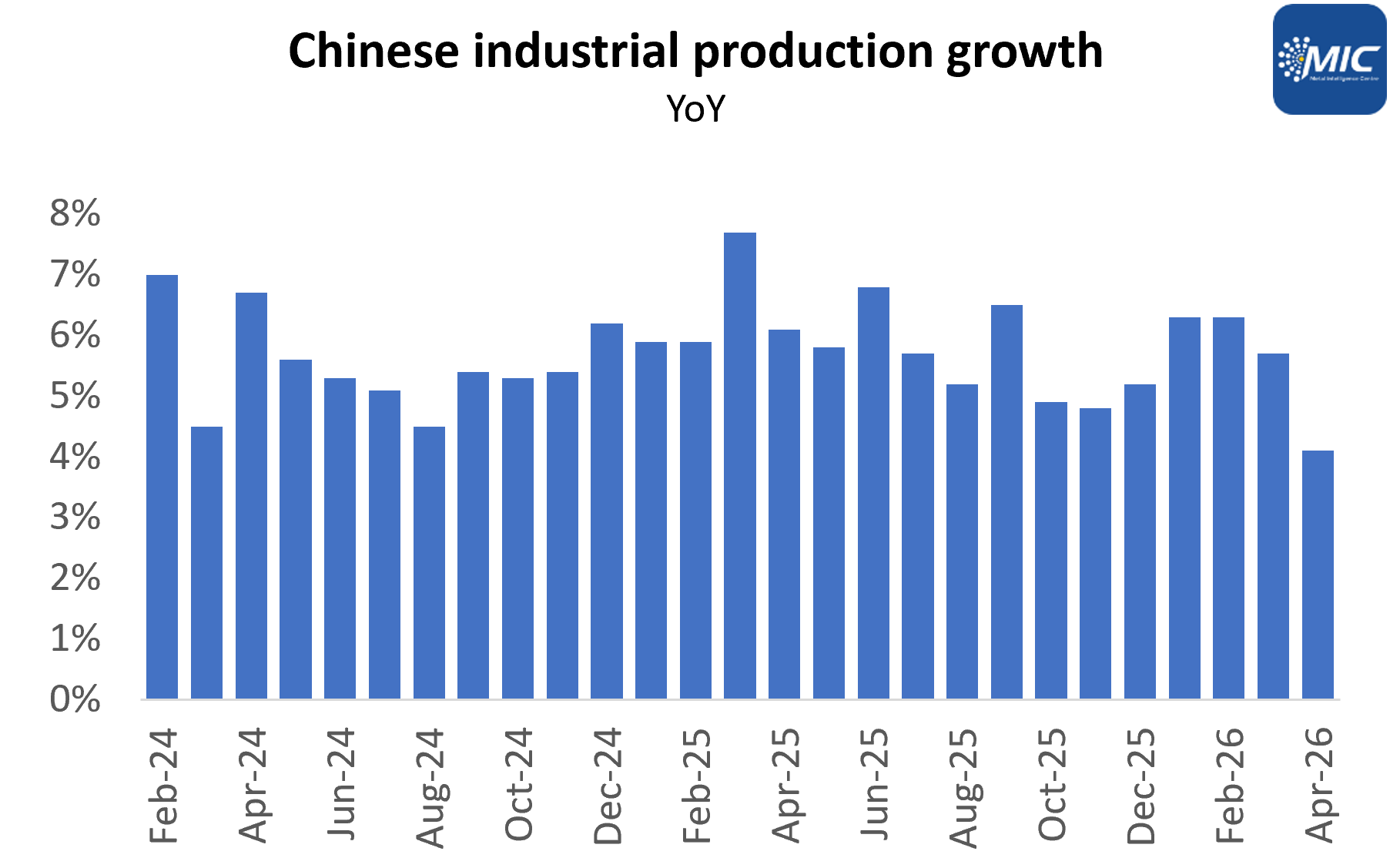
Data released by the National Bureau of Statistics of China showed that industrial production expanded by 4.1% y-o-y in April, missing market expectations and recording the slowest growth pace in nearly three years. The sharp moderation from March’s 5.7% growth signals weakening factory momentum and points to softer demand conditions both domestically and internationally.

Consumer demand also remained under pressure. Retail sales increased by just 0.2% y-o-y in April, significantly below market forecasts of 2% growth and sharply lower than the 1.7% rise recorded in March. According to Wind data, this marked the weakest retail sales performance since December 2022, when the country was still emerging from Covid-related restrictions. The slowdown reflects continued caution among Chinese households amid concerns over income security, employment prospects, and declining property values.
Investment activity showed further signs of deterioration. Fixed-asset investment declined by 1.6% during the first four months of 2026, surprising markets after registering 1.7% growth in the first quarter. The reversal suggests that recent policy stimulus measures and credit easing efforts have yet to generate sustained investment momentum or revive business confidence.

The property sector, a critical pillar of China’s economy, continues to remain under severe stress. The national house price index fell 3.5% year-on-year in March, marking the 34th consecutive month of decline. The prolonged housing downturn is continuing to erode household wealth, pressure local government revenues, and weaken broader market confidence, reinforcing negative economic sentiment across sectors.

Overall, April’s economic data presents a concerning picture of an economy struggling to regain stability. With domestic demand remaining fragile, investment activity weakening, and external risks intensifying, pressure is mounting on Chinese policymakers to introduce stronger and more targeted stimulus measures to support growth in the coming months.
Note: This article has been published as part of a content partnership between MIC and BigMint.
Leave a Reply