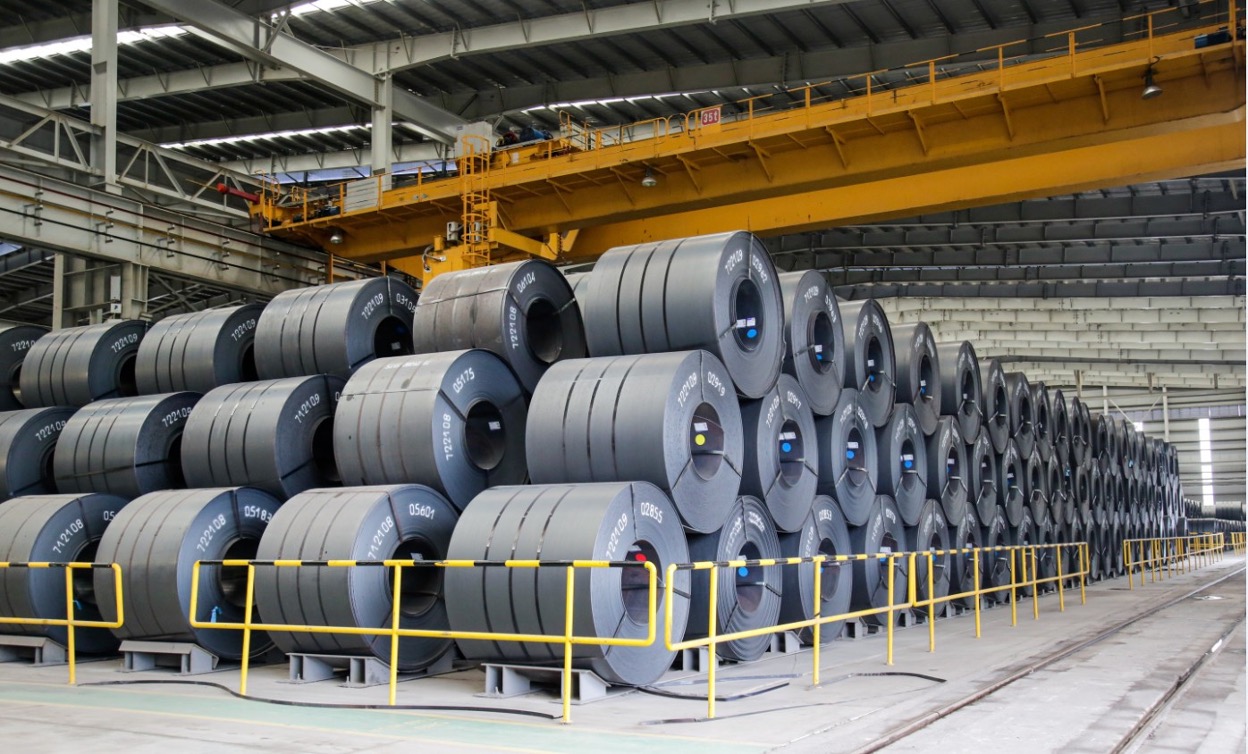
- China shifts to quality-focused steel exports
- New licensing may pressure low-end steel shipments
Mysteel Global: China’s decision to place a wide range of steel products under export license management from January 1 2026, marks a significant adjustment to its steel export policy framework and global steel trade flow, according to Mysteel’s latest analysis.
The announcement, made by the Ministry of Commerce and the General Administration of Customs on December 12, as Mysteel Global reported, comes 16 years after China abolished export licensing for steel and reflects growing concerns over both Chinese steel export structure and external trade pressures, rather than overall export volumes alone.
China’s steel exports have remained strong throughout 2025. From January to November, the country’s total steel exports reached 107.7 million tonnes, up 6.7% on year, as reported. And this year’s total export volume is expected to approach 115 million tonnes, exceeding the previous historical peak in 2015, according to Mysteel’s latest estimate.
However, much of this growth has been driven by low value-added steel products and market substitution. Long steel products accounted for more than half of incremental export volumes, while flat product exports became a drag.
Meanwhile, China’s steel export growth has also shifted toward Africa and Latin America, which together contributed nearly 70% of additional export volumes. While this sustained overall export volumes, it has also pressured Chinese steel export prices and increased global trade friction including anti-dumping actions against Chinese steel products.
Within this context, the reintroduction of steel export licensing is primarily a tool for structural adjustment rather than a blunt volume restriction. The 300 steel products subject to export licensing cover a broad range including pig iron, carbon and alloy steels, stainless steels, semi-finished and finished long and flat products, specialty steels, and ferrous scrap and recycled steel materials.
The selection reflects a targeted approach: both low-end and certain higher-end products are included, while some other categories remain unrestricted. This suggests that Chinese policymakers aim to guide steel export behavior and product mix, not to impose an across-the-board cap on shipments
In the short term, the policy is likely to trigger tactical adjustments — some Chinese steel exporters may divert volumes to the domestic market or accelerate inventory clearance ahead of implementation to mitigate compliance costs.
Large steel enterprises with diverse product portfolios are likely to prioritize higher value-added exports, while mini-mills in major steelmaking provinces may face increased pressure due to homogeneous, low-margin products.
Over the medium to long term, Mysteel expects the license system to generate lasting structural effects on China’s steel exports. Shipments of low value-added steel products such as billets and common carbon steel products such as hot-rolled coils are likely to lose competitiveness as licensing raises transaction costs.
This will push Chinese steelmakers to increase investment in higher-end flat products and improve quality management, as export licensing requires formal quality inspection documentation. As a result, the share of high-end flat products in China’s total steel exports is projected to rise steadily, potentially reaching around 45% by 2030.
Moreover, China’s steel export destinations are also expected to shift. Chinese steel exports to traditional destinations in Southeast Asia and the EU may come under pressure due to the combined impact of licensing and trade barriers, while Chinese steel producers and exporters are likely to accelerate expansion into Africa, Latin America and other emerging markets.
Overall, the reintroduction of export licensing signals a shift in China’s steel export strategy — from volume-driven growth toward a more quality-oriented, sustainable and structurally balanced model, Mysteel understands.
Note: This article has been written in accordance with a content exchange agreement between Mysteel Global and BigMint.
Leave a Reply