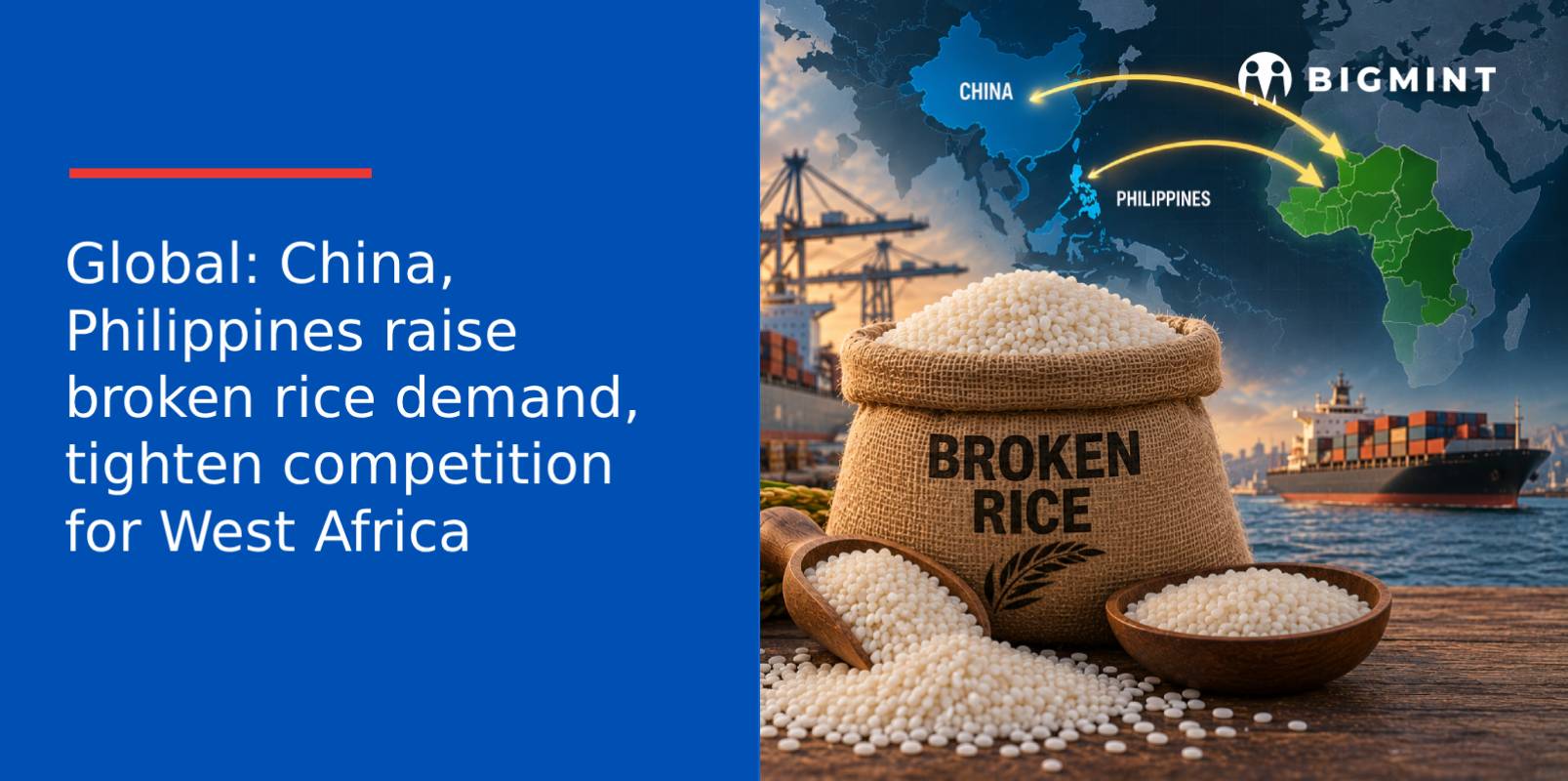
- China imported 1.4 million tonnes of broken rice during Jan-Jul 2026
- Senegal’s broken rice imports declined 35% in H1 2026
The global broken rice trade is facing increased competition as Asian demand strengthens, potentially tightening supplies available to West African markets. China, Philippines and India are driving key changes in demand and supply dynamics.
China Imports Rise as Feed Demand Supports Broken Rice
China imported 1.4 million tonnes of broken rice in the first seven months of 2026. The volume represented nearly one-third of its expected purchases for the full year. Demand is largely supported by the animal-feed sector, where broken rice is used as a substitute for corn when price economics are favorable. China’s imports remain below the record 3.5 million tonnes in 2022. India could also see lower export availability after raising the administered price of broken rice sold to domestic distilleries for ethanol production on July 16. The move could make domestic sales more attractive than exports for some suppliers.
Philippines Shifts demand toward higher broken grades
Philippines changed its rice import policy on July 2, suspending sanitary and phytosanitary permits for white rice containing 5% broken grains. Importers are now required to prioritize rice containing 25% broken grains or more. Philippines is projected to import a record 5.6 million tonnes of rice in the 2026/27 marketing year, potentially increasing competition for broken rice grades. Vietnam, Myanmar, Thailand and Pakistan could adjust shipment compositions to meet this demand.
West African Markets Face Tighter Availability
Broken rice is an important staple in Senegal, Mali, Guinea-Bissau and Gambia. In Senegal, broken rice accounts for more than 65% of rice purchases from India, while 25–30% broken rice represents around 70% of consumption in Mali. Senegal’s broken rice imports fell 35% in H1 2026 from a year earlier, highlighting weaker availability. Thai 5% broken white rice was assessed at $475/t FOB on September 3, its highest level in two months. Stronger Asian demand could narrow the traditional discount for 25%, 30% and 100% broken rice compared with 5% broken rice.
Outlook
Stronger demand from China and the Philippines could keep competition for broken rice elevated, particularly for 25–30% broken grades. At the same time, higher domestic returns for broken rice in India could limit export availability. With West African markets remaining dependent on broken rice imports, tighter supplies could support prices and narrow the discount between heavily broken grades and 5% broken rice in the coming months.
Leave a Reply