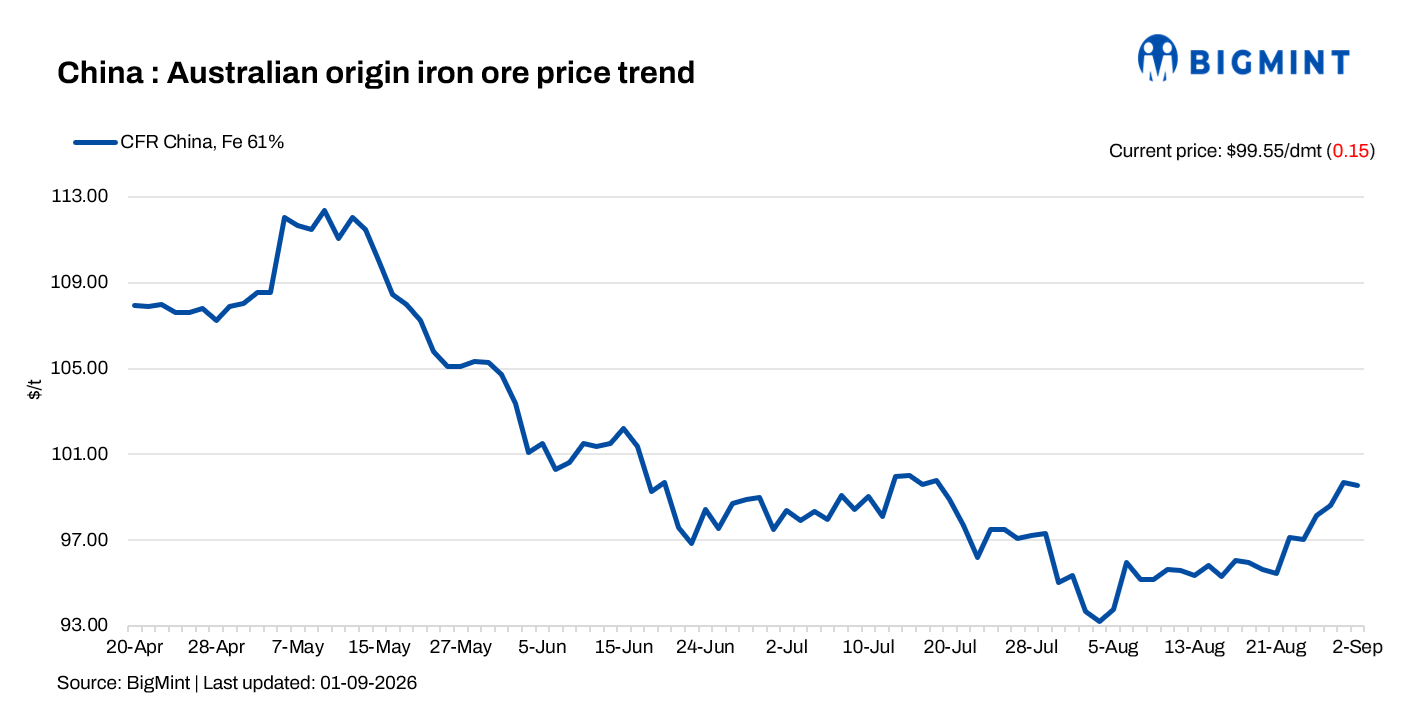
- Import margins narrow, leading to competitive portside prices
- Higher coke costs reduce buying appetite for high-silica iron ore fines
Iron ore fines (Fe 61%) spot prices edged down by $0.15/dmt d-o-d to $99.55/dmt CFR China on 1 September 2026, easing after hitting a one-month high on 31 August. The pullback reflected limited buying interest as narrow landing margins at Chinese ports reduced buyers’ willingness to pay higher seaborne prices.
The medium-grade fines market saw a relatively sharp price increase in recent sessions, which prompted some buyers to turn cautious at current levels. Demand for higher-silica products also softened as coke prices rose following a third-round hike, with the possibility of a fourth increase this week. Higher coke costs have reduced mills’ tolerance for high-silica ores, as these typically require higher coke consumption during steelmaking.
Portside trading activity in China improved significantly and more than offset the decline in seaborne transactions. Stronger buying concentration at ports provided support to spot prices, particularly for medium-grade fines. However, softer seaborne activity and increasingly stretched import economics limited further upside.
Cost-side sentiment also weakened as expectations of improved coal availability weighed on coking coal prices. This reduced some of the cost-driven support for iron ore, while mills remained cautious about absorbing further increases in raw material costs amid uncertain steel margins.
Market participants increasingly viewed current iron ore prices as approaching a near-term ceiling. While firm portside demand could keep prices supported, further gains may be difficult unless import margins improve or steel demand and mill margins strengthen.
DCE iron ore futures soften amid cautious sentiment
January 2027 iron ore futures on the Dalian Commodity Exchange (DCE) declined by RMB 3.5/t d-o-d to RMB 722.5/t ($108/t) on 2 September. The decline reflected cautious buying sentiment despite firmer physical market conditions, as participants remained watchful of steel demand and margin sustainability.
Leave a Reply