- Higher raw material costs, resilient manufacturing lift HRC through Aug and early Sep
- Construction slowdown, weather disruptions, weak housing demand continue to pressure rebar
- September demand recovery will determine divergence between flat and long product prices
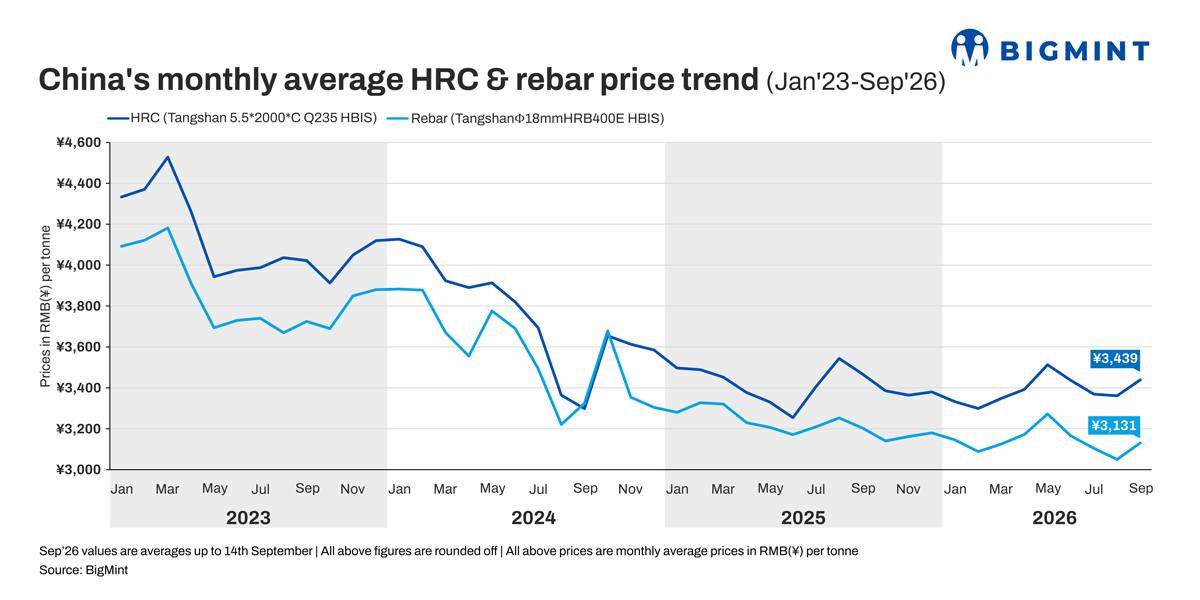
Morning Brief: China’s HRC and rebar prices diverged through August as resilient manufacturing demand, higher raw material costs and tighter supply supported flat steel, while weak construction activity continued to weigh on long products. Average HRC prices edged down marginally to around 3,361 yuan/t in August from 3,369 yuan/t in July before rebounding in early September, whereas average rebar prices fell to about 3,051 yuan/t from 3,104 yuan/t over the same period.
The divergence reflects the increasingly different demand drivers shaping China’s flat and long steel markets, as manufacturing continues to support flat steel demand, while construction continues to determine the outlook for long products.
Manufacturing continues supporting flat steel demand
Rising coking coal and coke prices following safety inspections and delayed mine restarts increased steelmaking costs through August, allowing mills to maintain firmer HRC offers despite only moderate downstream demand. Production was also constrained as several mills advanced maintenance schedules, limiting additional supply.
Manufacturing PMI recovered to 49.8% during August as production and new orders returned to expansion territory. Equipment manufacturing, shipbuilding, rail transit and new energy equipment continued outperforming construction-linked industries, supporting demand for sheet and plate products. Manufacturing has become the principal source of demand for flat steel products even as new real estate starts remain weak.
Distributors and downstream manufacturers also increased restocking ahead of the Mid-Autumn Festival and National Day holidays as the traditional “Golden September, Silver October” season approached.
Policy expectations have improved market sentiment more rapidly than actual steel demand, with the pace of project execution continuing to determine physical transactions.
Higher production costs and disciplined supply supported HRC prices through the month, while manufacturing demand reduced the downside risk from continued weakness in construction.
Construction continues to cap rebar prices
High temperatures, heavy rainfall and typhoons disrupted construction activity through August, reducing procurement by contractors and slowing steel deliveries across several regions. Weak residential construction continued to offset support from infrastructure projects, limiting demand for reinforcing bar and other long steel products.
Losses on rebar production, estimated at around RMB 200/t during July, prompted several mills to advance blast furnace maintenance and reduce output. China reported lower blast furnace utilisation during August as long-process producers curtailed production, although the supply response remained insufficient to offset weak end-user demand.
Higher coking coal and coke prices prevented a sharper decline in spot rebar prices by raising production costs, while futures markets strengthened on lower inventories and expectations of seasonal demand recovery. Physical transactions remained subdued, indicating that higher input costs alone were insufficient to restore pricing power.
Infrastructure investment continued providing the principal source of demand for construction steel, but weak new housing starts remained the dominant influence on long steel consumption, limiting the impact of supply cuts and higher production costs.
Outlook
Manufacturing activity, particularly across machinery, shipbuilding, automobiles and new energy equipment, is expected to continue supporting HRC demand through September provided raw material costs remain elevated. Rebar is likely to remain more closely linked to construction activity, where the pace of infrastructure execution and any improvement in residential building will determine whether seasonal demand recovery materialises.
We expect steel supply to remain relatively disciplined despite the potential for idled capacity to resume if margins improve, noting that September demand will determine whether mills continue production restraint or gradually increase output.
The market is therefore likely to remain divided between manufacturing-led demand for flat steel products and construction-led demand for long steel products. Continued strength in manufacturing without a corresponding recovery in construction would keep HRC better supported than rebar through the remainder of the traditional peak demand season.
Leave a Reply