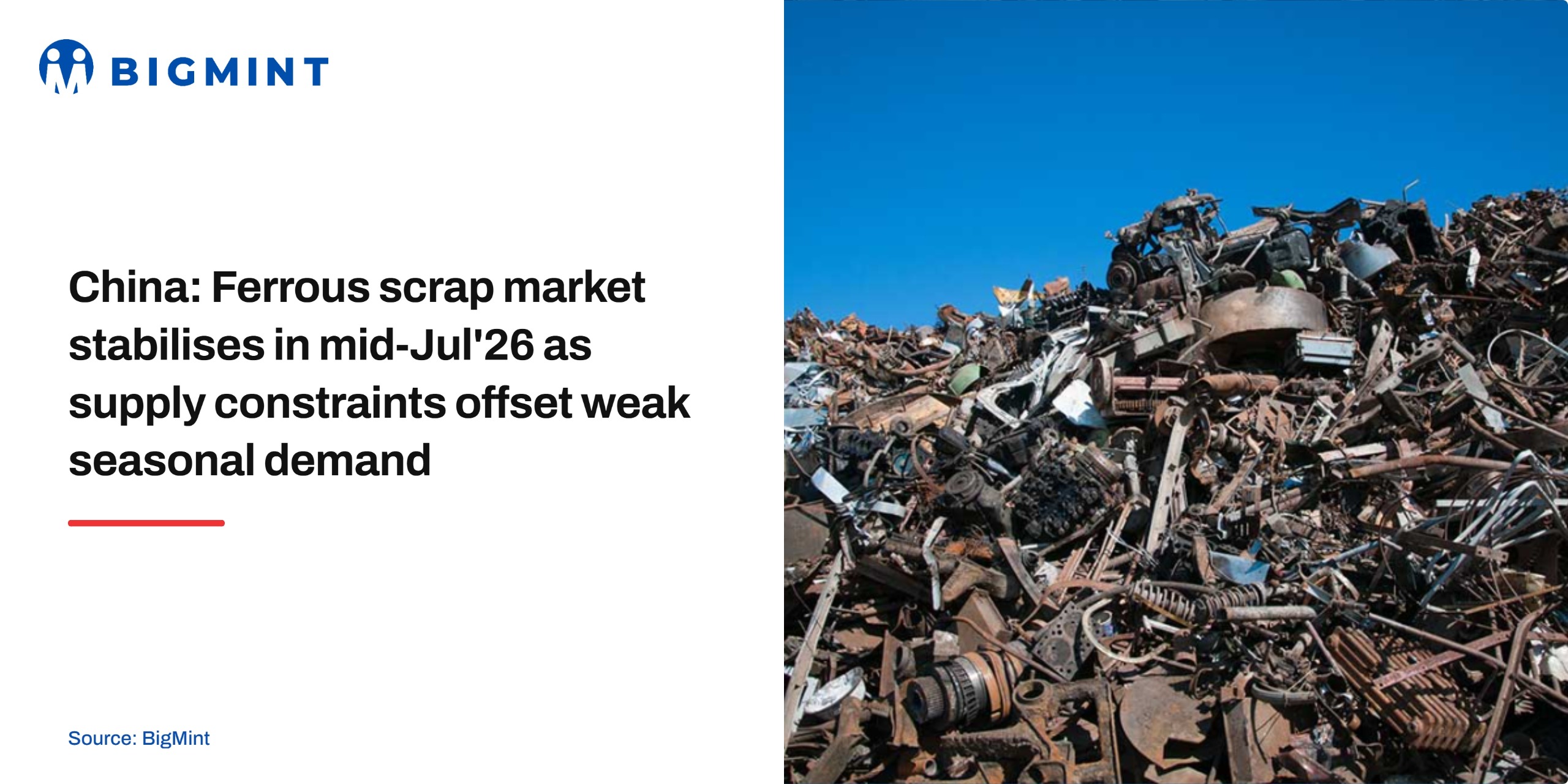
- High temperatures, flooding, tighter recycling norms limit scrap supply
- Mills keep inventories low at 8-9 days amid weak finished steel demand
China’s domestic scrap steel market has exhibited typical off-season characteristics since the start of July, marked by weak supply and demand, narrow price fluctuations, and regional divergence. Four key factors, namely the high-temperature and flood season, sluggish end-user demand, the implementation of new regulations on recyclable resources, and steel mills’ profit-and-loss dynamics, have dominated market trends throughout the month.
Overall, the market has followed a pattern of downward pressure and price cuts at the start of the month, followed by a halt to the decline and a slight recovery in the middle of the month. Both upside and downside potential remain constrained, with market participants adopting a cautious stance.
Supply tightens on weather disruptions, policy changes
Scrap availability in China has remained tight due to the combined impact of seasonal weather and regulatory changes.
As China entered the peak period of high temperatures and the flood season in July, the southern “plum rain” season, localised typhoons, and persistent heat in northern regions have significantly disrupted outdoor demolition work, scrap collection, dismantling operations, and long-distance transportation. This led to a marked contraction in the volume of newly generated scrap entering the market.
Meanwhile, the revised Specifications for the Construction and Management of Recyclable Resources Collection Points came into force on 1 July. Given the stricter audits of tax – focused on “four-stream consistency” or consistency across goods, invoices, accounts, and logistics) — for reverse invoicing, the new regulations have created compliance challenges for smaller collection points lacking compliant facilities or complete documentation. This has increased costs across the supply chain and further constrained shipments.
Most traders have adopted a “quick in, quick out” strategy with minimal inventories. High-quality heavy scrap and rebar chips remain in short supply, with traders holding back sales to support prices. By contrast, supplies of light and thin materials and colour-coated steel briquettes remain relatively abundant, widening the price differential between different grades.
Overall, tighter supply has provided a firm floor under the market, leaving little basis for a sharp fall in scrap prices.
Steel mills maintain hand-to-mouth procurement
On the demand side, procurement activity has remained subdued as the traditional off-season continues to weigh on finished steel consumption.
At present, the comprehensive cost of molten iron is around RMB 100/t ($15/t) higher than scrap steel, making scrap the more economical raw material. However, weakening finished steel demand has kept overall steel mill profitability under pressure, resulting in divergent operating strategies.
Long-process steel mills (BF-BOF-based producers) continue to benefit from scrap’s cost advantage, but sluggish trading in construction and structural steel has led to a gradual build-up of finished product inventories. Many mills have scheduled blast furnace maintenance and production cuts rather than increasing scrap usage, limiting procurement to immediate requirements.
Short-process electric arc furnace (EAF) mills have also reduced operating rates as margins remain under pressure, resulting in lower daily scrap consumption.
Throughout the month, steel mills largely followed a “procure only as needed” strategy. At the beginning of July, leading mills such as the Shagang Group reduced purchase prices by RMB 30/t, prompting similar price cuts across most regions. By mid-month, stabilising billet prices and firmer ferrous futures encouraged more than 30 steel mills across North and Northwest China to raise procurement prices by RMB 10-30/t to attract additional supplies.
However, these adjustments were aimed at balancing incoming volumes rather than rebuilding inventories, limiting the sustainability of the price recovery.

Low inventories, cash flow pressures persist
Inventory and liquidity risks continue to shape market behaviour.
Steel mills’ scrap inventories remain at a conventional low level of around eight to nine days of consumption, eliminating any immediate need for stock building. Processing centres have also maintained lean inventories to avoid both rainy-season material deterioration and potential price depreciation.
Cash flow pressures across the supply chain have intensified. Steel mills have extended payment terms and increased the use of bank acceptance bills, while tighter financial controls have lengthened payment collection cycles for small and medium-sized scrap suppliers. This has further reduced traders’ willingness to actively procure material.
The market has therefore entered a self-reinforcing cycle of weak demand, low sales, and tight supply.
Modest recovery may emerge in August
The scrap steel market is expected to continue its volatile consolidation through the remainder of July.
On the positive side, high temperatures, flooding, and other weather disruptions are likely to continue restricting scrap supply, providing solid price support. However, the absence of any meaningful improvement in downstream steel demand and continued pressure on steel mill profitability are expected to keep procurement cautious.
Traders are expected to avoid aggressive inventory accumulation, instead closely monitoring finished steel transaction volumes, steel mill maintenance schedules, and weather developments such as typhoons and heavy rainfall.
As downstream construction activity gradually resumes in August, scrap demand is expected to recover marginally, potentially opening a window for a modest improvement in market prices.

Leave a Reply