- Division to aid Chinese govt with policy development
- Move to boost industry collaboration, tech adoption
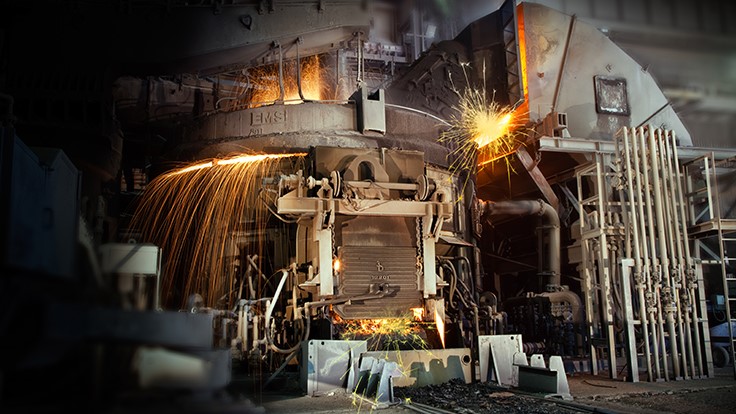
Mysteel Global: After more than six months of preparation, the China Iron and Steel Association (CISA) will officially establish an Electric Arc Furnace Steel Division inside its Beijing headquarters on 28 February, aimed at being a working platform for China’s electric-arc-furnace (EAF) steelmaking development, according to a news report published by CISA’s official media, China Metallurgical News, on Wednesday.
The new division will assist China’s central government in formulating and implementing policies that support the expansion of the EAF steel sector, thereby creating a favourable environment for the steel industry’s healthy growth, according to the news post.
Additionally, CISA envisages the division playing the role of a communication platform between steelmakers, steel end-users, and others in the country’s steel supply chain and aiding in the formulation of unified technical standards for the EAF sector, the report noted.
The systematic and orderly development of EAF steel production is essential if China is to meet its “3060” goals, namely, to achieve carbon peaking by 2030 and carbon neutrality by 2060.
The central government had proposed in 2023 that domestic steel output produced via the EAF route should account for 15% of the country’s total steel production by 2025 and that the proportion should rise further to over 20% by 2030.
However, CISA’s data showed that in 2024 just 10.5% of China’s total steel output was produced via the EAF route, indicating that EAF sector development was still lagging behind the combination of blast furnaces and converters as the industry’s preferred technology.
China’s EAF steelmakers are currently facing common challenges such as insufficient steel scrap resources, an underdeveloped scrap recycling system, and an incomplete carbon market mechanism, the report acknowledged.
The industry must seek policy support to address these issues, it stressed. The government should lead the integration of EAF development with regional economics, focusing on establishing EAF capacity in areas with abundant scrap resources and sufficient supplies of electricity.
The persistently tight availability of steel scrap remains a major impediment to the growth of EAF steel production. China’s total steel scrap supply this year is estimated at 252.5 million tonnes (mnt), while consumption is expected to reach 253.7 mnt, according to Mysteel’s statistics.
The EAF industry cannot develop effectively unless sufficient steel scrap resources are allocated to EAF production rather than for use in blast furnaces and converters, industry insiders argue.
Note: This article has been written in accordance with a content exchange agreement between BigMint and Mysteel Global.
Leave a Reply