- Freight volatility and geopolitical tensions increased landed scrap costs
- Mills increasingly shifted towards domestic and alternative metallics
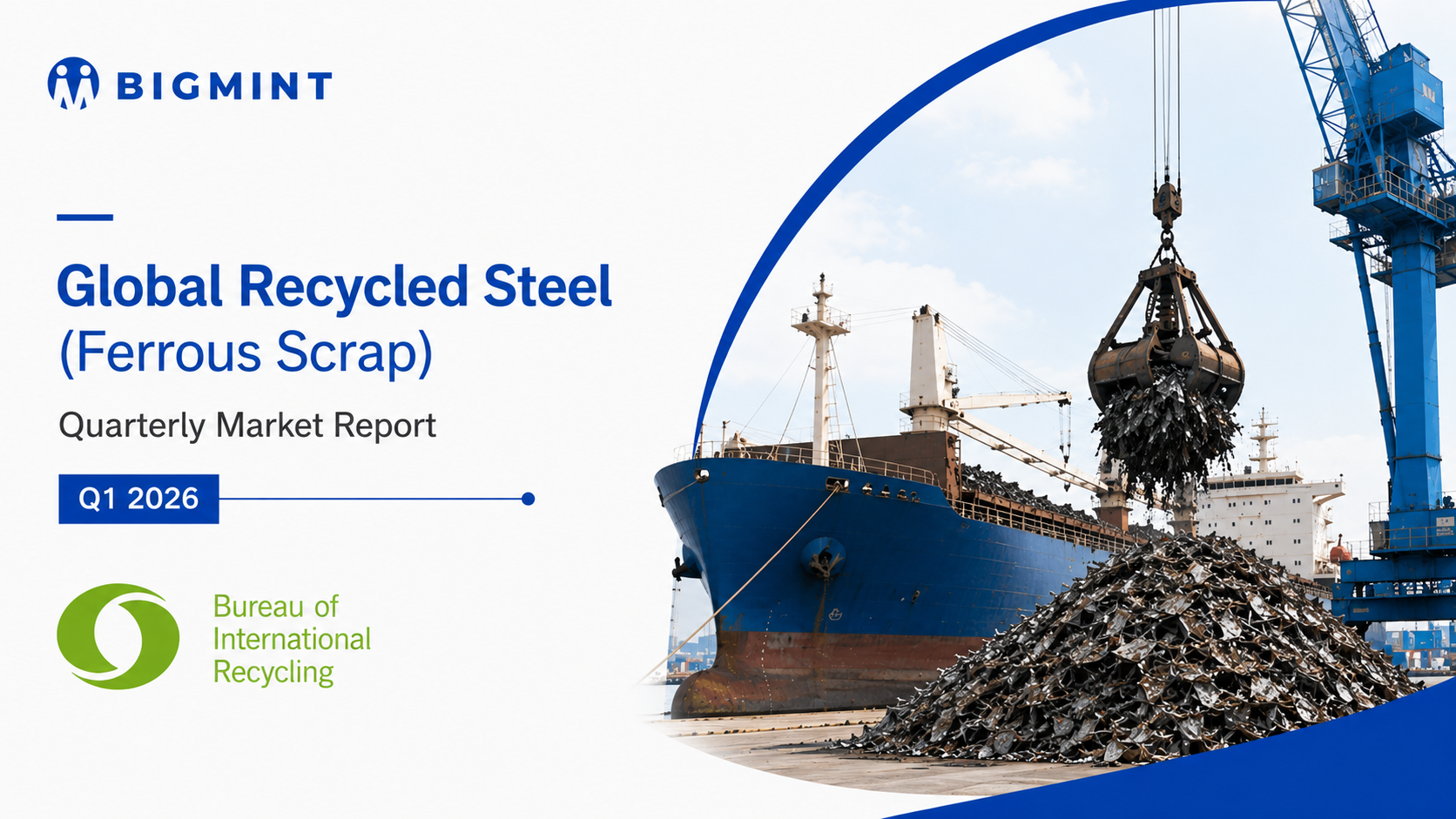
The global recycled steel market entered 2026 navigating a complex web of geopolitical disruptions, diverging regional demand cycles, and accelerating structural shifts toward low-carbon steelmaking – making it one of the most consequential years for the scrap industry in over a decade, industry body BIR said in a report.
Factors impacting the global scrap market
The body highlighted freight and geopolitical disruption remained among the biggest market drivers, as Strait of Hormuz tensions sharply increased war-risk premiums, bunker fuel costs, and freight rates across Turkiye, India, Pakistan, and broader Asia. At the same time, weak Chinese domestic steel demand and persistent oversupply continued pressuring Asian steel consumption and export markets, while higher landed costs pushed several countries towards domestic scrap and alternative metallics procurement. Despite near-term volatility, the BIR Ferrous Division maintained that recycled steel remains a strategic pillar of the global 2050 decarbonisation roadmap.
Europe
Denis Reuter of TSR Recycling GmbH & Co. KG (Germany), Board Member of the BIR Ferrous Division, stated that Germany entered 2026 with early signs of economic stabilisation supported by stronger industrial orders and government stimulus measures. However, elevated energy costs, geopolitical uncertainty, and weak global demand continued pressuring the steel sector, while tight scrap supply and logistical bottlenecks supported domestic recycled steel prices.
Mogens Bach Christensen of H.J. Hansen Genvindingsindustri A/S (Denmark) added that the Scandinavian recycled steel market remained directionless amid weak European steel demand, Turkish mill margin pressure, and increasing competition from billets and pig iron.
Meanwhile, Tom Bird of Enicor (UK) highlighted that UK HMS export prices into Turkiye rose to around $410-415/t, although sharply higher freight costs reduced FOB gains for exporters.
Turkiye
Abhijeet Mahanta of Stelaris Resources AG (Switzerland), Board Member of the BIR Ferrous Division, highlighted that Turkiye’s recycled steel market experienced acute volatility during Q1 2026 due to Middle East tensions, elevated freight and energy costs, and restrictive monetary policy. More than 30 deep-sea cargoes were reportedly booked within three days during March, pushing HMS 80:20 prices close to $396/t CFR Turkiye, while the USA re-emerged as Turkiye’s leading scrap supplier amid changing freight economics and shifting global trade flows.
United States
George Adams of SA Recycling (USA), Board Member of the BIR Ferrous Division, stated that the US recycled steel market remained relatively firm, supported by strong domestic mill demand, tariffs on imports, disciplined low-inventory strategies, and mill utilisation rates above 80%. Rising HRC prices above $1,070/t and tightening global scrap availability continued supporting domestic recycled steel demand despite improved spring scrap flows.
Asia
Michael Gaylard of SIMS Ltd (USA), Board Member of the BIR Ferrous Division, noted that weak Chinese domestic demand, persistent oversupply, and slowing exports continued pressuring Asian recycled steel markets.
Sanjay Mehta of MRAI (India) highlighted that India’s recycled steel imports declined more than 55% y-o-y during Q1 2026 as mills increasingly shifted towards domestic metallics and DRI-based production amid rising import costs and rupee depreciation.
Meanwhile, Ted Taya of Shinsei Scrap Co. Ltd (Japan) stated that Japan’s recycled steel market strengthened on recovering domestic demand and robust exports, with Kanto tender prices reaching multi-year highs.
South Africa and Middle East
Quintin Starkey of the Metal Recyclers Association of South Africa stated that South Africa’s recycled steel market remained constrained by the Price Preference System (PPS), weak downstream steel demand, and rand volatility.
Meanwhile,
Moosa Kazim of Al-Qaryan Group (UAE), Board Member of the BIR Ferrous Division, highlighted that GCC markets focused on stabilising recycled steel availability through coordinated procurement strategies, while Saudi Arabia accelerated its shift towards recycled steel-based production amid elevated freight and insurance costs.


Leave a Reply