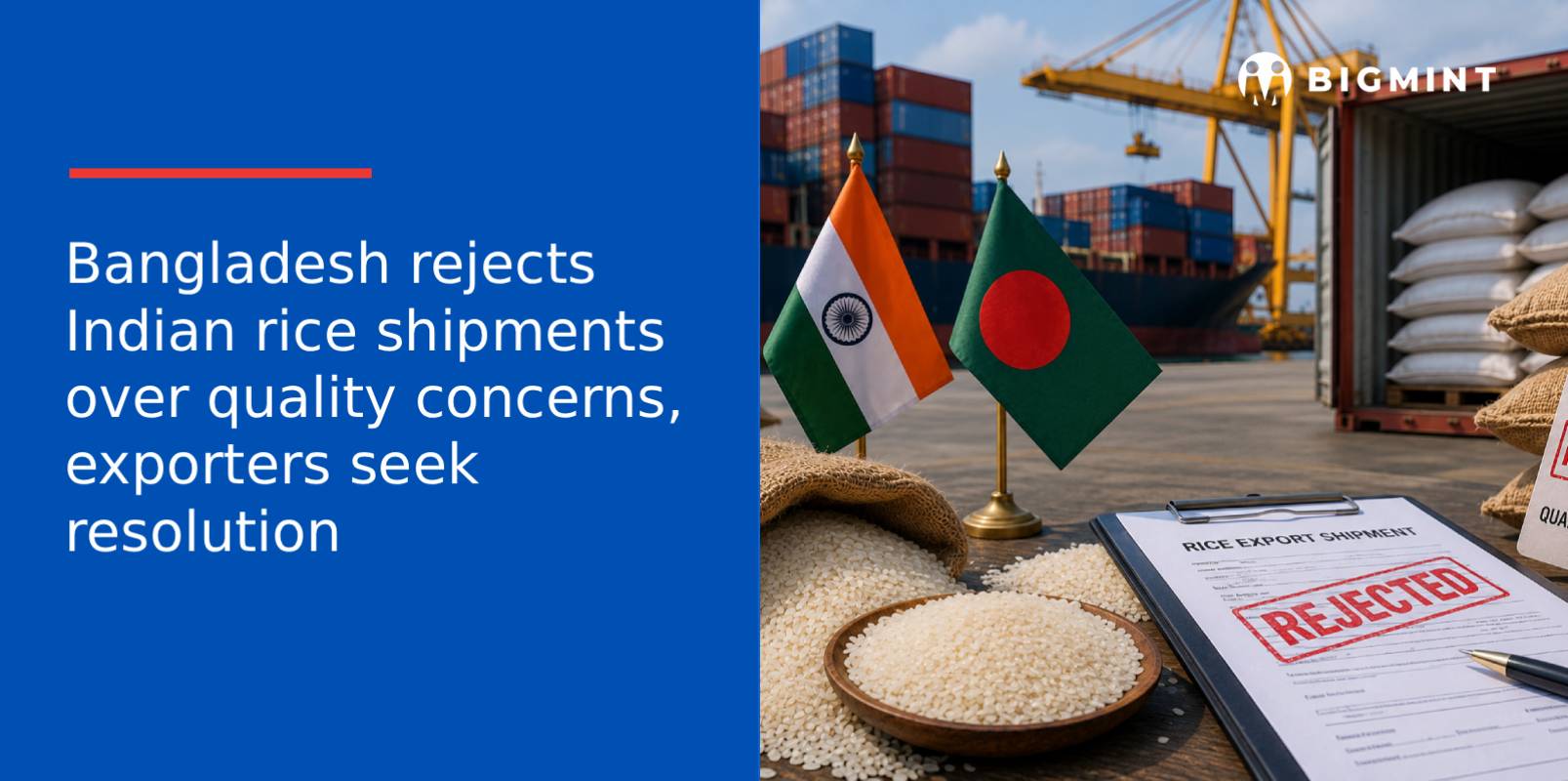
- Rejected shipments raise concerns over bilateral agricultural trade
- Prolonged uncertainty could disrupt rice trade and increase export costs
Bangladesh has rejected several consignments of Indian rice over alleged quality concerns, triggering a fresh trade dispute between the two neighbouring countries. The decision has drawn strong objections from Indian exporters and trade bodies, who maintain that the rice complied with all prescribed export standards before shipment and had successfully cleared quality inspections.
Bangladesh raises quality concerns
According to industry representatives, Bangladesh rejected multiple consignments after raising concerns over the quality of imported rice. Indian exporters, however, have disputed the allegations, stating that the shipments met the agreed export specifications and underwent mandatory quality inspections before dispatch. They believe the issue may be linked to differences in testing methods or administrative procedures rather than any actual quality defects.
The rejection has raised concerns among exporters, as Bangladesh remains an important market for Indian non-basmati rice. Industry bodies have urged both governments to engage in technical discussions to resolve the matter promptly and establish greater clarity on quality assessment procedures. Exporters have also cautioned that prolonged uncertainty could disrupt supply chains, increase logistics costs, and affect contractual commitments between buyers and sellers.
Bangladesh key to Indian rice exports
Bangladesh remains a significant market for Indian non-basmati rice due to its geographical proximity, competitive freight costs, and established trade relationship with India. Any disruption in this trade could affect exporters serving the neighbouring market and may influence short-term trade flows.
Potential impact on India’s rice exports
If the dispute remains unresolved, Indian rice exports to Bangladesh could face temporary disruptions due to additional inspections, stricter certification requirements, and shipment delays. Exporters may also incur higher storage, freight, and demurrage costs if consignments remain held at ports for extended periods. Continued uncertainty could prompt Bangladeshi buyers to diversify sourcing from alternative suppliers, potentially affecting India’s share in the neighbouring market.
However, the broader impact on India’s overall rice exports is expected to remain limited, as the country exports rice to a wide range of destinations across Asia, Africa, and the Middle East. India’s diversified export base is likely to cushion the impact of disruptions in a single market, although Bangladesh remains an important trading partner for non-basmati rice.
Outlook
The rejection of Indian rice consignments highlights the importance of transparent quality standards and harmonised inspection procedures in international agricultural trade. A timely resolution through bilateral dialogue and technical consultations would help restore buyer confidence, minimise trade disruptions, and ensure the smooth flow of rice between India and Bangladesh. Strengthening regulatory coordination and adopting consistent quality assessment practices could further support long-term stability in bilateral rice trade.
Leave a Reply