- Electricity tariff hikes add pressure on mills
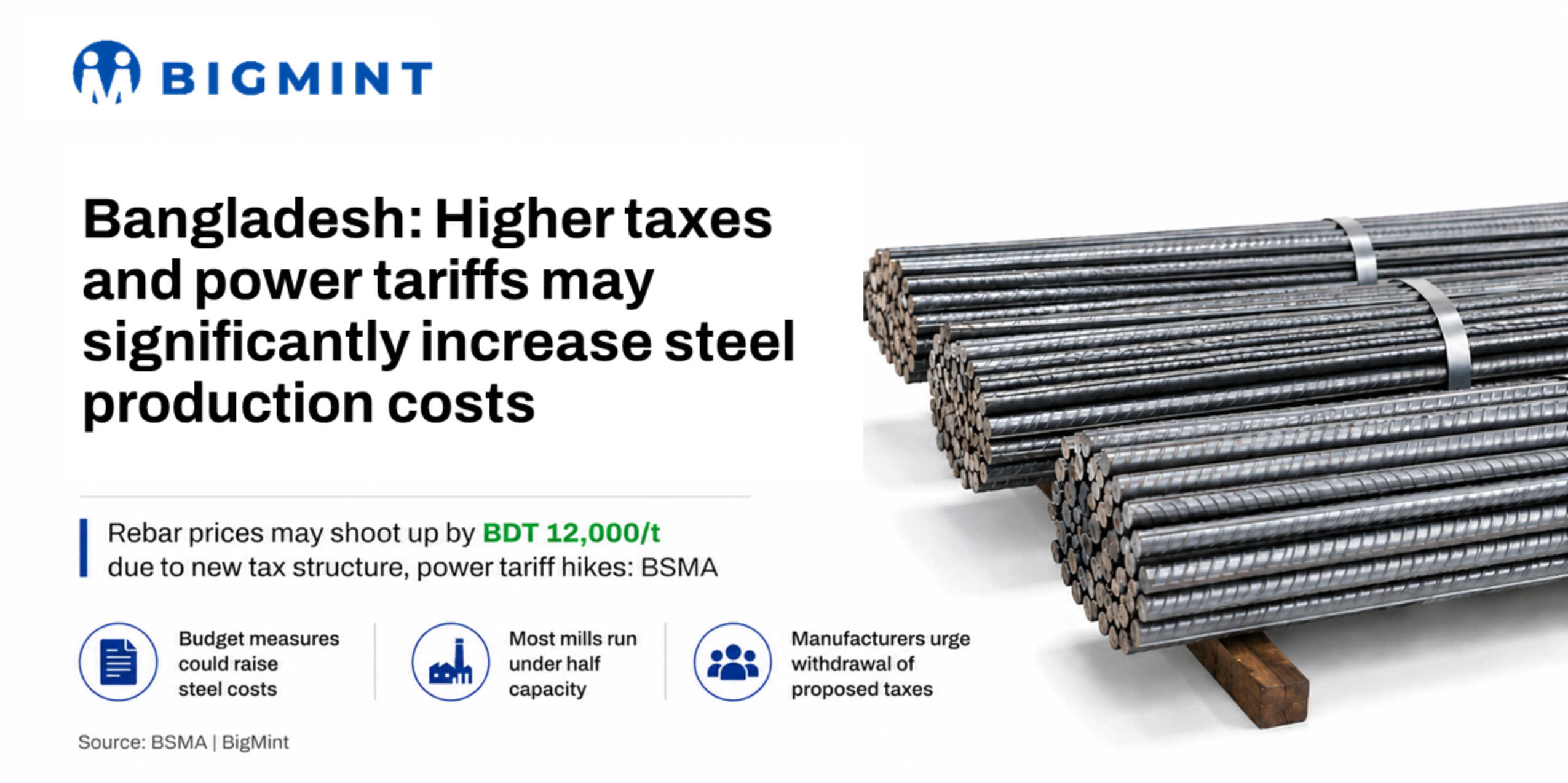
- Rebar prices may rise by BDT 12,000/t ($90-98/t)
Bangladesh’s steel industry has raised concerns over the proposed FY2026-27 national budget, warning that higher taxes, duties, and rising utility costs could significantly increase production expenses at a time when the sector is already struggling with weak demand and underutilised capacity.
The Bangladesh Steel Manufacturers Association (BSMA) has urged the government to reconsider the proposed measures, arguing that additional fiscal burdens could further weaken the competitiveness of domestic steel producers.
According to BSMA, recent electricity tariff hikes have already increased steel production costs by around BDT 1,800-2,000/t ($15-16/t). In addition, higher port charges, river dues, transportation expenses, and other operating costs have added another BDT 3,000-3,500/t ($24-29/t).
The association noted that the proposed budget would further increase costs through higher VAT at the sales stage, increased VAT on locally sourced scrap, and additional duties on key steelmaking inputs such as ferro alloys, refractory materials, and spare parts. These measures alone are expected to add another BDT 2,000-2,500/t ($16-20/t) to production costs.
BSMA President Mohammed Jahangir Alam stated that the combined impact of higher utility costs and proposed tax measures could increase direct production costs by BDT 5,000-6,000/t ($41-49/t). However, the overall burden could be much higher due to weak market conditions.
Most steel mills are currently operating at less than 50% of their installed capacity, resulting in elevated overheads, financing expenses, and fixed costs. As a result, indirect costs are estimated to rise by an additional BDT 5,000-6,000/t ($41-49/t), taking the total potential cost increase to BDT 11,000-12,000/t ($90-98/t).
The association highlighted that Bangladesh’s annual steel demand stands at around 5 mnt, while installed production capacity exceeds 10 mnt, leaving significant idle capacity across the sector. Industry participants warned that rising production costs could eventually be passed on to consumers, potentially affecting construction activity and slowing steel consumption.
BSMA has called on the government to withdraw the proposed VAT and duty increases on steel-related inputs, maintain the current VAT structure on scrap and steel sales, restore the turnover tax rate to 0.6%, and accelerate infrastructure and development projects to stimulate steel demand and improve capacity utilisation across the industry.
Leave a Reply