- BDI steady as Capesize rebounds
- Weak coal trade caps freight upside
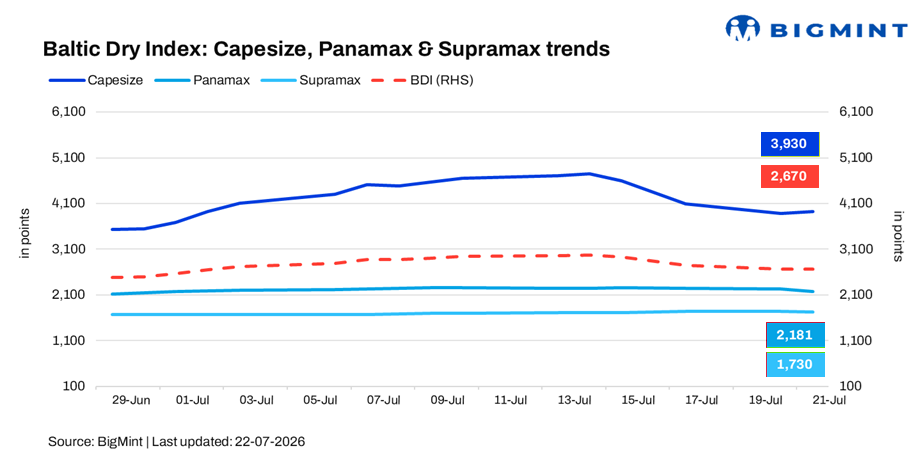
The Baltic Exchange Dry Bulk Index (BDI) remained largely unchanged at 2,670 points on 21 July 2026, compared with 2,671 points on 20 July, as gains in the Capesize segment were largely offset by weaker earnings across smaller vessel classes.
The marginal d-o-d decline reflected a broadly balanced dry bulk market, with improved iron ore-related demand supporting Capesize rates, while softer coal and minor bulk cargo activity continued to weigh on Panamax and Supramax earnings.
Segment-wise performance
- Baltic Capesize Index (BCI): The BCI rebounded by 1% (41 points) d-o-d to 3,930 points on 21 July 2026, recovering from 3,889 points on 20 July. The recovery was supported by improved iron ore cargo enquiries, particularly on key Brazil-China and Australia-China routes, following four consecutive sessions of declines. Firmer chartering activity and a modest tightening in prompt vessel availability also helped lift Capesize earnings, although overall market sentiment remained cautious.
- Baltic Panamax Index (BPI): The BPI fell by 2.1% (46 points) d-o-d to 2,181 points on 21 July 2026, down from 2,227 points on 20 July. The decline was driven by subdued coal and grain cargo demand across both the Atlantic and Pacific basins, coupled with limited fresh chartering activity. Ample vessel availability and cautious market sentiment further weighed on Panamax earnings, keeping freight rates under pressure.
- Baltic Supramax Index (BSI): The BSI fell by 8 points d-o-d to 1,730 points on 21 July 2026, from 1,738 points on the previous day, ending its recent rally. The decline reflected softer demand for minor bulk cargoes and limited fresh fixing activity across key loading regions. Increased vessel availability in parts of the Atlantic and Asia also weighed on Supramax earnings, although underlying market fundamentals remained relatively resilient.
Outlook
The Baltic Dry Index is expected to remain range-bound in the near term, with support from firmer iron ore cargo demand and improving Capesize activity. Sustained exports from Australia and Brazil could lend further strength to the index.
However, weak coal and grain trade, ample vessel availability, and cautious chartering activity are likely to limit any significant upside in overall dry bulk freight rates.

Leave a Reply