- Ample availability of tonnage kept index under pressure
- Weak demand and limited enquiries weighed on BDI
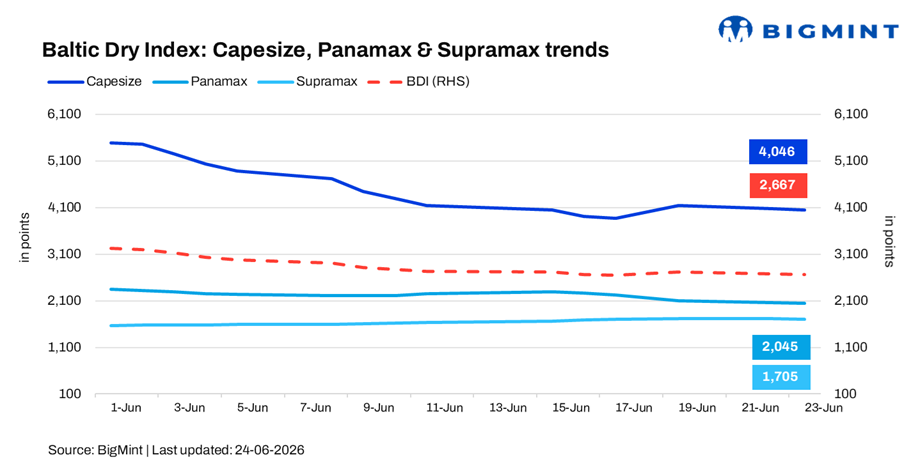
The Baltic Exchange’s Dry Bulk Index (BDI) declined by 0.6% (17 points) d-o-d to 2,667 points on 23 June 2026, extended its decline amid softer chartering activity across all vessel segments.
Weak Capesize earnings, cautious Panamax cargo demand, and subdued Supramax market activity weighed on overall sentiment, while balanced vessel supply and limited fresh enquiries continued to cap freight market upside.
Geopolitical uncertainties in the Middle East continued to weigh on Baltic index sentiment. While transit through the Strait of Hormuz has improved following a temporary easing of U.S.-Iran tensions, elevated war-risk premiums and concerns over renewed disruptions kept freight markets cautious and added volatility to the Baltic indices.
Segment-wise performance
- Capesize: The Capesize index decreased by 0.7% (28 points) to 4,046 points. Sentiment stayed subdued as weaker iron ore demand and slower fixtures in the Pacific offset limited support from the Atlantic basin.
- Panamax: The Panamax index declined by 0.7% (14 points) to 2,045 points. Sentiment softened amid cautious grain and coal trading, with ample vessel availability and muted cargo demand leading to lower earnings.
- Supramax: The Supramax index slipped 0.6% (10 points) to 1,705 points. Sentiment remained slightly negative as minor bulk cargo enquiries were insufficient to absorb tonnage, keeping overall market activity subdued.
Outlook
Baltic index is expected to remain under pressure in near term amid softer iron ore demand from China, subdued Pacific chartering activity, and ample vessel availability are expected to keep pressure on Capesize earnings.
Geopolitical risks in the Middle East are expected to keep dry bulk sentiment cautious. While easing tensions and improving Strait of Hormuz transit could support trade flows and lower energy costs, any renewed escalation may disrupt shipping lanes, increase bunker and insurance costs, and heighten volatility in Baltic freight indices.

Leave a Reply