- Broad-based weakness persists across all vessel segments
- Softer iron ore, coal fixture activity weighs on Capesize index
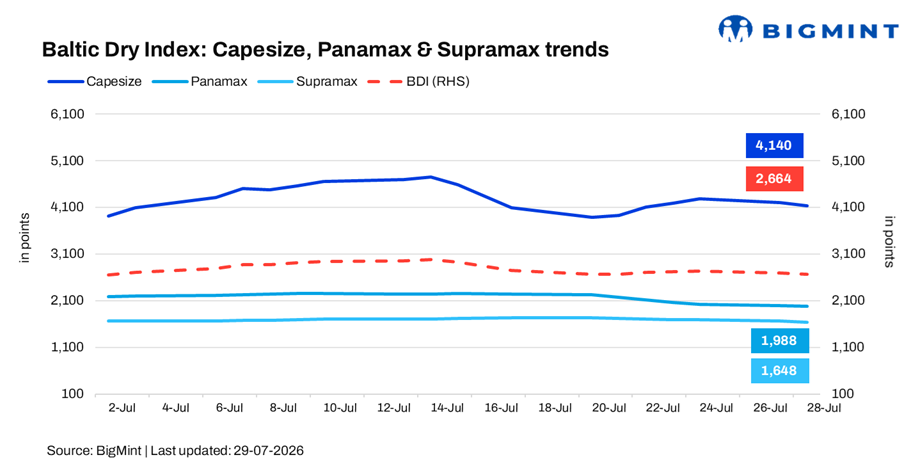
The Baltic Exchange’s Dry Bulk Index (BDI) declined 1.2% (32 points) d-o-d to 2,664 on 28 July 2026, marking its lowest level in four weeks, that is, since 2 July. The decline reflected broad-based weakness across all major vessel segments as softer cargo demand and improved vessel availability continued to weigh on market sentiment.
Capesize, Panamax, and Supramax indices fell to multi-week lows as subdued cargo enquiries, ample vessel availability, and cautious chartering sentiment continued to weigh on freight rates despite seasonal export support.
Segment-wise performance
- Baltic Capesize Index (BCI): The Capesize index fell 1.43% (60 points) d-o-d to 4,140 from 4,200, reaching its lowest level since 22 July. The decline was driven by slower iron ore and coal fixture activity across both the Pacific and Atlantic basins, while increasing prompt vessel availability limited owners’ pricing power.
- Baltic Panamax Index (BPI): The Panamax index eased 0.55% (11 points) to 1,988 from 1,999, its lowest level since late April. Weaker coal and grain cargo demand, together with cautious chartering activity, kept freights under pressure despite relatively balanced tonnage fundamentals.
- Baltic Supramax Index (BSI): The Supramax index declined 1.32% (22 points) d-o-d to 1,648 from 1,670, its lowest level since 12 June. Reduced minor bulk cargo enquiries and adequate vessel availability across Asian trading routes continued to cap earnings.
Outlook
The Baltic dry bulk market is expected to remain subdued in the near term as ample vessel availability and muted cargo enquiries continue to pressure freight rates across all vessel segments.
While seasonal iron ore exports from Australia and Brazil may provide some support to the Capesize market, overall sentiment is likely to remain cautious until coal, grain, and minor bulk demand improves. A sustained recovery will depend on stronger Chinese steel production, increased commodity export volumes, and firmer fixture activity across key global trade routes.

Leave a Reply