- BDI weakens as Capesize and Panamax rates retreat
- Supramax outperforms amid mixed vessel-segment performance
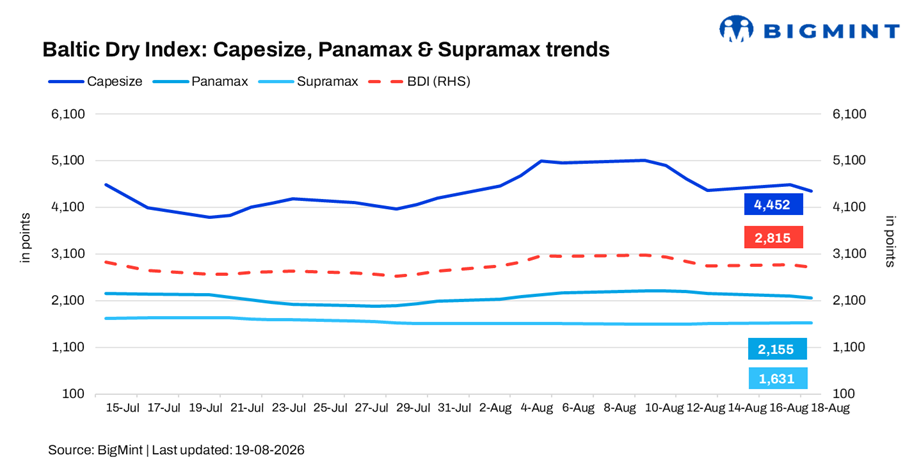
The Baltic Dry Index (BDI) declined d-o-d by 63 points (2.2%) to 2,815 on 18 August from 2,878 on 17 August, snapping a two-session advance and reaching its lowest level since 31 July. The decline was led by weaker Capesize and Panamax freight rates, while Supramax posted a marginal gain.
The latest movement reflects a mixed dry bulk market, with larger vessel segments facing renewed pressure, while Supramax remained comparatively resilient. The pullback in Capesize was the key drag on the overall index.
Segment-wise performance
- Baltic Capesize Index (BCI): Fell d-o-d by 3% to 4,452 from 4,590, ending a two-session winning streak and reaching its lowest level since 31 July. The decline indicates softer momentum in the larger vessel segment amid weaker iron ore and coal freight activity.
- Baltic Panamax Index (BPI): Declined d-o-d by 2.3% to 2,155 from 2,206, extending its weakness and reaching its lowest level since 3 August. Continued pressure suggests subdued chartering activity amid softer coal and grain demand and/or ample vessel availability.
- Baltic Supramax Index (BSI): Increased marginally d-o-d by 0.2% to 1,631 from 1,628, reaching its highest level since 28 July. The segment continued to outperform the larger vessel classes, supported by relatively steady minor-bulk demand.
Outlook
The BDI is likely to remain mixed in the near term, with the direction of Capesize rates remaining crucial for the dry bulk market. Any improvement in iron ore and coal cargo activity could help stabilise larger vessel freight rates, while continued weakness in Panamax could limit a broader recovery.
Supramax is expected to remain comparatively resilient if minor-bulk enquiries remain steady. Overall market momentum will depend on fresh cargo volumes, vessel availability and the pace of chartering activity across key trades.

Leave a Reply