- BDI extends decline as Capesize and Panamax remain under pressure
- Supramax bucks the trend, signalling stronger resilience in smaller vessels
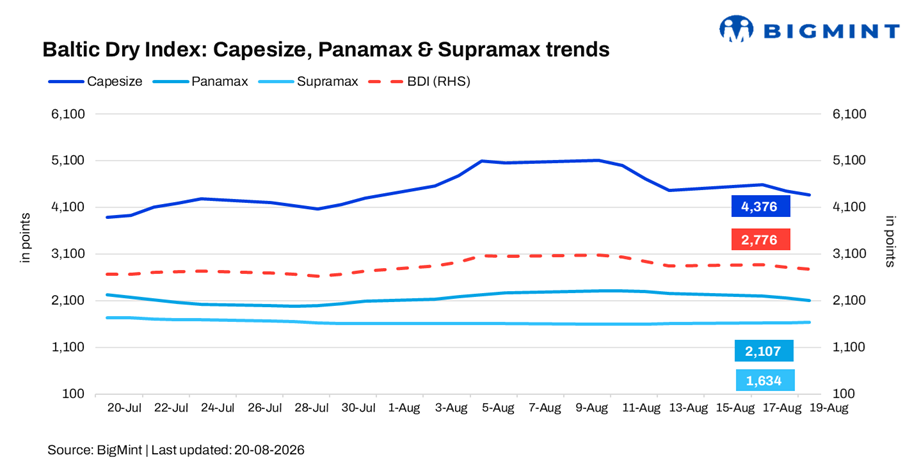
The Baltic Dry Index (BDI) declined for a second consecutive session, falling d-o-d by 39 points (1.4%) to 2,776 on 19 August from 2,815 on 18 August, reaching its lowest level since 31 July. The decline was driven by weaker Capesize and Panamax freight rates, while Supramax recorded a marginal gain.
The latest movement highlights a divergence across vessel segments, with larger vessels facing renewed pressure while the smaller Supramax segment continued to show resilience. Weakness in Capesize and Panamax outweighed the marginal improvement in Supramax, keeping the overall dry bulk market under pressure.
Segment-wise performance
- Baltic Capesize Index (BCI): Fell d-o-d by 1.7% to 4,376 from 4,452, extending its decline for a second session and reaching its lowest level since 31 July. The continued weakness points to softer momentum in the larger vessel segment amid subdued cargo and chartering activity.
- Baltic Panamax Index (BPI): Declined d-o-d by 2.2% to 2,107 from 2,155, also reaching its lowest level since 31 July. The sharper fall indicates continued pressure on Panamax freight amid relatively weaker demand and vessel availability.
- Baltic Supramax Index (BSI): Increased marginally by 0.2% to 1,634 from 1,631, reaching its highest level since 28 July. Supramax remained the only major segment to gain, reflecting comparatively firmer demand for smaller vessels and minor-bulk cargoes.
Outlook
The BDI is likely to remain mixed in the near term, with the performance of Capesize and Panamax rates remaining crucial. Continued weakness in larger vessel segments could keep the index under pressure, while sustained Supramax strength may provide some downside cushioning.
A recovery in fresh cargo enquiries and chartering activity across major dry bulk trades could help stabilise freight rates. Meanwhile, vessel availability and the pace of cargo bookings will remain key factors shaping market sentiment.

Leave a Reply