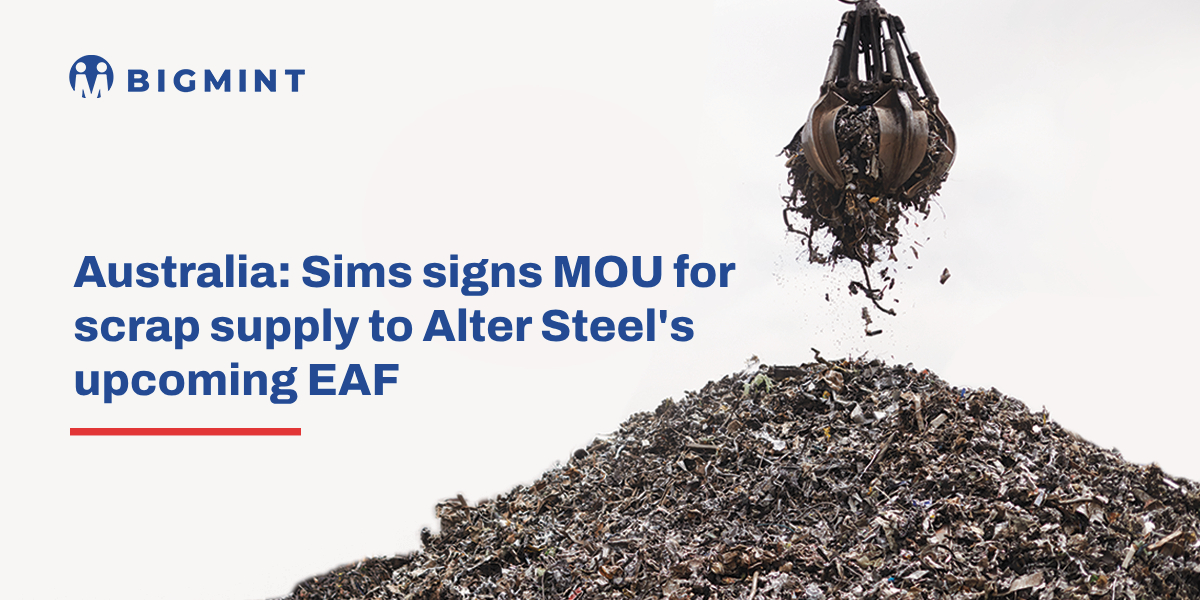
- Sims to support mill with just-in-time scrap delivery
- Move to boost low-emission steel output in Queensland
Australian metal recycler Sims Limited is taking a step towards strengthening Australia’s low-emissions steel value chain. According to a statement released by the company, the metal recycling giant has signed a non-binding Memorandum of Understanding (MoU) with Alter Steel, which is planning a new electric arc furnace (EAF) steel mill in Pinkenba, Queensland.
What happened?
As per the non-binding MoU with Alter Steel, Sims Limited will supply up to 550,000 tonnes (t) of ferrous scrap annually to Alter’s proposed EAF mill in Pinkenba, which is expected to begin operations in 2028.
- The proposed EAF facility is located around 1 kilometre (km) from Sims’ existing Pinkenba site.
- Alter aims to produce 500,000 t of rebars per year using domestic scrap.
- Sims will support the mill with just-in-time scrap inventory and logistics access through phased development of its own Pinkenba facility.
Why does it matter?
- Focus on domestic scrap: The agreement signals a growing emphasis on local scrap utilisation, supporting low-emission steel production in Australia.
- Strategic location synergy: The proximity of both facilities enhances logistical efficiency and supports Sims’ vision of developing a regional recycling and logistics hub.
- Potential employment generation: Alter Steel’s Pinkenba mill is set to generate 600 construction and 220 permanent jobs, with key milestones secured, including site approval and a supply deal with Danieli, an Italian commercial and industrial equipment manufacturer.
What’s next?
The MoU sets the stage for a binding long-term agreement that would align Sims’ scrap supply with Alter’s steel production timeline.
By aligning with new EAF capacities rising across the region, Sims is positioning itself as a cornerstone of circular steelmaking in Australia and New Zealand, redirecting its scrap flows to anchor a greener regional supply chain.
Leave a Reply