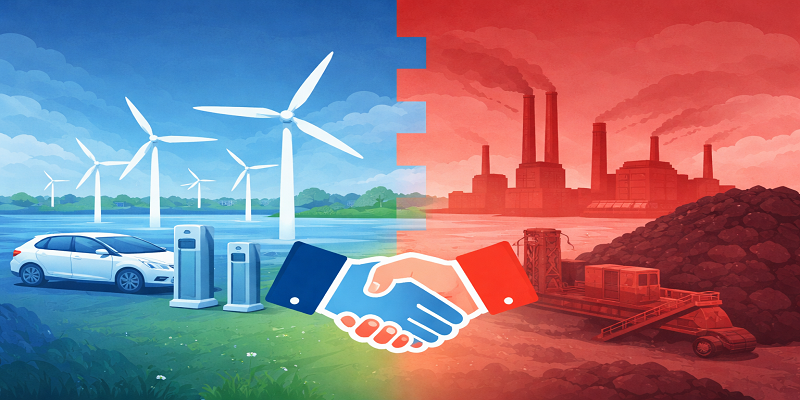
- Germany’s $9 billions plan cuts emissions and gas dependence by 2030
- Europe exits coal structurally, Asia drives future demand
While Asian nations pivot toward coal to offset high gas prices, Europe is moving decisively in the opposite direction. Germany’s federal cabinet approved a nine-billion-dollar climate package on March 25 aimed at accelerating the country’s energy transition. The program includes 67 separate measures designed to cut carbon emissions by 25 million metric tons by 2030 and reduce natural gas imports by seven billion cubic meters annually.
The package focuses on expanding onshore wind capacity, with plans to auction an additional 12 gigawatts in upcoming tenders. It also allocates three billion dollars for electric vehicle subsidies and nearly three billion dollars to help industrial sectors decarbonize through electrification and heat pumps. Nature-based climate solutions received nearly five billion dollars in funding.
Meeting legal targets while reducing import dependence
The German program is a response to two interconnected pressures. First, the country’s Climate Protection Act requires the government to close gaps identified in emissions projections. Second, the energy crisis triggered by geopolitical tensions has exposed the risks of fossil fuel dependence. By accelerating the shift to renewables and efficiency measures, Berlin aims to reduce exposure to volatile global energy markets while meeting legally binding climate targets.
This approach stands in stark contrast to the strategy being pursued in parts of Asia. Rather than switching from one fossil fuel to another, Germany is seeking to exit both coal and gas. The program’s focus on wind expansion is particularly significant, as onshore wind is expected to displace both coal and gas-fired generation, cutting wholesale power prices by an estimated six euros per megawatt-hour by 2030.
A structural decline in european coal demand
Europe’s path is clear: Policy support for coal is unlikely to return. Even with high gas prices making coal temporarily more competitive in the power dispatch order, the long-term direction is set by climate legislation and renewable energy targets. Germany’s package reinforces this trajectory, and other European nations are likely to follow similar strategies.
For coal exporters, this means European demand will continue its structural decline. Any short-term upticks in coal burn are likely to be marginal and temporary. The real growth market for thermal coal remains Asia, where affordability and energy security continue to outweigh decarbonisation pressures. Europe and Asia are increasingly moving in opposite directions, and that divergence is likely to widen in the years ahead.
Leave a Reply