- Restrictions initially enacted to strengthen domestic supply
- Policy shift to boost metal recycling industry in Argentina
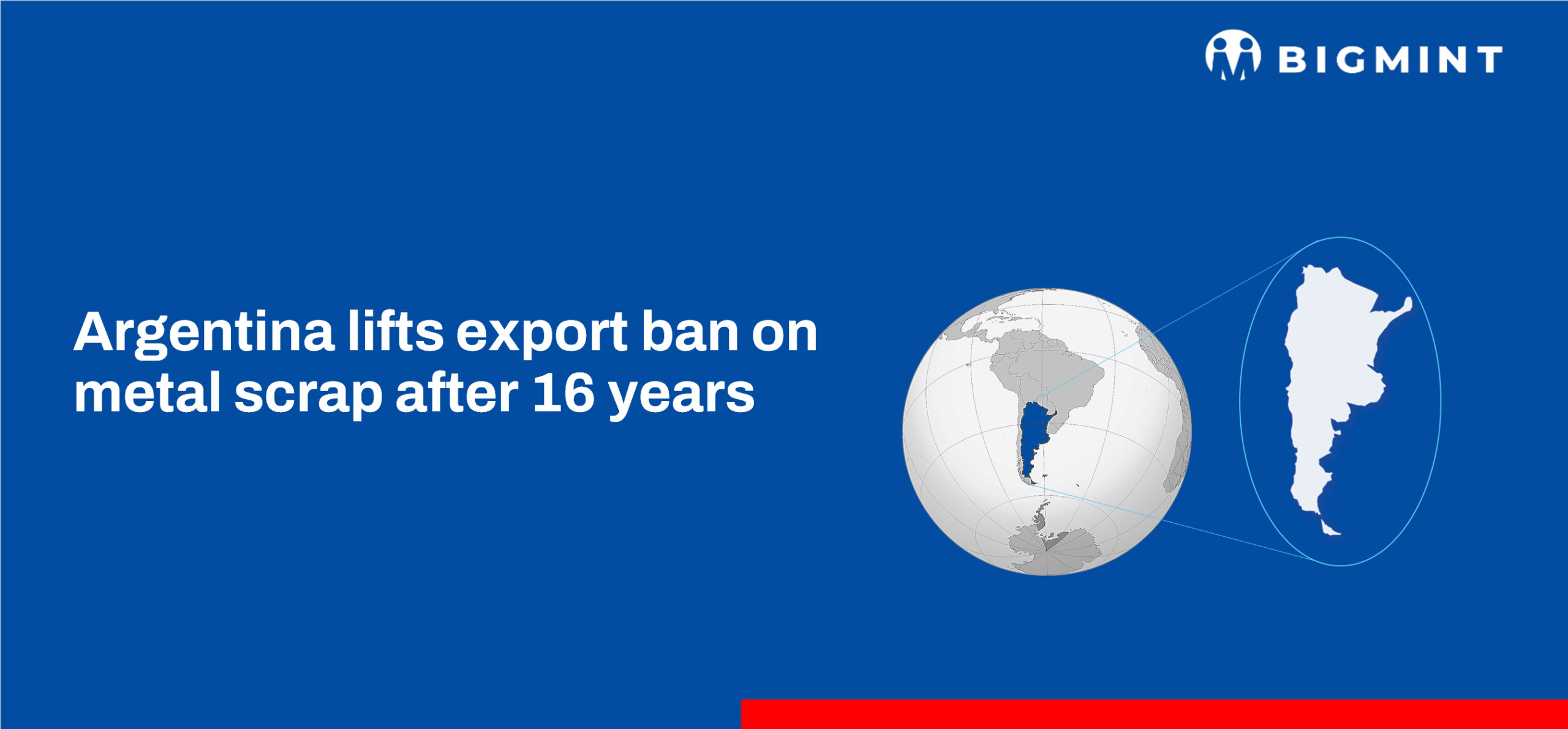
The Argentine government has lifted a 16-year-long export ban on scrap and metal waste, ending a policy in place since 2009. Minister of Deregulation and State Transformation, Federico Sturzenegger, announced that Decrees 1040/20 and 70/23, which extended the export ban, will not be renewed. This marks a significant shift in Argentina’s approach to its metal recycling and steel industries and has elicited mixed reactions.
Regulations initially enacted to strengthen domestic supply
Decrees 1040/20 and 70/23 were regulatory measures enacted by the Argentine government to extend the prohibition on the export of certain types of scrap metal and industrial waste.
The export restriction was introduced in 2009 to strengthen the national steel industry. The government justified the ban as a measure to ensure the domestic supply of essential raw materials such as iron, steel, aluminium, and copper scrap while stabilising local prices and preventing increases in steel production costs. The regulation suspended both definitive and temporary exports of these materials under specific tariff classifications.
Policy shift aims to enhance country’s economic potential
Sturzenegger stated that the move is aimed at encouraging recycling, opening international markets, and aligning local prices with global levels. He highlighted that the export ban had artificially suppressed local scrap prices, discouraging recycling and limiting economic opportunities, especially for small and medium-sized enterprises (SMEs). Materials such as copper cables, which are in high demand globally, were restricted to the domestic market, reducing their economic potential.
The policy aligns with President Javier Milei’s vision of reducing the state’s intervention in market dynamics. By lifting the ban, the government hopes to boost industries involved in waste valorisation and increase foreign exchange revenue through higher exports.
Domestic industry expresses concerns
The domestic metallurgical sector has raised concerns about the decision, warning that it could worsen raw material shortages. Since 2009, the ban has ensured a steady supply of scrap metal for domestic industries, which rely on these materials for steel, copper, and aluminium production.
Industry representatives fear that reopening exports will drive up local scrap prices, further straining domestic manufacturers, which are already facing declining crude steel production. Crude steel output fell to 3.61 mnt in 2024 from 5.1 million tonnes (mnt) in 2022.
What is the government’s position on scrap metal exports?
According to official sources, the previous decrees were intended to stabilise local prices by prohibiting the export of various valuable industrial wastes, such as metallic and plastic waste. However, this policy primarily benefitted a small group of entrepreneurs while disadvantaging many small and medium-sized enterprises (SMEs).
The new measure aligns with recent modifications to the Customs Code, which now allow the export of valuable waste. To ensure compliance with international treaties regarding waste movement, exporters must now formalise shipments through a sworn statement, with post-fiscalisation conducted by the Environment Subsecretariat.
The government contends that aligning local prices with international levels will incentivise waste collection, boost exports, and foster recycling industries.
Leave a Reply