- Aluminium and steel tariffs remain unchanged
- Automotive duties remain key negotiation hurdle
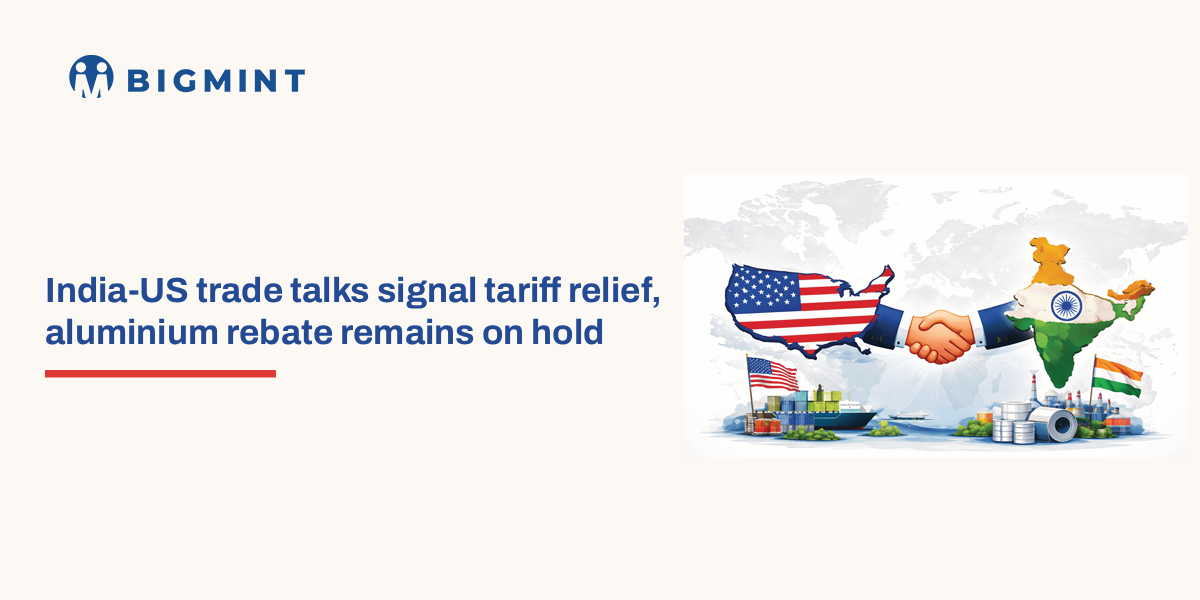
The United States and India are moving closer to a revised trade framework under which tariffs on most Indian-made products are expected to be reduced to 18% from the earlier 50%. However, aluminium and steel are likely to continue facing elevated duties until further negotiations conclude.
The proposed tariff rationalisation is reportedly linked to India’s commitment to halt purchases of Russian crude oil, marking a strategic trade-off between energy sourcing and market access.
Automotive tariffs remain a key friction point
India has historically maintained high import duties on vehicles and automotive parts–ranging between 60% and 100%–to protect its domestic automobile industry and promote local manufacturing. These measures were aimed at supporting companies such as Hindustan Motors, Tata Motors, and Mahindra during their growth phases.
The agreement also addresses longstanding US concerns over these elevated automotive tariffs. India is now considering selective reductions, signalling progress toward resolving a major trade friction between the two countries.
Implications for aluminium demand and manufacturers
The automotive sector, one of the largest end markets for aluminium sheets and extrusions, may face fresh challenges if import duties are lowered. Domestic manufacturers could encounter price competition from imported vehicles and components.
At the same time, reduced local demand could encourage Indian producers to explore export opportunities or pivot towards EV-related components, which typically use higher aluminium content, such as battery casings and lightweight structural parts.
Evolution of US tariff measures on Indian goods
Initially, the US imposed a baseline tariff of 10% on most imports. Under its reciprocal tariff framework, India faced a higher country-specific tariff of around 25-26%. Additional tariffs of 25% were later applied to Indian passenger vehicles, light trucks, and select auto parts.
Aluminium tariffs were doubled to about 25% in February 2025, while elevated steel duties continued under national security provisions. In August 2025, punitive tariffs of another 25% were added, linked directly to India’s continued purchase of Russian oil.
Proposed tariff reduction tied to energy sourcing
Washington is now reportedly willing to reduce tariffs on most Indian goods to 18% if New Delhi agrees to stop importing Russian crude. Under this arrangement, India is expected to increase oil purchases from the United States and potentially Venezuela.
As a result, Indian-made products would gain improved access to the US market, even as energy trade patterns are reshaped.
India’s tariff position among Asian peers
With the proposed changes, India would face one of the lowest US tariff rates among Asian exporters, below countries such as China, Laos, Myanmar, and Vietnam. However, India’s tariffs would still remain marginally higher than those applied to Europe, Japan, and South Korea.
Aluminium trade flows between India and the US
According to the Global Aluminum Trade Monitor, US aluminium imports from India have fluctuated significantly over the past decade. Imports ranged from 60,000 t in 2015 to about 160,000 t in 2024.
After rising steadily between 2016 (53,985 t) and peaking in 2019 (249,153 t), volumes declined in 2020 (144,351 t) and 2021 (116,523 t). Imports recovered in 2022 (186,000 t), fell again in 2023 (116,524 t), and rose in 2024 to around 159,000 t.
In value terms, aluminium imports followed a similar pattern, peaking at approximately USD 655 million in 2022, with notable volatility over the years.
Trade balance remains in favour of India
Trade data available up to October 2025 shows US aluminium imports from India at around 20,000 t, while exports stood at only 4,000 t. This resulted in an overall trade balance of approximately –192,035, indicating a persistent US trade deficit in aluminium with India.
Tariffs as a strategic policy tool
The US aims to reduce its trade deficit while maintaining stable trade relations with India. Tariffs are increasingly being used as leverage to influence trade behaviour, rather than as outright barriers.
The linkage of tariff relief to Russian oil purchases reflects this strategy. Since Russia’s invasion of Ukraine, the US, along with Canada, the European Union, and other allies, imposed financial sanctions to limit Moscow’s energy revenues.
India’s Russian oil purchases under scrutiny
India has increased its share of Russian oil imports from around 2% to nearly 40% in recent years, attracted by discounted prices of USD 2-4 per barrel. While commercially viable, this trade pattern has drawn scrutiny from Washington, which lacks direct control over India’s energy sourcing decisions but has used tariffs as an indirect pressure mechanism.
Note: This article is published in accordance with an article exchange agreement between BigMint and Mysteel.
Leave a Reply