- Customs seize 10,029 t of illegally imported e-waste in FY26
- Proposed import ban may disrupt material supplies to recyclers
Thailand has intensified inspections of containers declared as metal scrap amid a crackdown on illegal electronic waste imports, raising concerns over port delays, higher logistics costs and potential disruptions to raw material supplies. On 21 October, the Customs Department proposed to the Department of Foreign Trade a possible ban on imports of ferrous scrap (HS 7204), copper scrap (7404), aluminium scrap (7602) and rubber scrap (4004), with a proposed transition period of six to 12 months.
The blanket ban remains under consideration, with its implementation timeline and specific provisions yet to be finalised. In the meantime, authorities are physically inspecting containers declared as metal scrap to identify prohibited electronic and hazardous waste shipments.
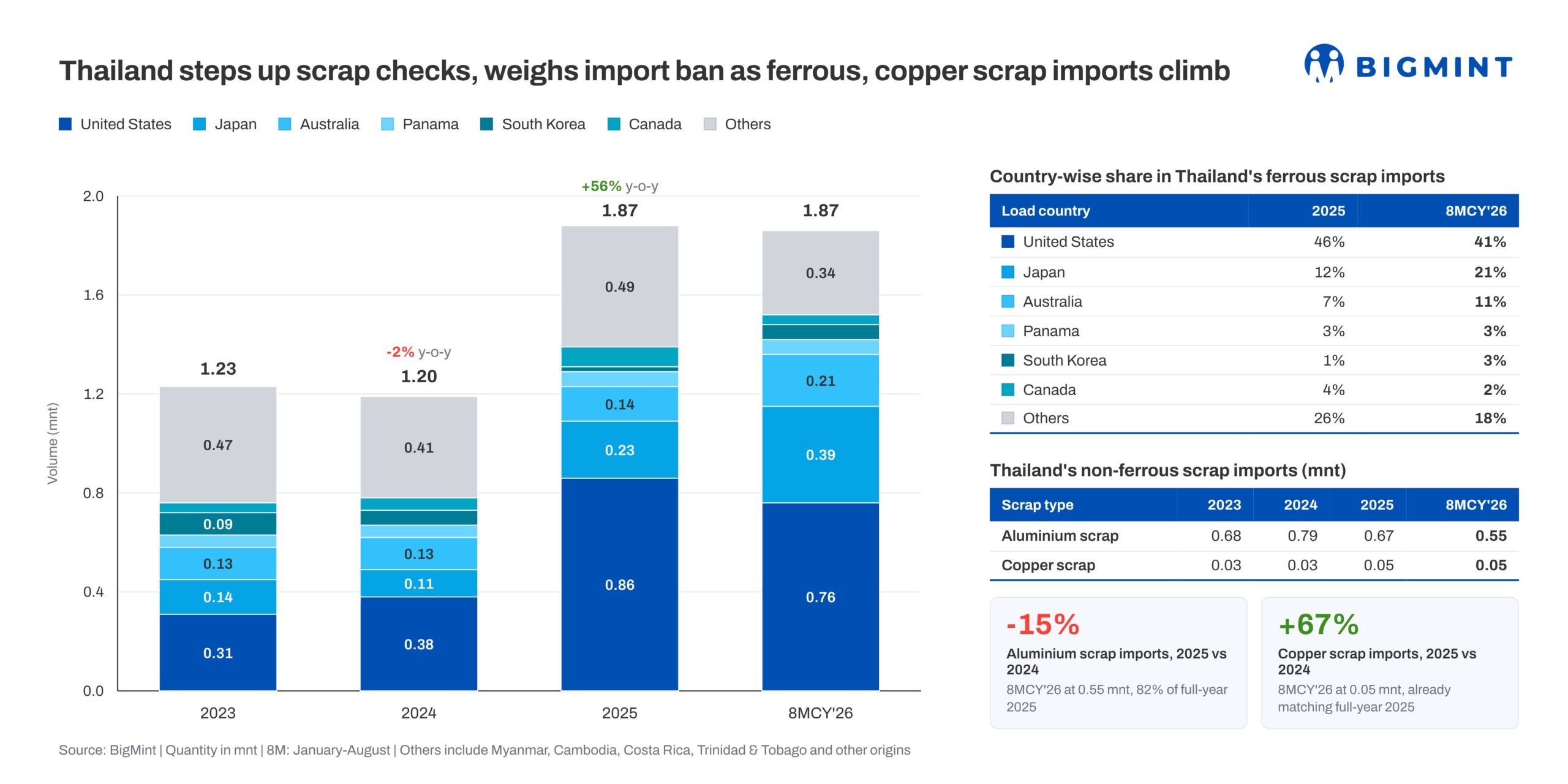
Thailand imported nearly 1.9 million tonnes (mnt) of ferrous scrap in 2025, with volumes remaining at a similar level during January-August 2026. The US, Japan and Australia continued to be its major suppliers.
In the non-ferrous segment, aluminium scrap imports remained significantly higher than copper scrap imports. Thailand imported 0.55 mnt of aluminium scrap and 0.05 mnt of copper scrap during 8MCY’26. US remained the largest supplier for aluminium as well as copper scrap in 8MCY’26 with 0.23 mnt and 0.03 mnt respectively.
Thailand’s Customs Department has proposed restrictions on scrap imports to address illegal shipments and imports entering without the required local licences, while promoting cleaner material.
Customs intensifies enforcement
Thailand confiscated 10,029 tonnes (t) of illegally imported electronic waste during fiscal year 2026, which ended on 30 September, according to Customs Department Director-General Phantong Loykulnanta. Of the total, 5,290 t had been shipped back to their countries of origin, he said.
The latest enforcement drive follows the discovery of suspicious shipments in the eastern provinces of Rayong and Prachin Buri. In Rayong, two containers reported in the media were part of a five-container shipment from Spain declared as metal scrap and released for delivery from Laem Chabang Port in Chon Buri. Authorities said there was no evidence yet confirming the presence of prohibited waste, while nine other containers from Spain, weighing 223 t in total, had been seized for inspection.
Separately, officials were inspecting containers from the US in Prachin Buri, with results pending. The comprehensive inspection process is reportedly causing port bottlenecks, while traders and buyers are exploring alternative destinations for Thailand-bound containers already in transit.
Potential impact on scrap trade
The proposed restrictions could significantly affect non-ferrous recyclers and metal processors that rely on imported raw materials. Industry participants have faced similar regulatory scrutiny in previous Asian trading destinations, including China and Malaysia, where concerns over waste misdeclaration and environmental compliance prompted tighter controls.
The Basel Convention, which regulates international movements of certain hazardous wastes, including relevant electronic waste, remains a key consideration in efforts to prevent illegal shipments.
According to a major supplier, Thailand’s proposed scrap import restrictions have increased market offers, including containers diverted from the country, giving buyers greater leverage to negotiate lower prices. While no deals have been concluded at specific price levels, the measures remain at an early stage and aim to curb illegal imports and encourage cleaner material. Continued uncertainty could redirect more cargoes to India, improving availability and putting pressure on prices, depending on how the restrictions are implemented.
Outlook
In the near term, stricter inspections could delay customs clearance and raise logistics costs for imported scrap, potentially supporting domestic copper and aluminium scrap prices. If the proposed blanket ban advances, processors dependent on imported feedstock could face supply constraints and higher procurement costs. However, the final impact will depend on the scope of restrictions, the transition period and the government’s eventual implementation framework.
Leave a Reply