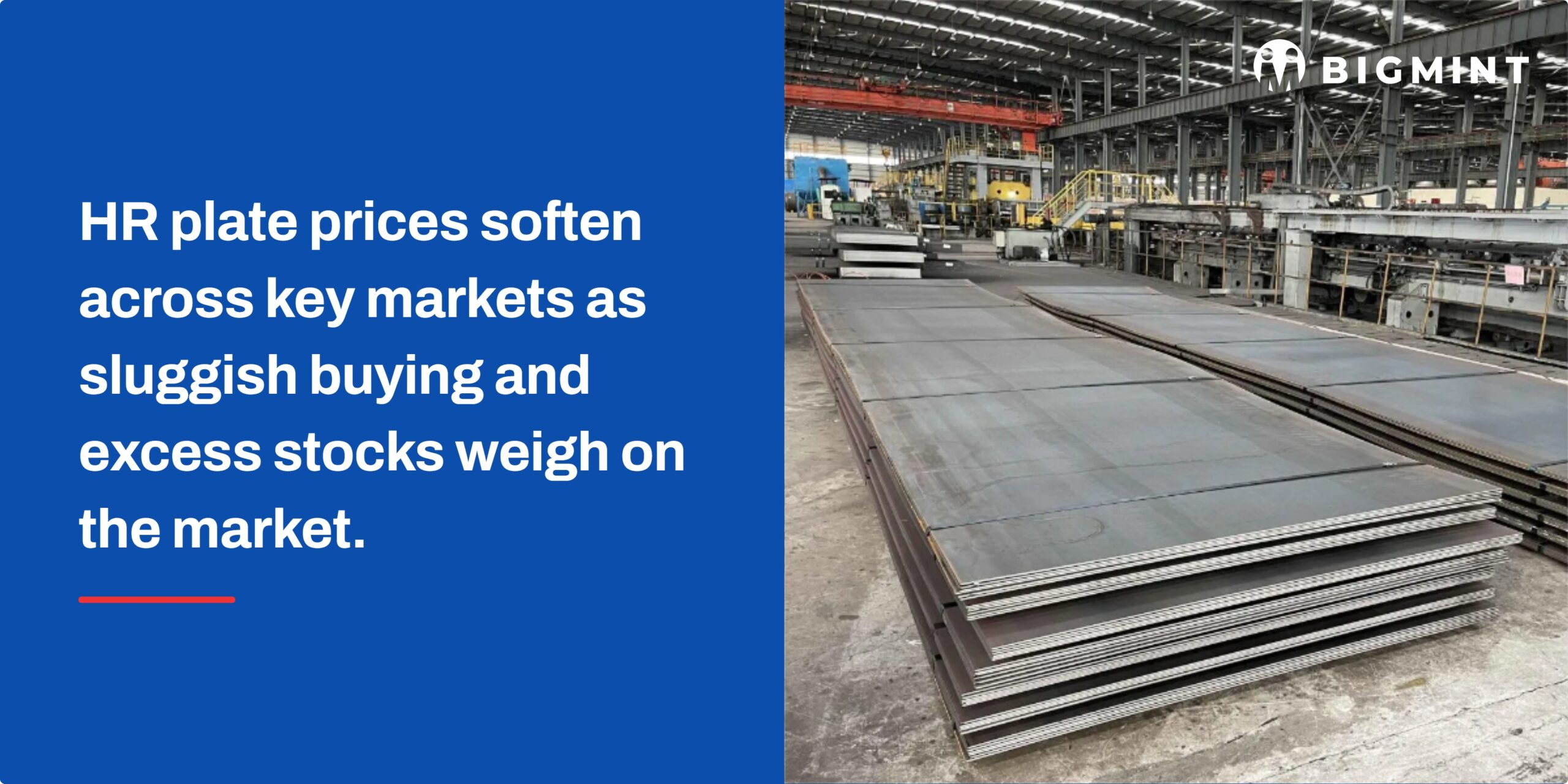
- Prices decline by INR 400/t in Mumbai and Delhi
- Stockists prioritise existing orders over fresh purchases
Indian hot-rolled (HR) plate prices declined across Mumbai and Delhi in the week ended 14 October, as subdued demand and elevated inventories curbed fresh buying. Prices fell by INR 400/t w-o-w in both markets, with stockists limiting purchases largely to confirmed customer requirements.
Mumbai prices for IS 2062 Grade E250 Br HR plate, 20-40 mm, decreased to INR 67,500/t, while Delhi prices fell to INR 67,700/t.

High inventories constrain procurement
Market activity remained subdued as buyers focused on executing previously placed orders rather than replenishing stocks. Deliveries continued, but in limited quantities, reflecting weak demand and reluctance among stockists to accumulate additional inventory.
“Buying activity has slowed down as stockists are reluctant to hold large inventories at the current price levels. Most are placing limited orders or purchasing strictly against confirmed customer orders,” a market participant said.
HRC benchmark also declines
The weakness extended to the broader flat steel market. Mumbai’s bi-weekly benchmark assessment for hot-rolled coil (HRC), 2.5-8 mm, cut-to-length (CTL), IS 2062 Grade E250 Br, fell by around INR 700/t w-o-w to INR 64,000/t ex-Mumbai as of 13 October.
Trade flows and import interest
India’s HR plate imports stood at 1,867 t as of 9 October, while exports totalled 27,667 t, according to data. The reporting period for these trade volumes was not specified.
Market participants reported Chinese material imported under the Advance Authorisation Scheme by a major domestic mill for re-export requirements. Separately, a Mumbai-based stockist indicated potential interest in importing HR plates by the end of 2026.
Outlook
HR plate trading activity could remain subdued as the festive season approaches, with demand dependent on end-user consumption. Elevated inventories and cautious replenishment may continue to limit fresh buying. However, further price direction remains uncertain without additional evidence on inventory movements, transaction volumes and buyer demand.
Leave a Reply