- Chinese demand remained cautious after holidays
- Middle East smelter restarts improved supply outlook
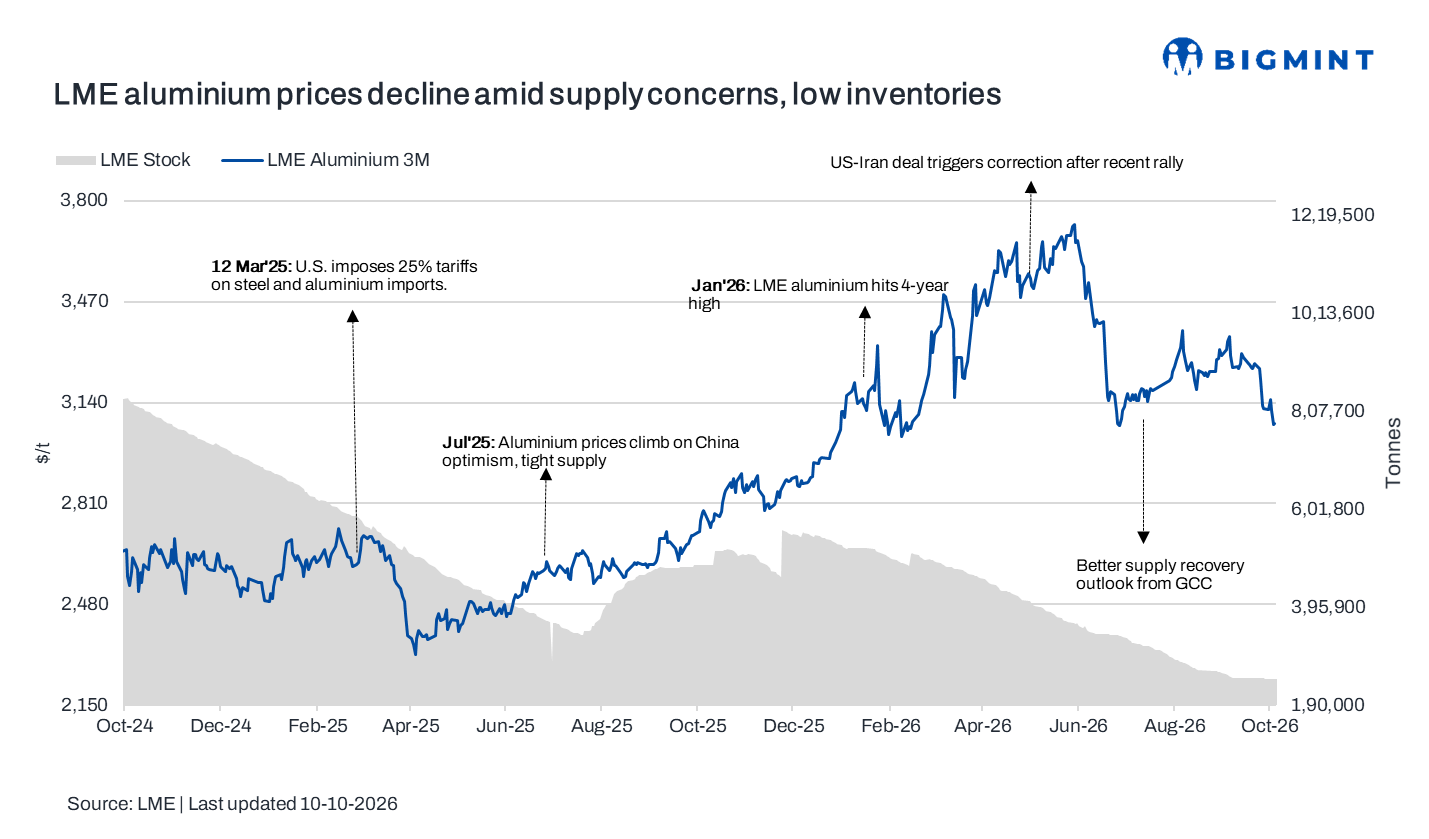
LME three-month aluminium prices declined by $52/t, or 1.7% w-o-w, to $3,070/t on 9 October from $3,122/t on 2 October, reflecting continued weakness in the global aluminium market.
Meanwhile, LME aluminium inventories declined by 1,500 t, or 0.6% w-o-w, to 238,875 t on 9 October from 240,375 t on 2 October. Stocks remained near historically low levels, providing some underlying support to aluminium prices despite continued downward pressure from macroeconomic headwinds and expectations of improving global supply.
Factors weighing on LME aluminium prices
LME aluminium prices came under pressure during the week ended 9 October as expectations of improving global supply reduced concerns over market tightness. Middle Eastern smelter restarts progressed faster than anticipated, while additional production capacity in Indonesia raised the prospect of greater metal availability. Higher Chinese aluminium exports and strong domestic production further reinforced supply concerns. Easing supply risks also reduced the risk premium built into prices, while lower Japanese premiums for October–December shipments signalled improved supply availability. These developments weakened bullish sentiment and limited support for LME aluminium prices.
Broader macroeconomic pressures and cautious demand further contributed to the decline. The US dollar strengthened to its highest level since May 2025, while elevated US Treasury yields weighed on investor appetite for dollar-denominated metals. In China, subdued downstream buying and reduced trading activity during the National Day holiday weakened near-term market support. Meanwhile, profit-taking and the liquidation of bullish positions accelerated selling pressure following the earlier price rally.
Outlook
LME aluminium prices are likely to remain under pressure in the near term amid expectations of improving global supply, a stronger US dollar and cautious demand. However, declining exchange inventories and persistently low stock levels may provide some downside support, while any supply disruptions or recovery in Chinese demand could help stabilise prices.
Leave a Reply