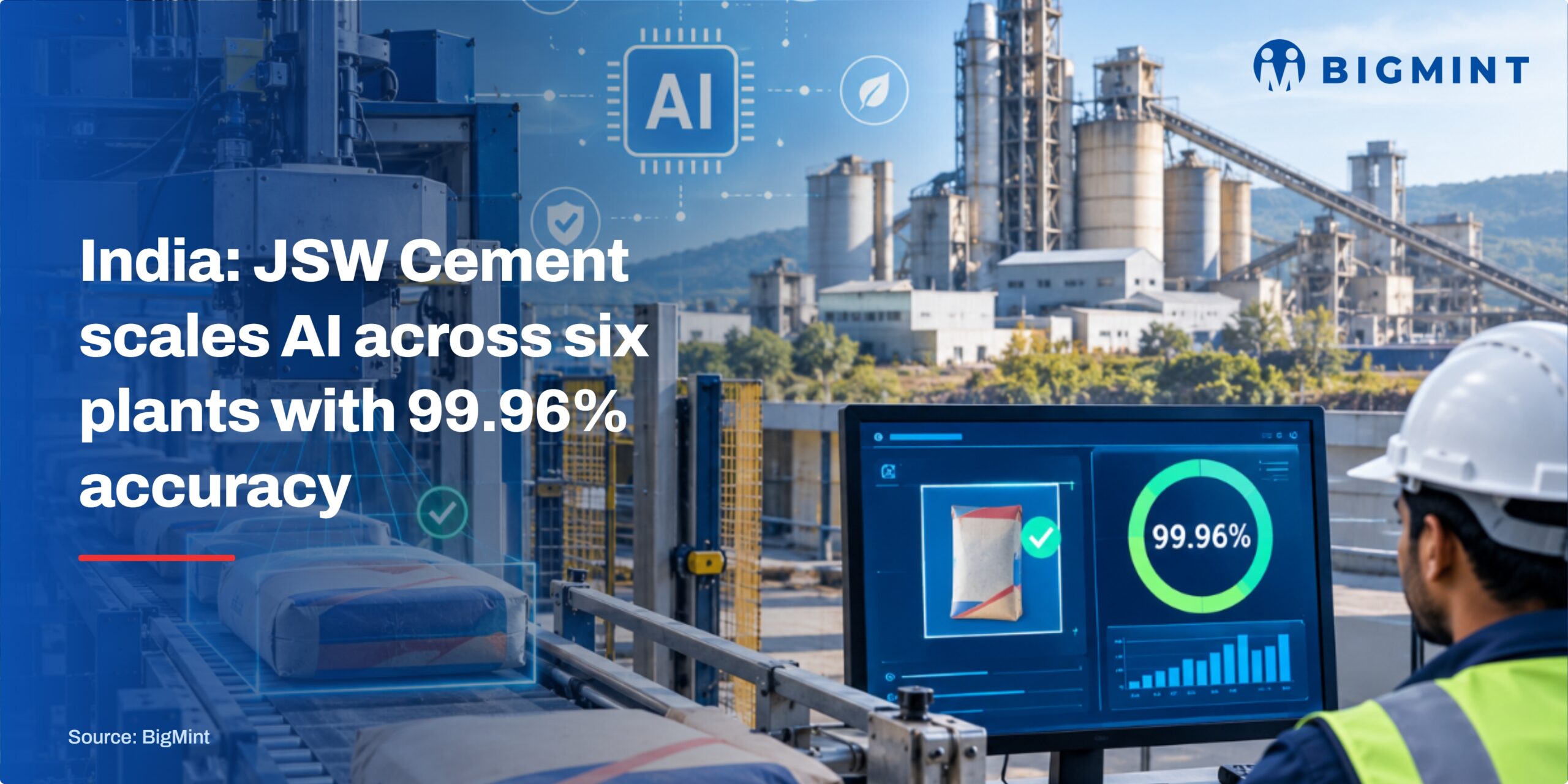
- AI packer automation expands from one plant to six
- Predictive models target quality, maintenance and energy
JSW Cement is expanding the use of artificial intelligence (AI) across manufacturing, with applications spanning quality, maintenance, energy, process optimization, safety and sustainability. According to Raghu Vokuda, Chief Digital and Information Officer at JSW Cement, the company is following a structured roadmap focused on interventions with measurable business objectives rather than deploying isolated technology pilots.
The approach is centered on defining clear key performance indicators (KPIs) before implementation, allowing manufacturing teams to assess the effectiveness of individual AI applications and determine whether they can be replicated across plants.
Packer automation demonstrates scalability
One of the company’s established applications is vision-based AI for packer automation. The system addresses discrepancies between bags dispensed through packers and those subsequently loaded, helping identify unaccounted bags.
The officials informed that the system has achieved more than 99.96% accuracy. After its initial deployment at one plant, the application expanded to six plants within around 18 months, with implementation at a seventh plant underway.
The expansion indicates that at least one AI intervention has progressed beyond the proof-of-concept stage. However, the company has not disclosed specific financial or operational benefits across individual plants, limiting assessment of the programme’s overall return.
Predictive models target manufacturing decisions
JSW Cement is also deploying predictive quality, predictive maintenance and predictive energy models. Its predictive quality application is designed to forecast cement strength, including C3S strength at one, seven and 28 days, ahead of conventional testing timelines.
The objective is to create additional time for manufacturing teams to intervene when process adjustments are required. Energy forecasting and optimisation are similarly being incorporated into the manufacturing AI framework.
Process twins support controlled testing
Process twins form another component of the company’s AI architecture. Rather than changing parameters directly on live production lines, the models allow teams to simulate manufacturing processes and evaluate the potential impact of interventions before implementation.
This approach can help assess process variation and build confidence in AI-generated recommendations while reducing the operational risk associated with testing changes directly in production.
Outlook
The company’s AI programme is moving from individual applications towards broader manufacturing integration, with replication across plants emerging as a key measure of scalability. The next stage is likely to depend on the company’s ability to convert predictive insights into operational decisions, expand closed-loop applications and demonstrate measurable improvements in quality, energy, maintenance and safety.
Leave a Reply