- Capesize strengthens as Atlantic activity improves
- Panamax remains under pressure from ample tonnage
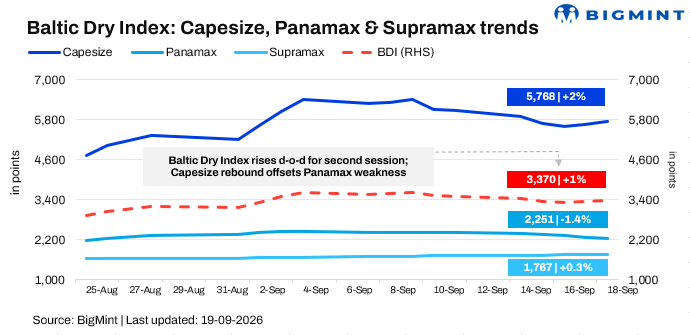
The Baltic Dry Index (BDI) rose for a second consecutive session, gaining 34 points, or 1%, d-o-d to 3,370 on 18 September, from 3,336 on 17 September. The recovery was led by a stronger Capesize segment, while continued Panamax weakness limited the overall upside.
Segment-wise performance
- Capesize rebounds: The Baltic Capesize Index (BCI) climbed 112 points, or 2%, to 5,768 from 5,656, reversing some of the week’s earlier losses. Market sentiment improved towards the close, particularly in the Atlantic, where South Brazil and West Africa-to-China activity strengthened and October fixing gained momentum. However, the Pacific remained relatively softer, with prompt tonnage still outweighing fresh cargo demand.
- Panamax extends losses: The Baltic Panamax Index (BPI) fell 31 points, or 1.4%, to 2,251 from 2,282, extending its decline. The segment remained pressured by increasing vessel availability relative to demand, with softer conditions across both Atlantic and Pacific markets. Although grain and mineral enquiries provided some support, expanding tonnage lists continued to weigh on rates.
- Supramax remains resilient: The Baltic Supramax Index (BSI) edged up 5 points, or 0.3%, to 1,767 from 1,762. Supramax fundamentals remained comparatively firm, supported by tighter tonnage in parts of the Atlantic and steady demand from Southeast Asia and North America, although later-position tonnage in the US Gulf provided some flexibility.
Outlook
Baltic Dry Index is likely to remain mixed in the near term. Capesize could find support from improving Atlantic fixing and sustained seaborne iron ore flows, but the softer Pacific market and questions around the sustainability of Chinese iron ore demand may limit upside. Panamax is likely to remain under pressure until vessel availability tightens, while Supramax may continue to show relative resilience.
Leave a Reply