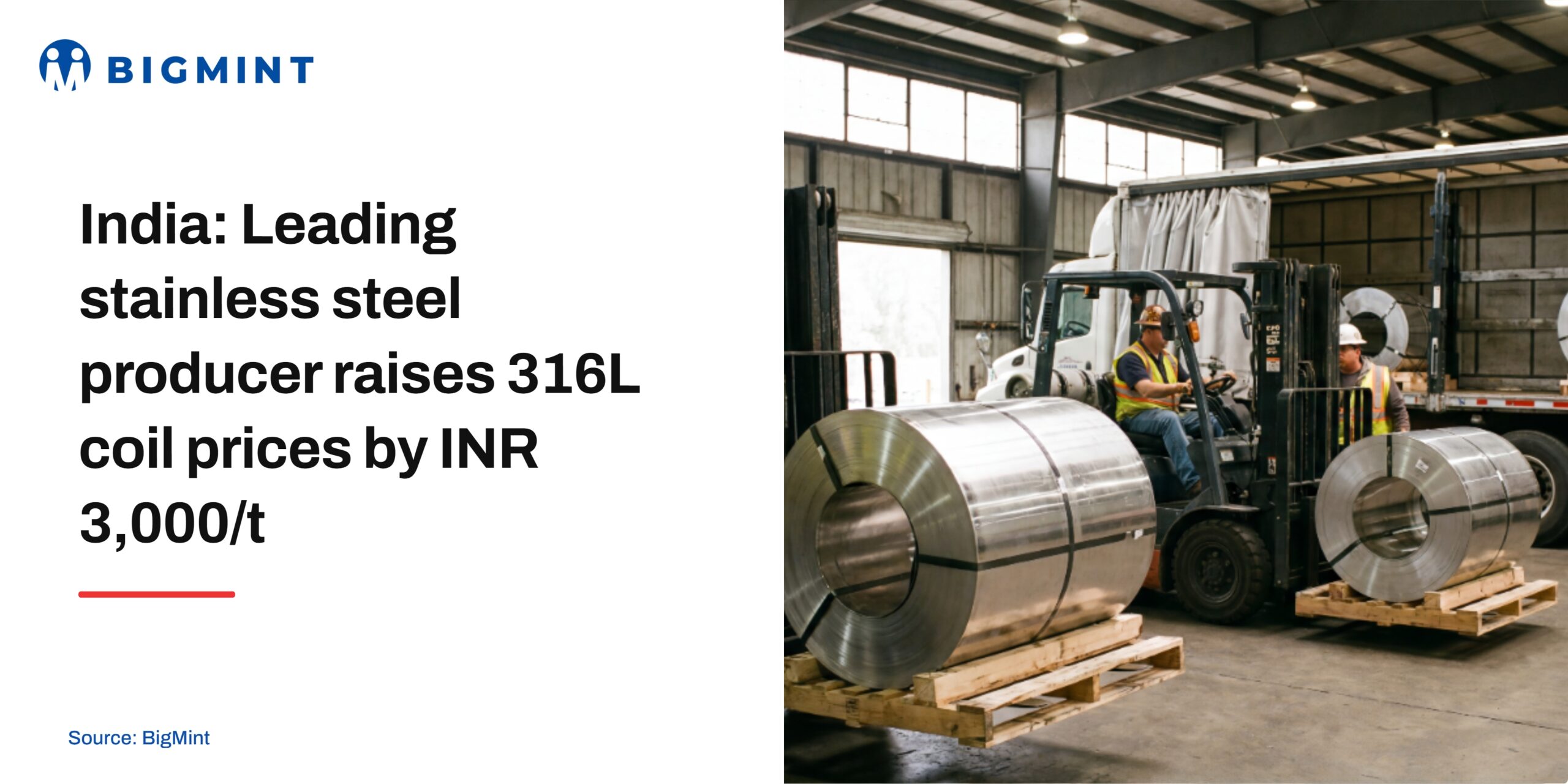
- Tight scrap availability supported stainless steel prices
- 316L HR and CR prices increased INR 3,000/t
A leading Indian stainless steel producer has raised prices of 316L-grade hot-rolled (HR) and cold-rolled (CR) products by INR 3,000/t, effective September 12, 2026, marking its second price revision this month. Prices of J4-grade HR and CR products were increased by INR 1,500/t. While 204Cu were raised by INR 2,000/t, 202-AU were raised by INR 2,000/t, with other grades such as DD,SDM also recorded a revision.
Market participants attributed the latest revision to volatile nickel prices and tight availability of stainless steel scrap, which have kept raw material costs elevated. Firm domestic demand and limited import activity have also provided support to domestic mill pricing.
Raw material costs
Ferro molybdenum (FeMo) prices remained elevated, with BigMint’s FeMo 60% assessment at around INR 4,328,000/t on September 11, down marginally by INR 31,000/t. Volatility in nickel prices and tight stainless steel scrap availability continued to keep input costs supported.
BigMint’s latest assessment on September 9 placed 304 HRC at INR 222,000/t and 316 HRC at INR 433,000/t.
LME three-month nickel prices were around $16,410/t at the time of reporting.
Market sentiment
Market sentiment remained firm but cautious, with elevated alloy costs and tight scrap availability supporting stainless steel prices. However, buyers are likely to remain price-sensitive following the latest mill revision, particularly amid subdued import activity and limited fresh transactions.
Outlook
The latest price revision reflects continued pressure from elevated ferro molybdenum costs, volatile nickel prices and tight stainless steel scrap availability. Firm domestic demand and subdued imports are also supporting mill pricing.
Further price revisions in September will likely depend on alloy price movements and downstream buying response. Any correction in nickel or ferro molybdenum prices, or increased resistance from buyers at higher price levels, could limit further upside in the near term.
Leave a Reply