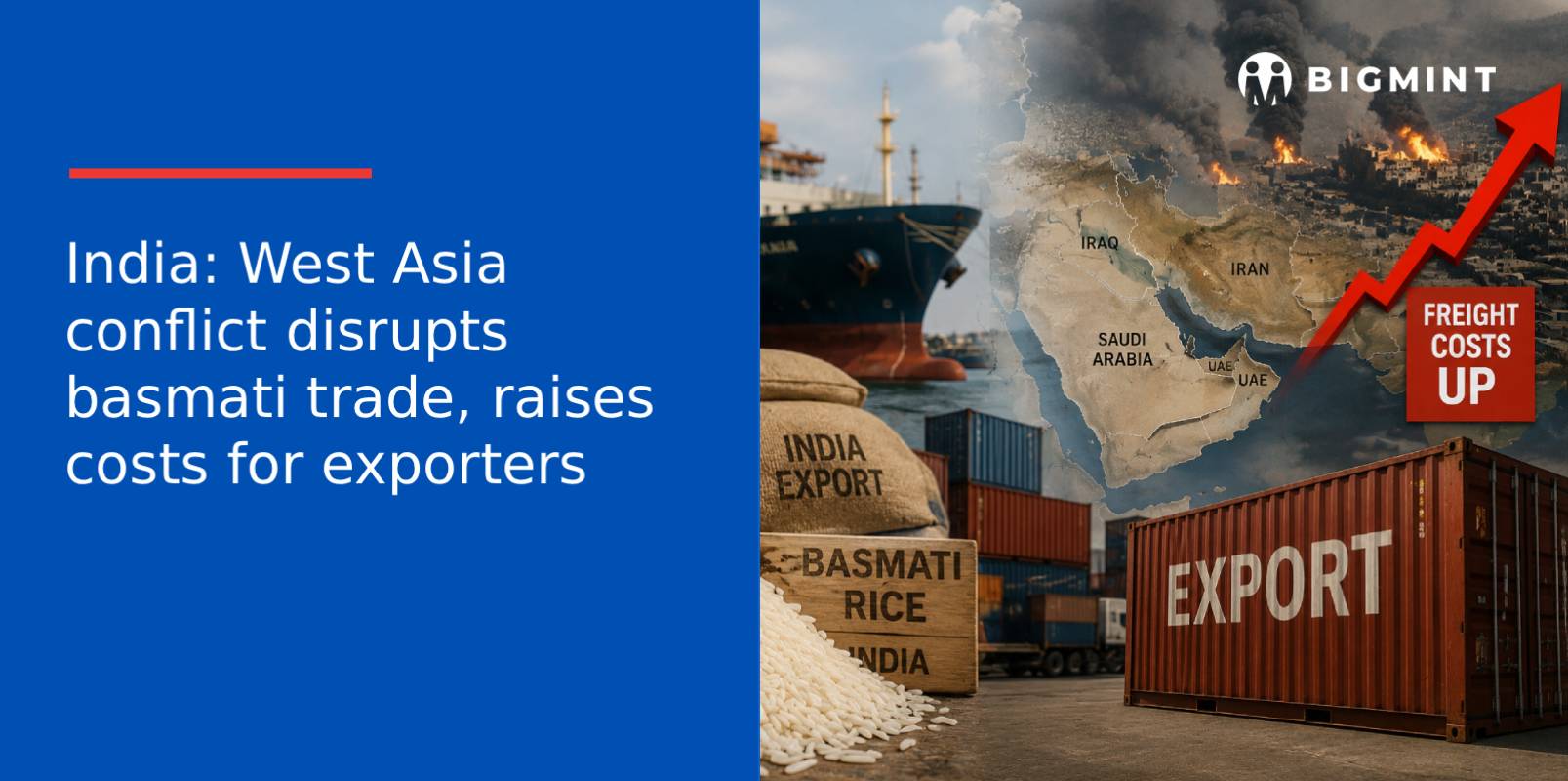
- Container shipping rates surge from around $400 to $5,000
- Iran- and Gulf-bound consignments stuck at ports, new orders slow
India’s basmati rice trade is facing increasing pressure from disruptions to shipping routes in West Asia, higher freight costs and uncertainty around payments for shipments to Iran and other Middle Eastern markets.
Freight costs surge
Rice exporters said shipping costs have risen sharply since the beginning of the Iran conflict. Container freight, which was previously around $400, has increased to $5,000 or more due to changes in shipping routes and difficulties in obtaining insurance. Rice miller and traders from Karnal said exporters are also facing higher costs as shipments take longer to reach their destinations. He estimated that overall expenses have increased by 25-30%, while trading margins that were earlier around 2-3% have come under pressure.
Shipments delayed, new orders slow
Shipments destined for Iran and the Gulf are reportedly stuck at various ports, while new orders have slowed. Delays in transit are resulting in stocks accumulating at ports and increasing storage costs for exporters. The disruptions around the Strait of Hormuz and shipping difficulties in the Red Sea have affected vessel movement, adding to logistical uncertainty for Indian basmati exporters.
West Asia key export market
The Middle East accounts for nearly 70-72% of India’s total basmati rice exports, making the region critical for the country’s basmati trade. India exported 6.52 million tonnes of basmati rice in fiscal 2025-26, valued at around Rs 50,138 crore. Saudi Arabia was the largest buyer, accounting for 16.6% of India’s basmati exports, followed by Iran at 13.9%, Iraq at 11.2%, the UAE at 8.2% and Yemen at 5.7%.
Together, these five markets accounted for around 55.6% of India’s basmati exports. Government data released in May showed a sharp decline in India’s basmati exports during March and April. Exports fell 27.4% in March and 20.9% in April, resulting in an overall decline of around 24% in export value across the two months.
Payment risks add to uncertainty
Disruptions in UAE-Iran trade have created uncertainty around transactions and payments routed through Dubai. Traders are concerned that wider sanctions targeting payment systems and third-country transactions could further complicate trade with Iran. For millers, delayed payments and slower export movement could leave capital tied up in inventory, while storage costs, bank interest and working-capital requirements add to the financial burden. If existing stocks remain uncleared and new crop arrivals increase, millers could become more cautious about fresh purchases, potentially putting further pressure on the basmati trade.
Outlook
The near-term outlook for India’s basmati trade remains cautious, as high freight costs, shipment delays and payment uncertainties are likely to weigh on export activity and keep prices under pressure. Any further disruption to West Asian trade routes or Iran-related payments could intensify the pressure, while improved shipping and payment conditions would be key for a recovery.
Leave a Reply