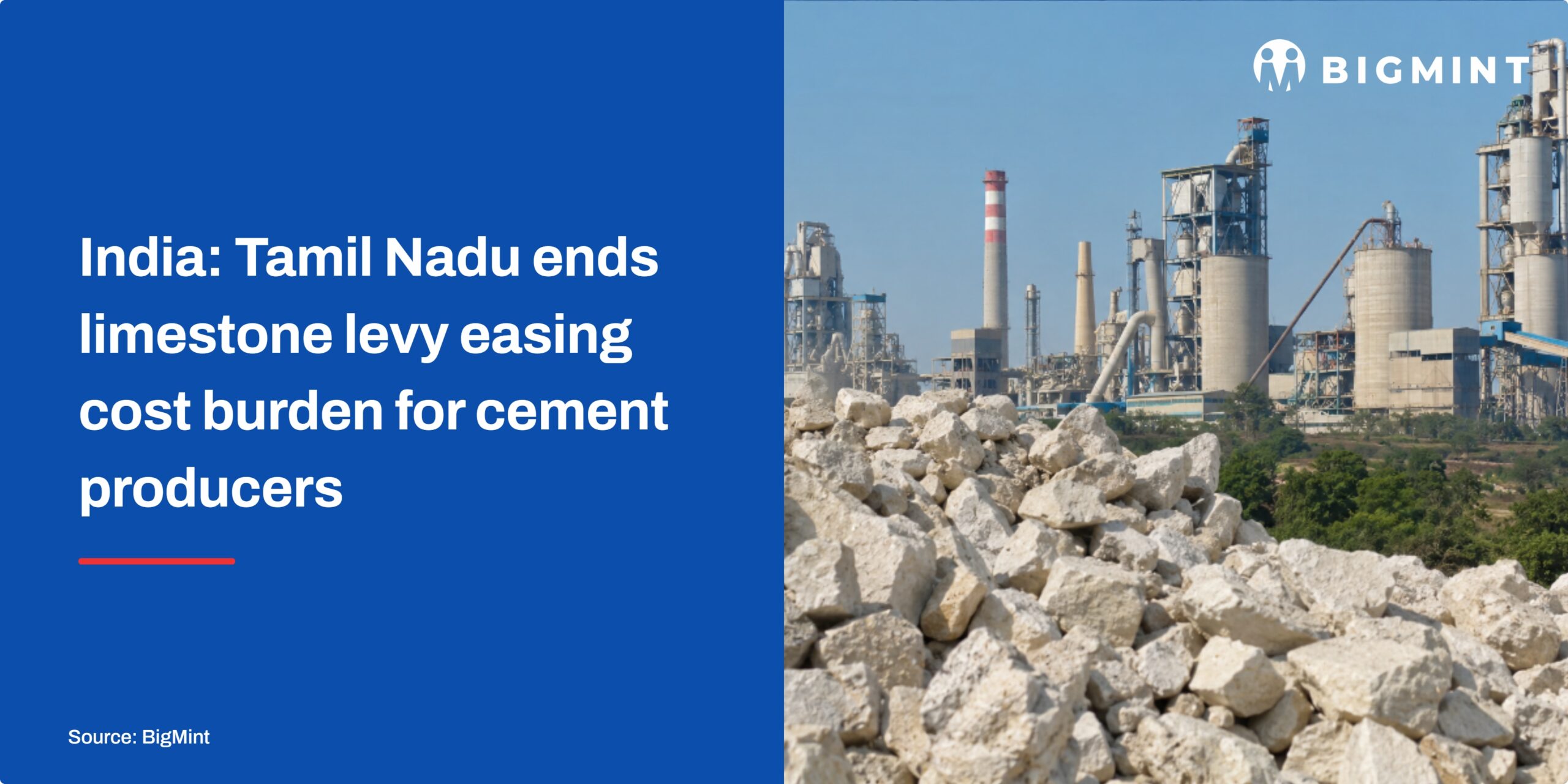
- INR 160/t limestone levy quashed from 22 August
- Cement makers gain direct raw material cost relief
Cement manufacturers in Tamil Nadu are set to benefit from the cessation of the Mineral Bearing Land Tax on limestone, following the coming into force of the Mines and Minerals (Development and Regulation) Amendment Act, 2026 on 22 August. The levy of INR 160/t had increased limestone costs for producers operating in the state since 4 April 2025.
The tax was introduced under the Tamil Nadu Mineral Bearing Land Tax Act, 2024. Tamil Nadu government had stated that the levy applied to 32 minerals, with rates varying by mineral. Limestone was assigned a rate of INR 160/t.
Levy raised production costs
The additional charge had become a direct cost for cement manufacturers at a time when fuel and other raw material expenses remained elevated. Ramco Cements, one producer with significant exposure to Tamil Nadu, reported that the limestone levy increased its raw material cost by INR 150.48 crore in FY’26.
The company subsequently disclosed it had paid INR 171.78 crore towards the levy during FY’26 and INR 79.07 crore during FY’27 up to the cessation of the tax.
Dalmia Bharat also disclosed that it and its subsidiaries had paid INR 127 crore in FY’26 and INR 38 crore in FY’27 towards Mineral Bearing Land Tax and mineral cess across Tamil Nadu, Assam and Meghalaya. The company said these levies were no longer payable from 22 August.
Cost relief improves margin potential
The cessation of the levy removes INR 160/t from the limestone cost for affected Tamil Nadu operations. Since limestone is a core raw material for clinker production, the benefit should flow directly into operating costs for producers sourcing from affected mines.
The extent of margin improvement will vary between producers based on limestone consumption, clinker production, captive mining volumes and the share of production located in Tamil Nadu. Producers with higher exposure to the state are likely to see a larger absolute benefit.
The removal could also reduce the need for producers to recover the additional raw material cost through cement prices. However, competitive intensity and regional demand will determine whether the savings are retained by manufacturers or partly passed on to customers.
Regulatory change provides certainty
The MMDR Amendment Act, 2026 was passed by Parliament on 13 August and subsequently came into force on 22 August. The central government said the amendment is intended to provide greater certainty, stability and predictability in the fiscal regime for the mineral sector. It also clarified that states would retain their existing rights over land and minerals, while the amendment restricts specified state levies on mineral rights and mineral-bearing lands.
Outlook
The cessation of the limestone levy is expected to provide a measurable reduction in operating costs for cement producers with significant Tamil Nadu exposure. The benefit is likely to be more visible on margins if cement realisations remain stable and fuel costs do not rise materially.
However, seasonal weakness in construction activity, regional competition and changes in coal, petcoke and power costs may determine how much of the tax saving translates into higher profitability. Cement makers are therefore likely to retain a portion of the benefit while continuing to monitor demand and input costs before making pricing decisions.
Leave a Reply