- Saudi rebar competition is putting pressure on regional steel prices
- Strong demand for processed grades supports overall scrap values
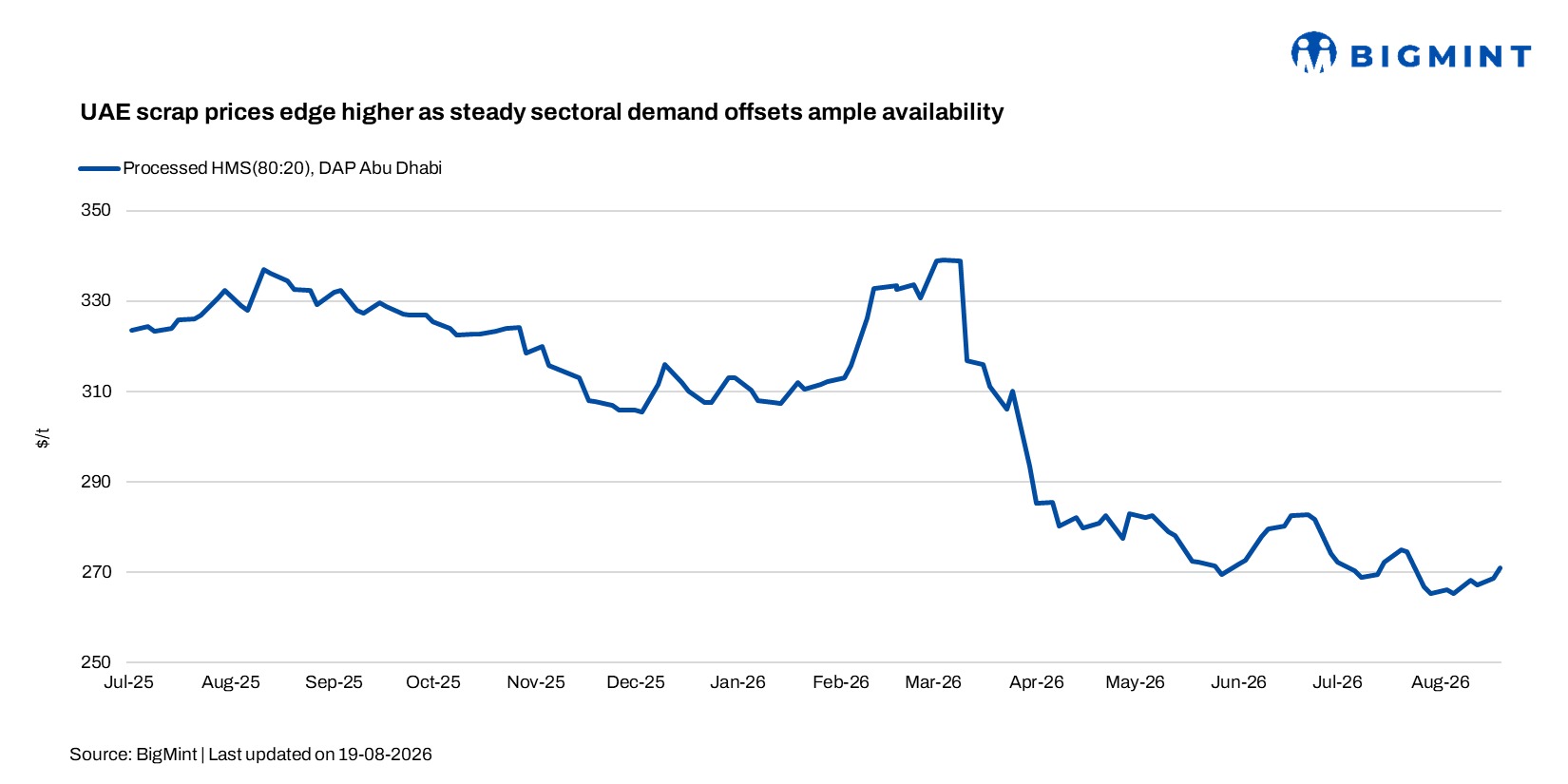
UAE’s domestic scrap market remained stable to firm w-o-w, with ample availability and good-quality material keeping supply comfortable. However, demand across sectors prevented a sharper correction. BigMint assessed processed HMS at AED 996/t ($269/t) DAP Abu Dhabi, up AED 14/t ($4/t) w-o-w.
A Dubai-based trader said mills are not currently concerned about material availability, but demand across consuming sectors remains sufficient to support prices. This has limited sellers’ willingness to lower offers despite comfortable supply.
Market updates
HMS (80:20) was heard at AED 890-900/t ($240-243/t) DAP Abu Dhabi, while HMS Super was around AED 920-940/t ($248-254/t). Processed HMS sheared was around AED 995-1,000/t ($269-270/t), while shredded scrap commanded AED 1,040-1,060/t ($281-286/t).
PNS unprocessed was heard at AED 980-990/t ($265-267/t), while fabrication scrap was around AED 1,020-1,030/t ($275-278/t).
In the export market, Middle East shredded scrap offers to Qasim were heard at around $428-430/t.
Hormuz disruption puts UAE pipe deliveries and projects under pressure
While scrap availability remains comfortable, the downstream steel market is facing increasing logistics and supply-chain pressure from the prolonged disruption to shipping through the Strait of Hormuz. Delays in raw-material deliveries are disrupting production schedules, with some UAE pipe producers reportedly operating at sharply reduced rates or temporarily idling production.
Even cargoes reaching alternative ports are facing logistical difficulties. One UAE pipe industry source said production had been idled, with plate orders already at Fujairah port but vessels still unable to berth.
The disruption is also beginning to influence project allocation. The full order for Azerbaijan’s Absheron gas-condensate field was reportedly awarded to an Indian supplier because of customer concerns over delivery risks from UAE suppliers. Similar considerations are reportedly affecting procurement for Geng North, a major gas and condensate project offshore Indonesia.
The issue is therefore moving beyond freight costs and becoming a competitiveness challenge for UAE pipe producers. Large projects depend on timely heavy-plate and other feedstock deliveries, making logistics reliability increasingly important in supplier selection.
If the disruption persists, UAE pipe producers could face continued pressure on capacity utilisation and new project orders, while international buyers may increasingly diversify sourcing towards suppliers with less-exposed logistics routes.
Steel market
Regional billet values remained supportive, with Saudi billet heard at SAR 2,120-2,150/t ($551-559/t) ex-works and GCC billet at around $495-503/t CFR. However, Saudi rebar prices came under pressure as first-tier producers cut offers to SAR 2,660/t ($692/t) delivered, down SAR 40/t ($10/t) from SAR 2,700/t, to stimulate sales and defend market share.
Smaller mills were offering at SAR 2,350-2,550/t ($611-663/t), up to SAR 450/t ($117/t) below the benchmark producer’s official price of SAR 2,800/t ($728/t). Market participants attributed the cuts to competitive pressure and current demand, rather than lower production costs. High buyer price sensitivity and the wide gap between official and workable prices indicate that smaller producers are increasingly influencing market pricing, forcing larger mills to remain flexible to secure volumes.
Outlook
UAE scrap prices are likely to remain stable to firm over the coming week, with steady mill demand and firm regional replacement costs supporting offers. However, prolonged Hormuz-related supply disruptions and intense Saudi rebar competition could weaken steelmaking margins, potentially limiting mill scrap procurement and capping further price gains.
Leave a Reply