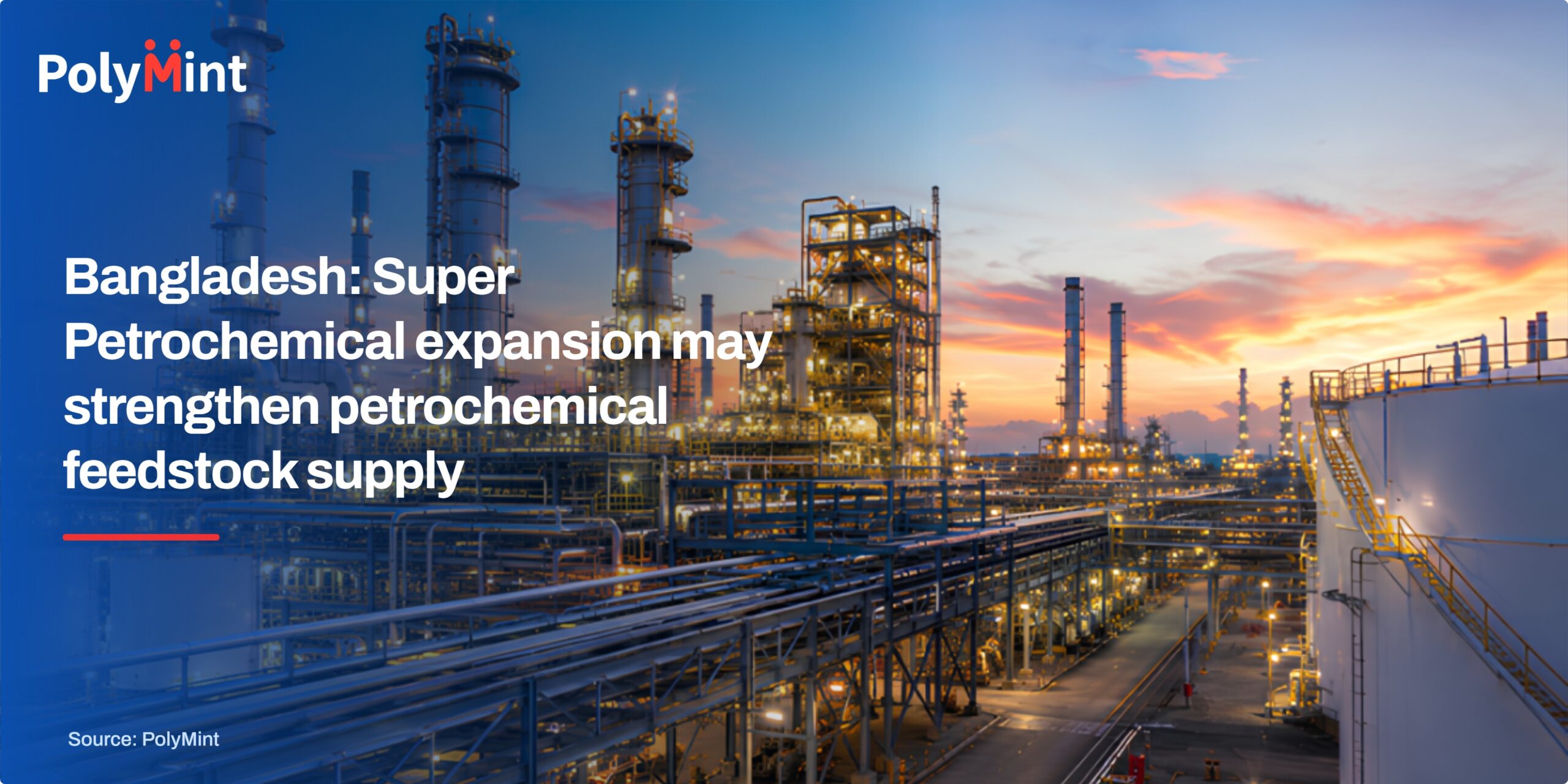
- Refinery expansion targets March 2027 start
- Naphtha availability remains key polymer-market link
Super Petrochemical is targeting March 2027 commercial production from its expanded Juldha refinery in Chattogram. The expansion is expected to lift total processing capacity to around 51,700 barrels per day (bpd) from 16,700 bpd, strengthening Bangladesh’s domestic hydrocarbon processing base. For the polymer market, however, the key question is whether the expansion creates additional commercially available naphtha for petrochemical conversion.
Refinery expansion
The project will add around 35,000 bpd of processing capacity, with diesel expected to remain a major product alongside furnace oil, marine fuel and other petroleum products. Super Petrochemical is already part of Bangladesh’s private refining and petrochemical ecosystem, with current naphtha processing capacity of 16,700 bpd. The company also has an established petrochemical footprint, including hexane and benzene production.
Bangladesh Petroleum Corporation supplied 127,480 t of naphtha to private petrochemical refiners in fiscal 2023-24, highlighting established domestic demand for the feedstock. The expanded refinery could therefore become increasingly relevant to the country’s petrochemical feedstock balance, depending on its final product yield and allocation of naphtha.
Polymer connection
An earlier environmental assessment for a proposed integrated Super Petrochemical complex envisaged a naphtha-fed cracker with 550,000 t/year of low-density linear polyethylene LLDPE/high-density polyethylene (HDPE) and 350,000 t/year of polypropylene (PP) capacity. However, these were part of an earlier proposal and should not be treated as confirmed capacity under the current refinery expansion.
This distinction is important for the polymer market. The current project could improve domestic naphtha availability, but there is no confirmed evidence that the March 2027 expansion itself will add PP or polyethylene (PE) production.
Downstream implications
Bangladesh’s plastics industry remains dependent on imported polymer resins, making feedstock availability, import parity and freight key cost drivers. The refinery expansion could improve feedstock flexibility, but its impact on PP and PE will depend on additional naphtha being available for domestic conversion.
Outlook
The expansion’s immediate impact is likely to be on Bangladesh’s fuel and hydrocarbon-processing balance. Its significance for PP and PE will depend on naphtha allocation and any confirmed cracker or polymerisation investment. Until then, imported resin prices, freight, currency and downstream demand are likely to remain the key polymer-market drivers.
Leave a Reply